NASA’s astrophysics program is moving on two fronts, with one mission already in orbit and another just selected for accelerated development. The agency announced Wednesday that PRIMA, the Probe far-Infrared Mission for Astrophysics, will advance to Phase B—the preliminary design and technology development stage—as the first mission in a new class called Probe Explorers. At the same time, NASA’s Nancy Grace Roman Space Telescope, a dark-energy-seeking observatory, is in space and has achieved first starlight, according to mission updates. But the public should not expect the Roman telescope’s first full science images until 2027.
Roman’s First Light: A Milestone, Not a Photo Op
The Roman Space Telescope has launched and is now in space, according to optics.org, which describes it as a dark universe-seeking mission. NASA has confirmed that the observatory has seen starlight for the first time—a critical engineering milestone known as “first light.” The mission has also captured a green ring test image, a calibration result that suggests its detectors and optics are functioning as designed.
Yet those early signals are not the same as the dazzling, full-color images the public typically associates with space telescopes. MSN headlines emphasize that NASA’s Roman telescope is in space “but don’t expect photos until 2027,” while KGW asks plainly: “When will we see the first images from NASA’s Roman Space Telescope?” The answer, based on current mission timelines, is not until the observatory completes commissioning and begins its science survey. First light and test images are engineering checkpoints; the first publicly released science images will come later.
Roman’s name honors Nancy Grace Roman, NASA’s first chief of astronomy and a champion of space-based observatories. The telescope is designed to probe dark energy, dark matter, and exoplanets, using a wide field of view to survey vast swaths of the infrared sky. Its launch marks a major step in NASA’s effort to understand why the universe’s expansion is accelerating and how planets form.
PRIMA: A New Window into the Far-Infrared Universe
While Roman settles into orbit, NASA is already planning its next generation of astrophysics probes. PRIMA was selected to move into Phase B within NASA’s Explorers Program. The mission is the first in a new class called Probe Explorers, a tier of medium-sized astrophysics missions designed to fill gaps between smaller Explorer missions and flagship observatories.
"The PRIMA mission is humanity’s next window into the deep universe. It will unveil the obscure across cosmic time to better understand the formation of planets, stars, black holes, and even how water on Earth came to be," said Nicky Fox, associate administrator, Science Mission Directorate, NASA Headquarters in Washington.
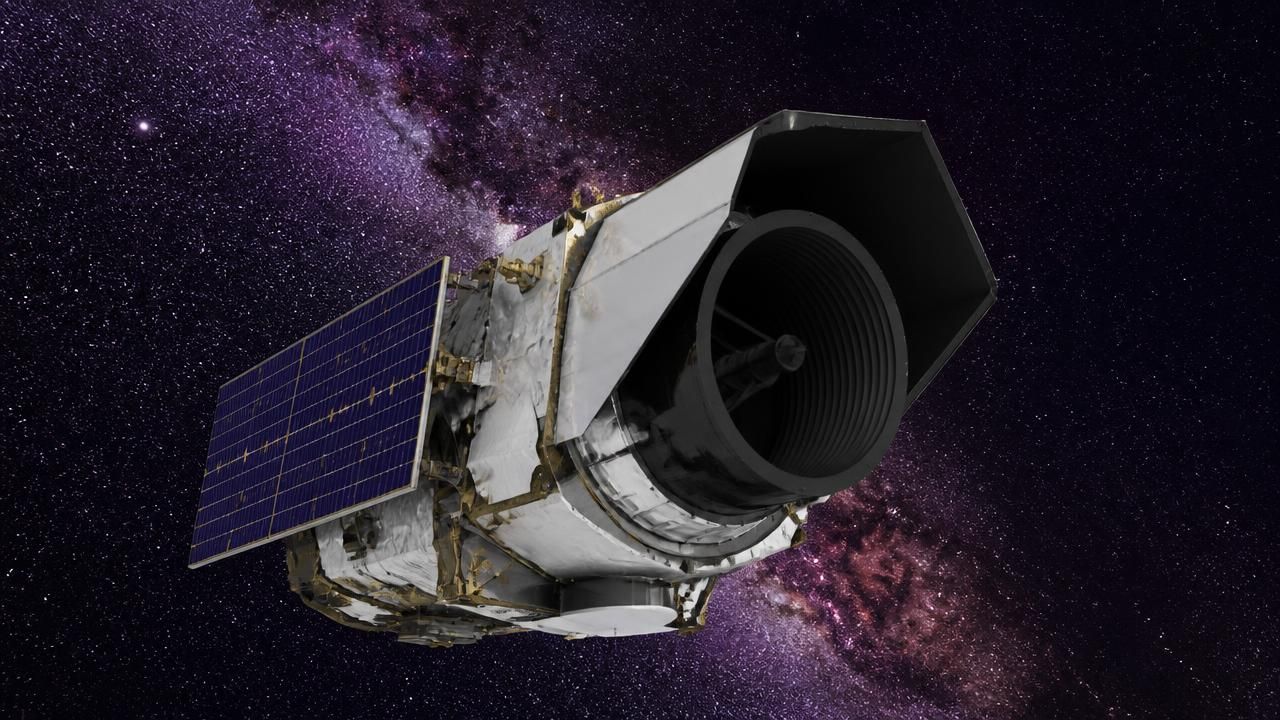
PRIMA will carry a 5.9-foot telescope and conduct deep, sensitive surveys in far-infrared light. That wavelength regime is crucial for studying cool cosmic objects, including planet-forming disks, distant galaxies, and the dust that hides newborn stars. Far-infrared observations also help trace water and other molecules that are key to habitability. NASA says PRIMA will bridge the gap between existing infrared observatories like the James Webb Space Telescope and radio telescopes, offering a complementary view of the universe’s history and evolution.
The mission is subject to a confirmation review based on technical, programmatic, and cost performance before it can begin implementation in Phase C. If confirmed, PRIMA’s project cost is capped at $1.2 billion, not including launch and other non-project costs. The observatory is targeted to launch in 2033 for a planned five-year mission.
Two Missions, One Cosmic Strategy
The contrasting headlines around Roman and PRIMA reflect two different phases of NASA’s science pipeline. Roman is a flagship-class observatory already in space, now undergoing the slow, methodical work of commissioning. Its first starlight and green-ring test image are behind-the-scenes victories that precede public science. PRIMA, by contrast, is still on the drawing board—but its selection signals that NASA is investing in a new class of missions that can tackle focused questions with more agility than giant flagships.
Optics.org framed Roman as a “dark universe-seeking” mission, highlighting its cosmological ambitions. NASA’s own release emphasized PRIMA as “humanity’s next window into the deep universe.” MSN’s coverage focused on the timeline and the public’s hunger for images, while KGW’s headline addressed the most common question: when will we see the pictures? Together, these outlets capture a story that is as much about process as it is about discovery—how NASA moves from selection to launch to first light to science.
What Comes Next
For Roman, the next few years will involve calibrating instruments, testing pointing and data systems, and preparing for its wide-field infrared surveys. If all goes according to plan, the first science images will be released in 2027. Those images could transform our understanding of dark energy, exoplanets, and the infrared sky.
For PRIMA, the immediate task is completing Phase B and passing confirmation review. If confirmed, the mission will enter Phase C, when hardware fabrication and final design begin. With a launch targeted for 2033, PRIMA will not see first light for nearly a decade. But its far-infrared eyes will ultimately complement Roman and JWST, probing the cold, dusty, and obscure corners of the cosmos.
- Roman Space Telescope: launched, first starlight achieved, test image captured; first public science images expected in 2027.
- PRIMA: selected for Phase B; 5.9-foot far-infrared telescope; $1.2 billion cost cap; targeted launch in 2033; five-year mission.
- Program: PRIMA is first in NASA’s new Probe Explorers class within the Explorers Program.
Together, the two missions illustrate NASA’s long-term strategy: use flagship observatories to answer grand questions, then deploy innovative probes to fill in the details. Roman is already in space, hunting dark energy. PRIMA is now on the path to join the hunt, peering at the universe in a wavelength that has remained largely unexplored. The first images may be years away, but the scientific groundwork is being laid now.