For skywatchers, November has long been the month when the heavens turn theatrical. This week, NASA's Astronomy Picture of the Day underscored that reputation with a striking image of a fireball meteor streaking beneath the Big Dipper over Italy's Dolomite Alps — a photograph that, while taken in 2017, arrives as astronomers and outlets from ScienceDaily to MSN are urging the public to look up at this month's meteor showers, fireballs and a supermoon.
A Fireball Over the Dolomites
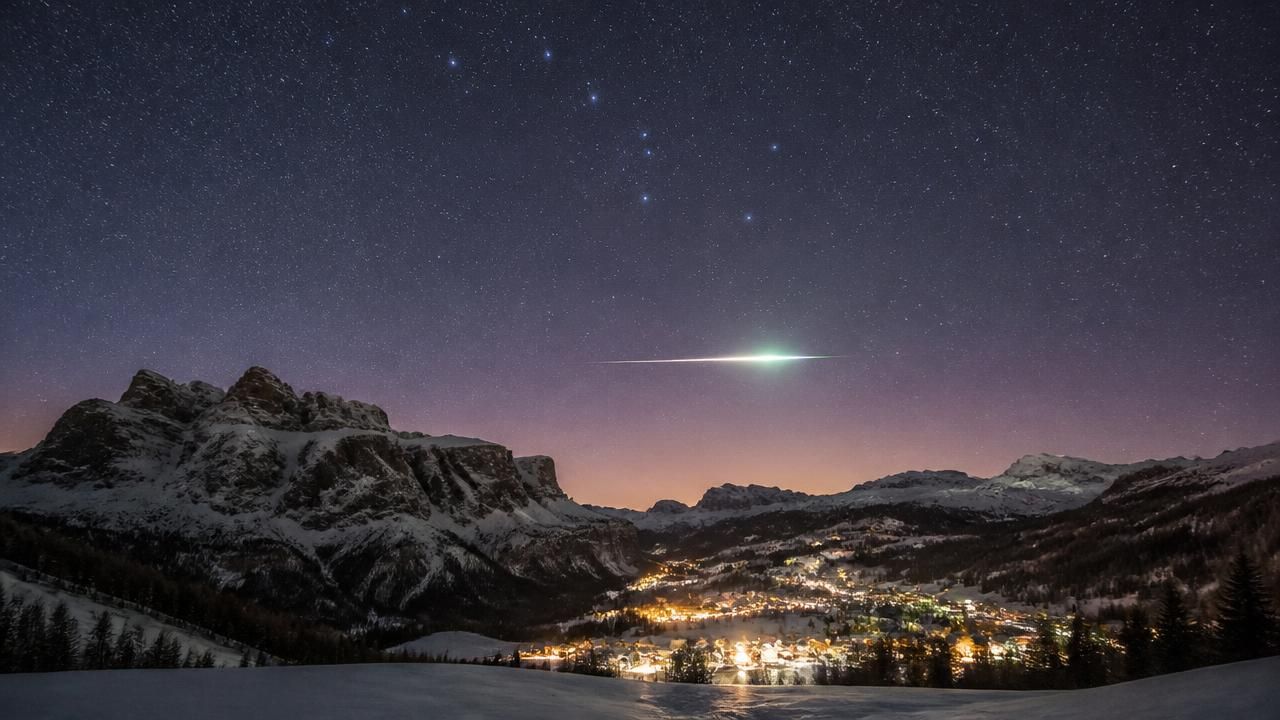
The APOD image, featured for 8 November 2026, was captured on 14 November 2017 from a mountain pass above the village of La Villa in Alta Badia, Italy. Taken in subfreezing temperatures, the thoughtfully composed frame shows snowy, rugged peaks and the soft pinkish glow of fading twilight, with Ursa Major hanging over the northern horizon above the nestled village lights.
What makes the photograph remarkable is what the camera caught by chance: an intense fireball flashing east to west across the northern horizon, directly beneath the familiar Big Dipper asterism. According to NASA's accompanying explanation, the event became a landmark in meteor record-keeping.
Sightings of this major fireball meteor were widely reported in European skies, making it one of the most reported fireball events ever for planet Earth's American Meteor Society and the International Meteor Organization.
The meteor's measured track over Germany is consistent with an origin near the active radiant of November's Northern Taurid Meteor Shower — a stream of debris associated with dust shed by Comet Encke.
Why the Taurids Punch Above Their Weight
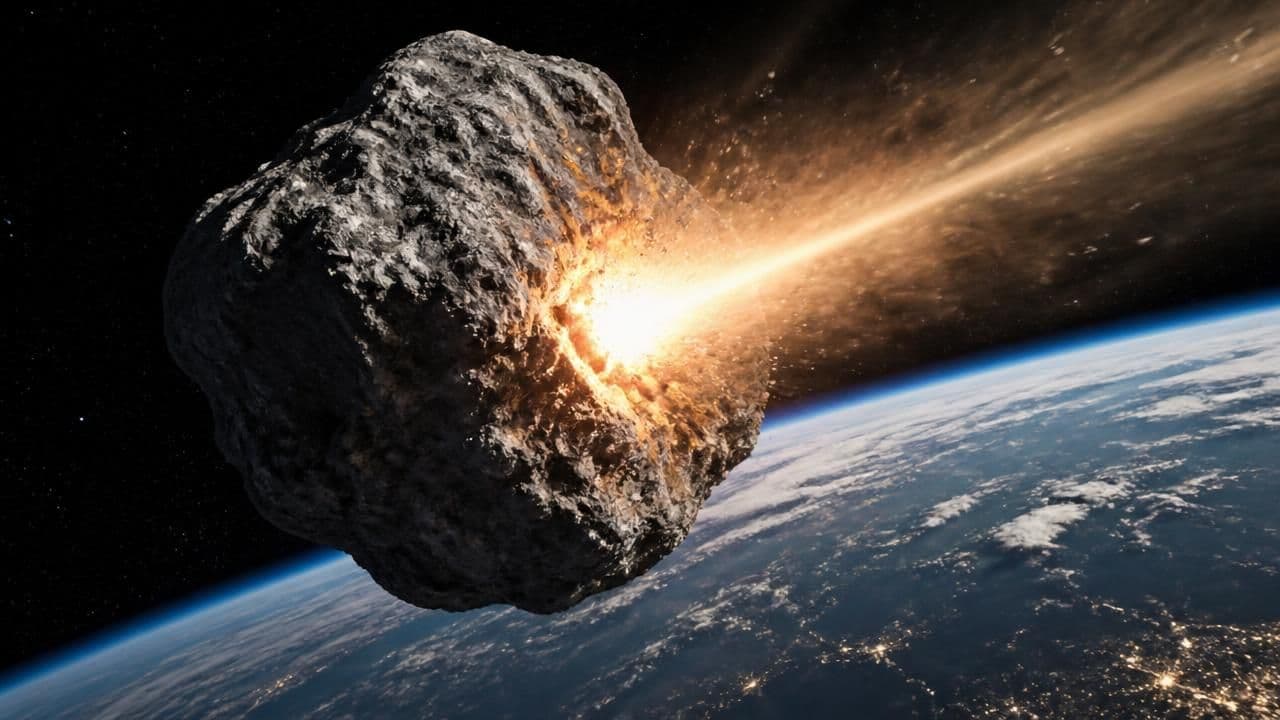
The Taurids are not the most prolific shower on the calendar. Unlike the Perseids or Geminids, which can produce dozens of meteors an hour, the Taurids typically offer only a handful. But what they lack in quantity, they make up for in spectacle: the stream is rich in larger particles, producing slow, bright fireballs that can outshine Venus and occasionally fracture into visible bursts.
That is precisely the characteristic MSN's coverage emphasized ahead of the shower's peak, framing the Taurids as a fireball event rather than a numbers game. ScienceDaily took a broader editorial approach, bundling the meteor showers, fireballs and the month's full moon into a single "don't miss" package — a reminder that November's sky offers a varied program rather than a single headline act.
The Supermoon Complication
This year's calendar adds a complication. November 2026 brings a supermoon — a full moon occurring near the closest point in its orbit, appearing marginally larger and noticeably brighter than average. For casual observers, it is a photogenic event in its own right; for meteor hunters, it is a nuisance. Moonlight washes out all but the brightest meteors, narrowing the window for spotting faint Taurid trails to the hours before moonrise or after moonset.
The tension illustrates a recurring theme in amateur astronomy: the best-laid viewing plans are always negotiated with the Moon. Veteran observers recommend orienting away from the lunar glare, letting the eyes adapt for at least 20 minutes, and treating the Taurids as a marathon rather than a sprint — the stream stays active for weeks, and individual fireballs can appear on almost any clear night.
Citizen Science in the Sky
Perhaps the most consequential element of the APOD story is not the photograph but the data behind it. The 2017 fireball generated reports across Europe, logged by networks such as the American Meteor Society and the International Meteor Organization — an early and vivid example of how crowdsourced observations now underpin modern meteor science.
Professional networks rely on triangulated amateur reports and all-sky camera data to reconstruct trajectories, estimate orbits and, in some cases, recover meteorites. The 2017 event, with its measured track over Germany, was parsed in precisely this way, tying a momentary flash to the debris trail of Encke's comet.
How to Watch
- When: The Northern Taurids are active through November, with activity concentrated in the first half of the month.
- Where: Any dark site with an unobstructed view of the eastern horizon; the radiant sits in Taurus, near the Pleiades.
- What to bring: Warm clothing, a reclining chair and patience — no telescope or binoculars, which narrow the field of view too much for meteors.
- How to contribute: Report fireballs to the American Meteor Society or the International Meteor Organization, where amateur sightings feed directly into scientific analysis.
The Takeaway
The three framings converge on a single message. NASA's APOD supplies the science and the spectacular imagery; MSN supplies the practical urgency of a viewing window; ScienceDaily supplies the calendar context that keeps skywatchers from missing the month's broader offerings. Together they describe a November in which the sky rewards attention — and in which the most dramatic moment may arrive in the half-second it takes a fireball to cross the northern horizon.