Every news cycle leaves a residue — stories that were real, consequential and widely followed in their own corners of the world, yet never quite broke through to the front page. Bloomberg’s “By The Way” segment exists for precisely that reason. Hosts Lisa Mateo, David Gura and Christina Ruffini package the week’s odds and ends into a brisk digest: an immersive movie screening, a renewed plea for headphones, an all-you-can-drink German model arriving in the United States, and old rock stars who keep on rocking. It is a reminder, from a financial news organization no less, that markets are not the only thing happening.
Set beside that cultural sampler are four stories from Wikinews that, taken together, sketch a week of records, recriminations, grief and introspection.
A fifth major, and a place in the record books
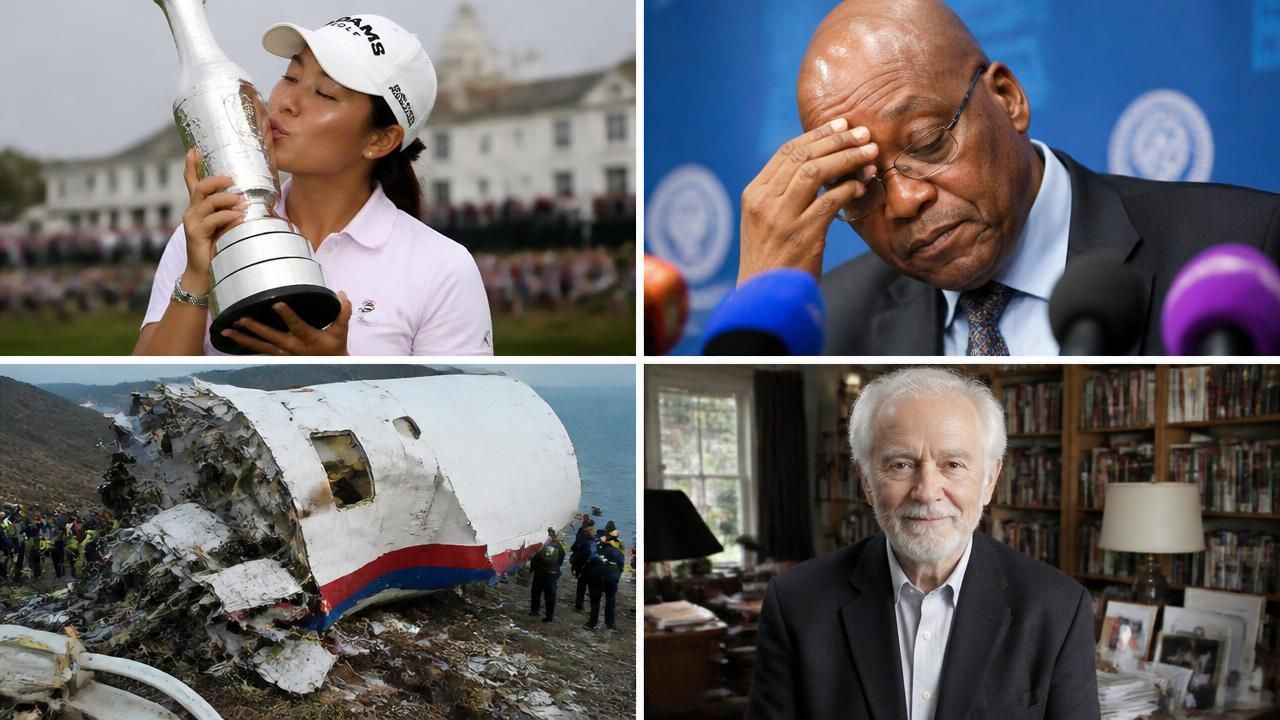
At Carnoustie, on the east coast of Scotland, Yani Tseng of Taiwan won the Women’s British Open and, in doing so, collected the fifth major championship of her career — a benchmark no player, male or female, had reached at such a young age in the modern era. Tseng, then in her early twenties and already installed as world number one, had built her résumé methodically: an LPGA Championship in 2008, then a breakout 2010 season in which she added the Kraft Nabisco Championship and her first Women’s British Open.
“Yani Tseng captures Women’s British Open title for a record fifth major.”
That was the framing Wikinews chose, and it is telling. Where wire services led with the scoreline and the runner-up, the headline here foregrounded the historical marker — the idea that a career is measured less by a single Sunday than by the arithmetic of majors. Tseng finished several strokes clear of the field, with American Brittany Lang the nearest challenger, on a links course that punished anything loose. Her dominance through 2011 — she spent the season at number one and won multiple majors in a single year — made the result feel less like an upset than an inevitability, which is its own kind of news.
FIFA promises change after the handball that shook a nation
On 18 November 2009, at the Stade de France, Thierry Henry controlled the ball with his hand — twice, by most replays — before crossing for William Gallas to score the goal that sent France to the World Cup and Ireland home. The Football Association of Ireland formally requested a replay; FIFA refused, and the affair curdled into a diplomatic row, with Irish officials asking to be admitted to the tournament as a symbolic “33rd team.”
What followed was institutional self-examination of a kind FIFA rarely undertakes. The governing body moved to add two additional assistant referees behind each goal line — a system deployed at the 2010 World Cup and later at the European Championship — and revived the long-stalled debate over goal-line technology, which was eventually approved in 2012 and used at the 2014 World Cup. The irony was noted at the time: neither innovation would have caught a deliberate handball. The reforms were less about correcting the specific injustice than about restoring faith in a sport whose officiating had become a running controversy.
A national tragedy in the Juan Fernández Archipelago
On 2 September 2011, a Chilean Air Force CASA C-212 Aviocar went down in the Pacific Ocean while attempting to land at the Juan Fernández Islands, roughly 670 kilometres off the Chilean coast. All 21 people aboard were killed, among them Felipe Camiroaga, one of the country’s best-known television presenters, and Felipe Cubillos, a businessman who had led reconstruction efforts after the devastating 2010 earthquake. Reports said there were no survivors.
The aircraft had circled and attempted the island’s notoriously short runway before disappearing on a further approach; wreckage and victims were recovered over the following days. Chile declared national mourning. The crash resonated far beyond the archipelago because of who was on board: a delegation of entrepreneurs and volunteers travelling to a community still rebuilding from disaster. It also revived uncomfortable questions about air safety at an isolated airstrip where terrain and weather leave pilots with almost no margin.
Gay Talese, still reporting
In a wide-ranging Wikinews interview, Gay Talese — the author of “Frank Sinatra Has a Cold,” “The Kingdom and the Power” and “Honor Thy Father” — reflected on the state of journalism, the Iraq war and his own long career. His argument has been consistent for decades: that the reporter’s craft depends on patience, curiosity and an unwillingness to look away, and that it is corroded by newsrooms run as cost centres rather than as civic institutions.
Talese’s career began as a copyboy at The New York Times and matured during the heyday of magazine narrative journalism, when writers were given months, not hours, to report a story. His lament about Iraq coverage — that it was too often reported from briefing rooms rather than from the streets — echoes his broader complaint that access has replaced observation. In an era of shrinking foreign bureaus, the critique lands with more force than when he first made it.
Meanwhile, at the shallow end
Bloomberg’s cultural roundup supplied the counterweight: immersive film screenings that turn cinema into a sensory environment, the perennial campaign for headphone etiquette in shared spaces, a German all-you-can-drink format crossing the Atlantic, and ageing rock stars who show no inclination to retire. These are not trivialities so much as indicators — of how entertainment is being repackaged as experience, and of how reliably nostalgia sells.
The connective tissue
What links a golf major, a handball, a plane crash, a media memoir and a beer-hall import is less a theme than a habit: the work of keeping score. Records, replays, crash investigations and reporter’s notebooks are all instruments of accountability, imperfect but stubborn. Bloomberg’s “By The Way” segment ends with a wink, but the impulse behind it — that the week’s overlooked headlines deserve a second look — is the same one that drives the rest of the file. Not everything that matters moves a market. Some of it just moves the record.