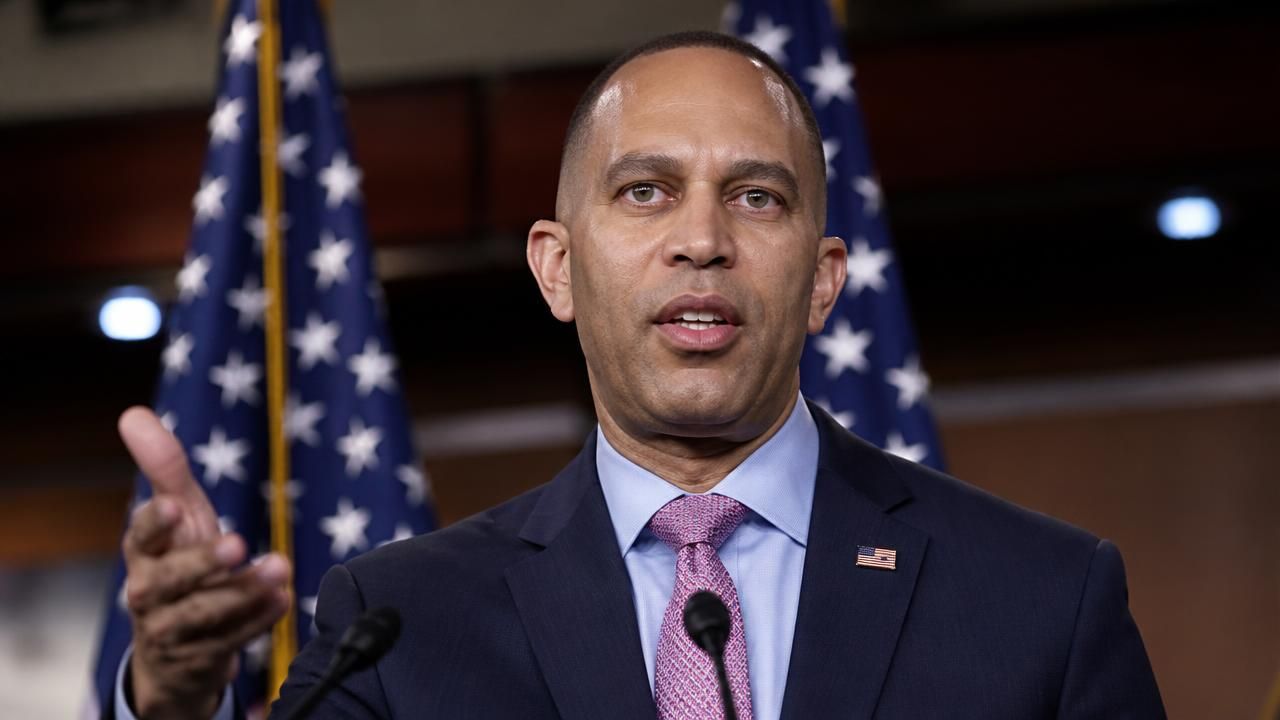
Hakeem Jeffries is on the verge of making history — and staring at the hard part. If Democrats win control of the House in the midterms, the New York congressman and current Democratic leader is positioned to become the first Black Speaker of the House, a milestone that would reshape the top of American politics. But the same outcome would hand him a coalition that is easier to assemble in opposition than to hold together in power, with a narrow margin, an emboldened progressive wing and a Republican Party eager to turn Democratic oversight into a campaign issue.
A historic promotion, a fragile mandate
The arithmetic is the first problem. Sarah Chamberlain, president and CEO of the Republican Main Street Partnership, said Democrats will need a much larger House majority than simply the one-seat edge that can decide control. According to Bloomberg Markets, Chamberlain argued that Democrats would need to win the House by at least a 25-seat majority to give Jeffries real room to get elected Speaker and pass legislation. Without that cushion, she said, the presence of new far-left members could mean Jeffries has to reach across the aisle to get things done.
Democrats will need to win the House by at least a 25-seat majority to give Hakeem Jeffries wiggle room to get elected as Speaker and pass legislation, Sarah Chamberlain said.
That is a Republican strategist's framing, but it points to a genuine governing challenge. A Speaker with a slim majority must satisfy swing-district moderates while keeping progressive newcomers on board. Every defection can become a floor defeat. Every compromise can become a primary challenge. Jeffries would inherit a Democratic caucus that spans from centrists in competitive districts to activists demanding aggressive action on climate, healthcare and economic inequality. The MSN headline captures the paradox: Jeffries is on the verge of making history, then comes the hard part.
The progressive pressure cooker
Chamberlain's warning also reflects how Republicans intend to portray a Democratic House: as a chamber pulled left by its newest members. The claim should be read as partisan, but the underlying dynamic is familiar. Recent Democratic Speakers have had to manage restive factions, and narrow majorities magnify the leverage of a handful of lawmakers. If Jeffries cannot pass bills with Democratic votes alone, he may need to seek Republican support on must-pass measures such as government funding, the debt ceiling or defense policy. That could produce more centrist outcomes, but it would also inflame the left and complicate his relationship with the White House if a Democrat occupies it.
The alternative is equally fraught. If Jeffries tries to hold his coalition together with progressive priorities, he could imperil moderates in districts that decide the majority. The result is a leadership test not just of ideology but of scheduling, vote counting and message discipline. The Speaker's first job is not to give speeches; it is to find 218 votes.
Epstein, Trump and the oversight dilemma
The second problem is oversight. Bloomberg reported that Epstein is haunting the GOP in the midterms as Democrats vow fresh probes. The story line is politically potent: Democrats believe Republican vulnerabilities around the Jeffrey Epstein case can be exploited, and they are promising investigations that would keep the issue alive. Newsday frames the choice inside Jeffries' leadership: the Democratic leader is weighing aggressive investigations into Trump against a policy focus.
That is the central strategic dilemma of a Democratic House. The party base wants accountability, especially after years of Trump-era battles, and committee gavels would give Democrats the power to subpoena witnesses, demand documents and hold hearings. Fresh probes into Epstein could put Republicans on the defensive and generate national attention. But oversight can also consume the calendar and drown out the kitchen-table message that wins swing districts. Voters who are angry about grocery prices, housing costs and healthcare may not reward a House that seems consumed by Washington’s investigative wars.
Jeffries would have to sequence rather than choose. A limited, high-profile investigation can satisfy the base and dominate news cycles; an open-ended series of probes can overshadow legislation. The Newsday framing suggests he knows the risk. The Bloomberg headline suggests Republicans know the exposure. Both sides are already treating Epstein as a midterm weapon, which means the issue may shape not only committee agendas but the broader battle for House control.
Why the finance world is watching
For markets and business, the stakes go beyond political theater. House control determines the fate of tax legislation, spending bills, the debt ceiling and regulatory oversight. A narrow Democratic majority with internal fissures could raise the risk of fiscal brinkmanship, even if divided government limits sweeping legislation. Investors tend to prefer predictability; a Speaker who must constantly negotiate between progressives and moderates may struggle to deliver it. At the same time, a forced reliance on Republican votes could make fiscal deals more centrist and market-friendly than the progressive wing would like.
The sources frame the same story from different angles. Bloomberg Markets focuses on the Republican strategist's seat math and the leverage of the far left. Bloomberg.com focuses on Epstein as a Republican liability and a Democratic probing opportunity. MSN emphasizes the historic arc and the difficulty that follows. Newsday focuses on Jeffries' internal debate over investigations versus policy. Together they describe a leader who may make history by winning a majority, but whose legacy would depend on governing one.
What to watch
- The final House margin. Anything close to a bare majority would make every factional fight a potential crisis.
- The size and composition of the progressive freshman class. New members can energize the base, but they can also complicate vote counting.
- How Jeffries sequences oversight. A focused Epstein or Trump probe may be politically useful; an investigation-first agenda could crowd out economic messaging.
- Republican counter-framing. Chamberlain's comments show the GOP will argue that Democrats are captive to their left and unable to govern.
Jeffries' rise would be a milestone in American politics. But the hard part is turning a coalition into a working majority. The next House session, if Democrats win it, will test whether he can make history and make the House work at the same time.