Hydro-Québec, the Canadian hydropower giant whose exports help light up New England, is at the center of a widening financial and legal strain that cuts across two countries and one politically sensitive transmission corridor. The utility is facing a roughly $40 million court fight with Massachusetts electric utilities over missed winter hydropower deliveries, according to reports from Yahoo Finance and MSN, while WBUR reports that interruptions on a Maine power line helped spark the legal battle. Bloomberg Markets adds a longer-term dimension: Hydro-Québec is stretching a C$200 billion ($143 billion) investment plan by six years to 2041 and expects it may be a net importer of electricity until then.
The cross-border dispute is significant because Hydro-Québec has long been a pillar of northeastern clean-energy planning. Massachusetts utilities signed contracts for Canadian hydropower as part of the state's effort to decarbonize its electricity supply. Those contracts depend on transmission infrastructure, including the Maine corridor. When deliveries fall short, the question becomes who bears the cost: the seller that could not deliver, the buyers that still needed power, or the transmission system that failed to perform.
Dueling lawsuits over missing hydropower
At the center of the litigation are competing claims over responsibility for the shortfall. Yahoo Finance and MSN framed the dispute as mutual lawsuits between Hydro-Québec and Massachusetts utilities over missing hydropower. MSN's headline described a $40 million court fight tied to winter power cuts. WBUR linked the conflict to interruptions on a Maine power line, suggesting that the physical reliability of the transmission route is as central to the case as the language of the power contracts.
None of the headline reports provided a full account of the pleadings, and the utilities were not named in the summaries. But the structure of the fight is familiar in cross-border electricity trade. Buyers typically pay for firm capacity and energy, with contract terms allocating risk for outages, curtailments, and force majeure. Sellers typically argue that interruptions outside their control excuse performance. Buyers argue that they paid for reliability and had to replace lost power at a cost. The $40 million figure indicates that the disagreement is large enough to matter for both sides, even if it is modest relative to Hydro-Québec's C$200 billion investment program.
Why the Maine line matters
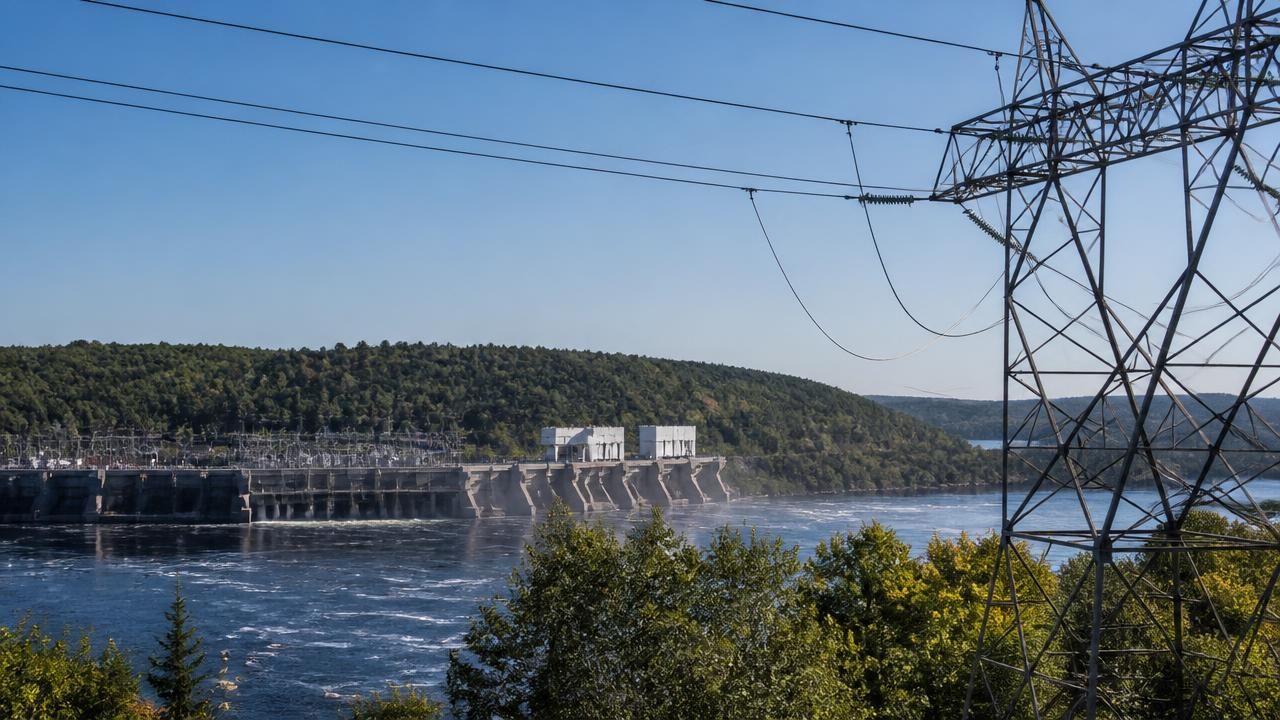
WBUR's framing puts the Maine power line at the heart of the story. That corridor is the physical link between Quebec's hydroelectric reservoirs and Massachusetts customers. If the line is interrupted, the contract becomes a paper promise rather than a flow of electrons. The legal battle therefore extends beyond a single winter billing cycle. It tests how much delivery risk can be shifted across a transmission line that crosses state boundaries and an international border.
For Massachusetts, the stakes include its clean-energy goals and its backup power costs. The state has sought to diversify its supply with Canadian hydro, but that strategy depends on infrastructure that can be delayed, challenged, or curtailed. For Hydro-Québec, the stakes include its reputation as a reliable exporter and its ability to manage domestic needs while honoring US contracts.
Bloomberg's longer view: from exporter to possible importer
Bloomberg Markets' report adds a strategic backdrop that helps explain why Hydro-Québec may be less flexible than its customers expected. The utility is extending its investment plan by six years, to 2041, and anticipates potentially being a net importer of electricity until then. That does not mean Hydro-Québec will stop exporting altogether. It means the balance between its own demand, its generating capacity, and its export commitments may tighten.
The forecast is notable for a utility that has built its identity on surplus hydropower. A net-importer status, even if temporary, would mark a shift in the energy politics of Quebec and New England. It would also give Hydro-Québec a stronger incentive to defend its contract terms and to argue that interruptions outside its control should not become its financial liability.
How the outlets frame the same fight
The sources approach the story from different vantage points, and together they show how a single commercial dispute can look like three different problems. Bloomberg focuses on capital planning and the shifting supply balance: a C$200 billion investment plan stretched to 2041 and the possibility of net imports. Yahoo Finance and MSN focus on the litigation: mutual lawsuits, missing hydropower, winter power cuts, and a $40 million claim. WBUR focuses on infrastructure: a Maine power line, interruptions, and the legal battle that followed.
Those framings are not competing versions so much as layers of the same risk. The legal fight is the visible symptom. The Maine interruptions are the operational trigger. The investment plan and import forecast are the underlying pressure. Together they show how cross-border renewable-energy contracts can be undone by transmission constraints, regulatory delays, and the shifting needs of the seller.
What happens next
The immediate question is how the court or arbitration process allocates the $40 million and whether the ruling clarifies responsibility for future interruptions. A decision could set a precedent for other cross-border power contracts in the Northeast, which increasingly rely on hydropower imports to meet climate targets. It could also affect the willingness of Massachusetts utilities to sign long-term deals with Hydro-Québec if delivery risk remains contested.
The broader question is whether Hydro-Québec can remain the reliable exporter that New England has counted on while it stretches its investment timeline and manages the possibility of net imports. The utility's US contracts were built on the assumption of surplus power and dependable transmission. The legal fight with Massachusetts utilities is a reminder that neither assumption can be taken for granted.
- Who: Hydro-Québec, Massachusetts electric utilities, and the Maine transmission corridor.
- What: Dueling lawsuits over missed hydropower deliveries and a roughly $40 million dispute tied to winter power cuts.
- When: The dispute follows winter service interruptions; Hydro-Québec's investment plan now runs to 2041.
- Where: Quebec, Massachusetts, and Maine.
- Why: Contractual responsibility, transmission reliability, clean-energy goals, and Hydro-Québec's shifting supply balance.
- How: Through court claims, investment-plan changes, and a potential shift toward net electricity imports.