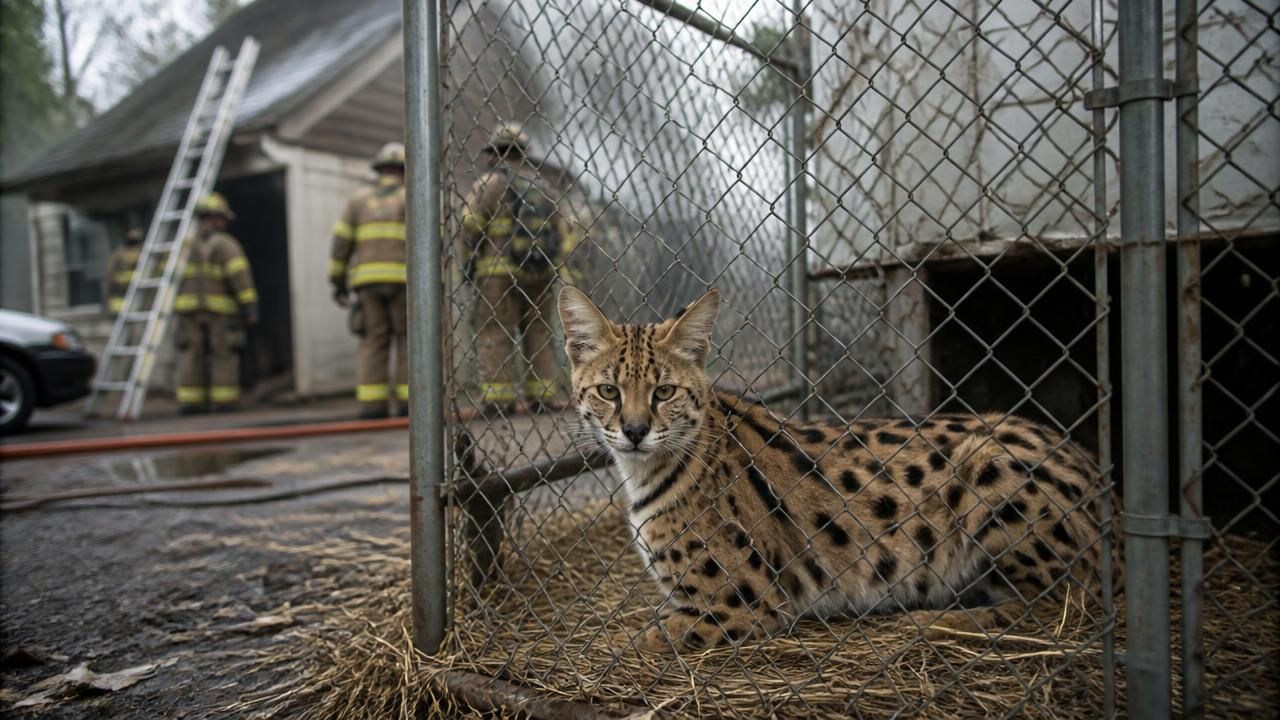
MARRERO, La. — A routine fire call in this suburban New Orleans community took an unexpected turn Tuesday when firefighters discovered an African serval, a wildcat native to sub-Saharan Africa, illegally enclosed in a backyard chain-link cage behind a home where a minor fire had been reported.
The serval was found in an enclosure resembling a cramped baseball batting cage, according to a spokesperson for the local animal protection services. Firefighters had been investigating the small blaze at the residence when they spotted the animal. The cat was subdued and transferred to an animal welfare facility, where officials are now seeking to place it in an appropriate environment.
A discovery amid the smoke
Firefighters from the Marrero area responded to a report of a minor house fire on Tuesday. While checking the property, they noticed the serval behind the residence. The animal was kept in a chain-link enclosure that officials described as inadequate for a wildcat of its size and needs. The enclosure resembled a cramped baseball batting cage, a spokesperson said.
“The African serval, illegally enclosed in the back yard, was subdued and transferred to an animal welfare facility,” officials said.
The fire itself was small, and no injuries to people were reported. But the discovery of the serval turned a routine call into an animal welfare investigation. The local animal protection services agency is now working to find a suitable home for the cat, likely a sanctuary or accredited facility that can meet its specialized needs.
What is an African serval?
The African serval, scientifically known as Leptailurus serval, is a medium-sized wildcat found across sub-Saharan Africa. It is not a domesticated animal, despite sometimes being kept as an exotic pet. Servals have long legs, large ears, and a spotted coat. They are adapted to grasslands and wetlands, where they hunt rodents, birds, reptiles, and insects.
Adults typically weigh between 20 and 40 pounds and stand about two feet tall at the shoulder. They are known for their remarkable jumping ability, capable of leaping up to nine feet vertically to catch birds in flight. In the wild, servals are solitary and territorial. They can live 10 to 20 years in captivity, but they require specialized diets, large enclosures, and veterinary care that most private owners cannot provide.
- Native range: Sub-Saharan Africa, from Senegal to South Africa.
- Size: 20–40 pounds; about 2 feet tall at the shoulder.
- Diet: Carnivorous; rodents, birds, reptiles, insects.
- Behavior: Solitary, territorial, and highly active.
- Legal status: Ownership is regulated or banned in many jurisdictions; permits are often required.
Legal and ethical questions
In Louisiana, as in many U.S. states, keeping an exotic animal like a serval without proper permits is illegal. Officials described the Marrero enclosure as illegal. The case raises familiar questions about the exotic pet trade, which animal welfare advocates say often leads to suffering, abandonment, and public safety risks.
Servals are sometimes bred and sold as pets, but they do not behave like domestic cats. They can spray, bite, and escape. They may also be declawed—a painful procedure that is widely condemned by veterinarians—to make them less destructive indoors. Many end up in sanctuaries after owners realize they cannot care for them.
“Wildcats belong in the wild or in accredited sanctuaries, not in backyard cages,” animal welfare advocates often say.
The owner of the Marrero property has not been publicly identified. Officials did not say whether charges will be filed, but the investigation is ongoing. The serval is now in the care of an animal welfare facility, where it will be evaluated before a permanent placement is arranged.
From fire scene to animal welfare facility
Subduing a serval is not a typical task for firefighters. The animal was likely frightened by the fire and the presence of strangers. According to officials, it was subdued and transferred to an animal welfare facility. The facility has not been named, but it is expected to assess the cat's health and behavior before deciding on next steps.
The process of placing a wildcat can take weeks or months. Accredited zoos and sanctuaries have limited space, and they must ensure that any new animal will not pose a risk to existing animals or staff. If the serval is healthy, it may eventually live in a large, naturalistic enclosure with others of its kind.
Broader implications
The incident in Marrero is a reminder of the patchwork of laws governing exotic pet ownership in the United States. Some states have strict bans, while others require permits that can be difficult to enforce. Federal law primarily addresses big cats—lions, tigers, and leopards—through the Big Cat Public Safety Act, but smaller wildcats like servals often fall through the cracks.
Animal welfare groups argue that incidents like this one underscore the need for stronger regulations and better public education. They also praise first responders who recognize when an animal is out of place and take appropriate action. In this case, firefighters not only extinguished a small fire but also helped remove a wildcat from an illegal and inadequate enclosure.
As for the serval, its future remains uncertain. But for now, it is safe, fed, and in the hands of professionals. The investigation into how it ended up in a Marrero backyard—and who is responsible—continues.