MINNEAPOLIS — A federal immigration officer charged in connection with a non-fatal shooting in north Minneapolis during the immigration enforcement operation known as Operation Metro Surge has been booked into a Minnesota jail and appeared before a state judge, capping a week of legal maneuvering that stretched from Texas to Minnesota.
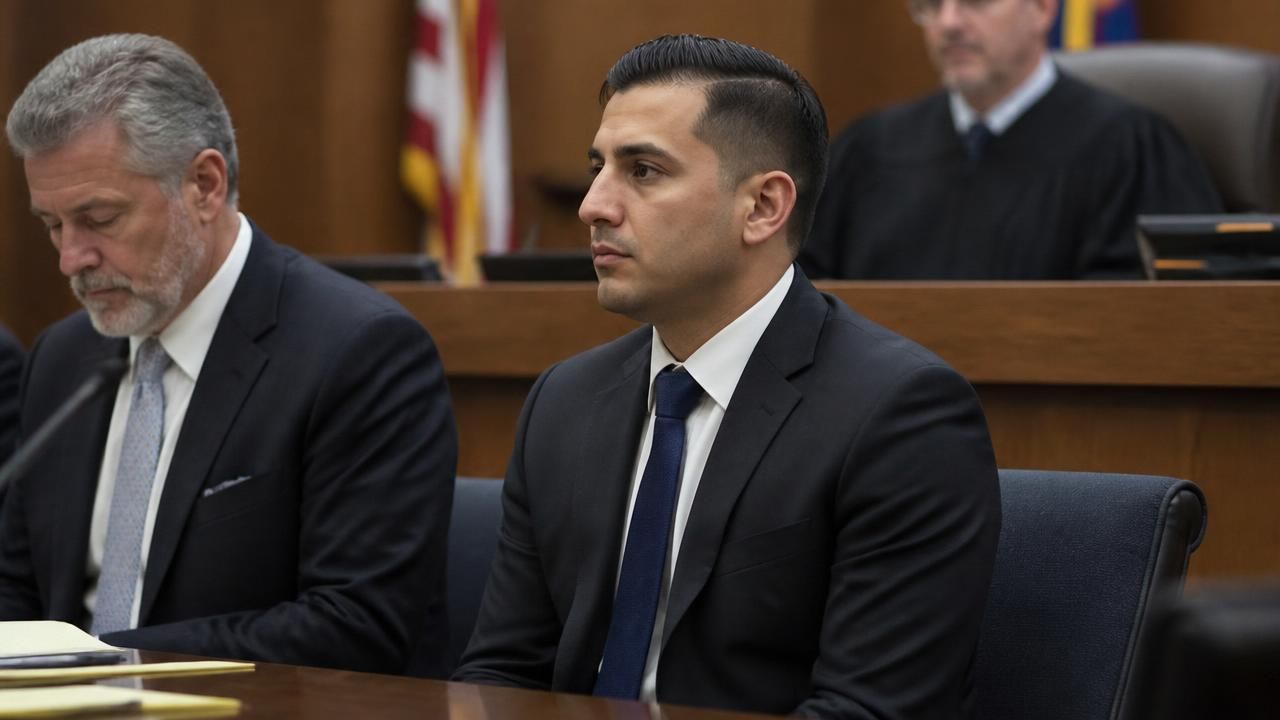
Christian Castro, an officer with U.S. Immigration and Customs Enforcement, made his first court appearance since being taken into local custody, according to NPR News. The hearing followed his release from a Texas jail and his subsequent arrest by Minnesota authorities, who had spent days trying to secure his transfer.
A Case That Pitted Two States Against Each Other
The procedural fight drew national attention because it turned on an unusual question: which state gets to hold a federal officer accused of a crime in another jurisdiction?
Minnesota prosecutors charged Castro over the shooting of a Venezuelan immigrant in Minneapolis — a non-fatal incident that occurred amid the immigration enforcement surge in the state. Castro was also charged federally with lying to investigators about the episode, according to CBS News, which first reported that he was in federal custody on those charges. Separate accounts describe the federal allegation as a false-statement charge carrying significant legal exposure on its own.
After Castro was taken into custody, a legal dispute erupted over whether he would be extradited to Minnesota. A federal judge declined to intervene in the matter, siding with Texas over Minnesota and effectively allowing Castro to be released from a Texas jail rather than forced north.
Reuters reported that the federal judge "refuses to force extradition of jailed ICE agent from Texas to Minnesota," a ruling that cleared the way for his release from custody in Texas even as Minnesota's warrant remained outstanding.
CNN characterized the same decision as a federal judge declining "to intervene in Minnesota extradition fight over ICE agent being detained in Texas." The New York Times framed it more bluntly: "Judge Sides With Texas Over Minnesota on Extradition of ICE Agent."
From Texas Jail to Minnesota Courtroom
The rulings did not end the case. UPI reported that the ICE agent charged in the Minnesota shooting was released from a Texas jail; Reuters described the release as occurring "in defiance of Minnesota extradition request." Not long afterward, Minnesota authorities arrested Castro themselves.
Border-state procedural battles aside, the practical result by midweek was that Castro sat in a Minnesota jail — booked Wednesday, per NPR — and stood before a state judge on state charges. The Mercury News reported that bail was set for the ICE officer accused of lying and assault in the non-fatal Minneapolis shooting, while noting that the officer "charged in non-fatal shooting" had been "arrested by MN authorities."
Inforum, a North Dakota outlet with regional reach into Minnesota, summarized the posture simply: the "ICE agent charged in non-fatal Minnesota shooting to appear on state charges."
The Charges, Stacked Across Two Systems
Castro faces a dual-track prosecution — a rare configuration for a federal law enforcement officer.
- State charges: Filed in Minnesota in connection with the non-fatal shooting of a Venezuelan immigrant during the enforcement surge, and described in reports as assault-related.
- Federal charges: Lying to investigators, according to CBS News, which cited a source. MSN and other aggregators carried the same headline: an "ICE officer charged with lying about shooting turns himself in."
The sequence of custody — arrest, jailing in Texas, a federal refusal to compel extradition, release, re-arrest in Minnesota — reflects how unusual it is to prosecute a federal immigration officer in state court over on-duty conduct. Federal officers frequently argue that their actions are shielded by federal authority, and extradition between states involving federal employees is a legally unsettled area.
Why It Matters Beyond One Case
The shooting occurred during an immigration enforcement operation in Minnesota that has drawn intense scrutiny, litigation, and protests. The case is now a test of whether local and state prosecutors can hold federal enforcement personnel accountable — and of whether states seeking custody of federal officers can overcome jurisdictional barriers erected in another state.
The coverage split along familiar lines. Wire services (Reuters, UPI) focused on the procedural rulings and the resulting custody outcome. Broadcast and network outlets (NPR, CBS, CNN) emphasized the courtroom appearance and the federal deception charges. Aggregators and tabloids (MSN, New York Post) foregrounded the most dramatic framing — an officer in custody, then freed, then arrested again — compressing nuance about which jurisdiction was acting at any given moment.
Yahoo News, which also covered the arrest in Minnesota, carried the headline that Castro was "charged with lying about north Minneapolis shooting" and "arrested in Minnesota," reinforcing the local angle.
What Comes Next
Court records indicate further state proceedings are expected in Minnesota, where Castro now faces a judge on the state charges; his federal case on the lying-to-investigators allegation proceeds separately. It remains unclear how the two prosecutions will be sequenced, or whether defense attorneys will again contest jurisdiction.
For now, the case has done something rare: it has moved a federal immigration officer from a Texas cell to a Minnesota docket, over the objection of the state that first held him.