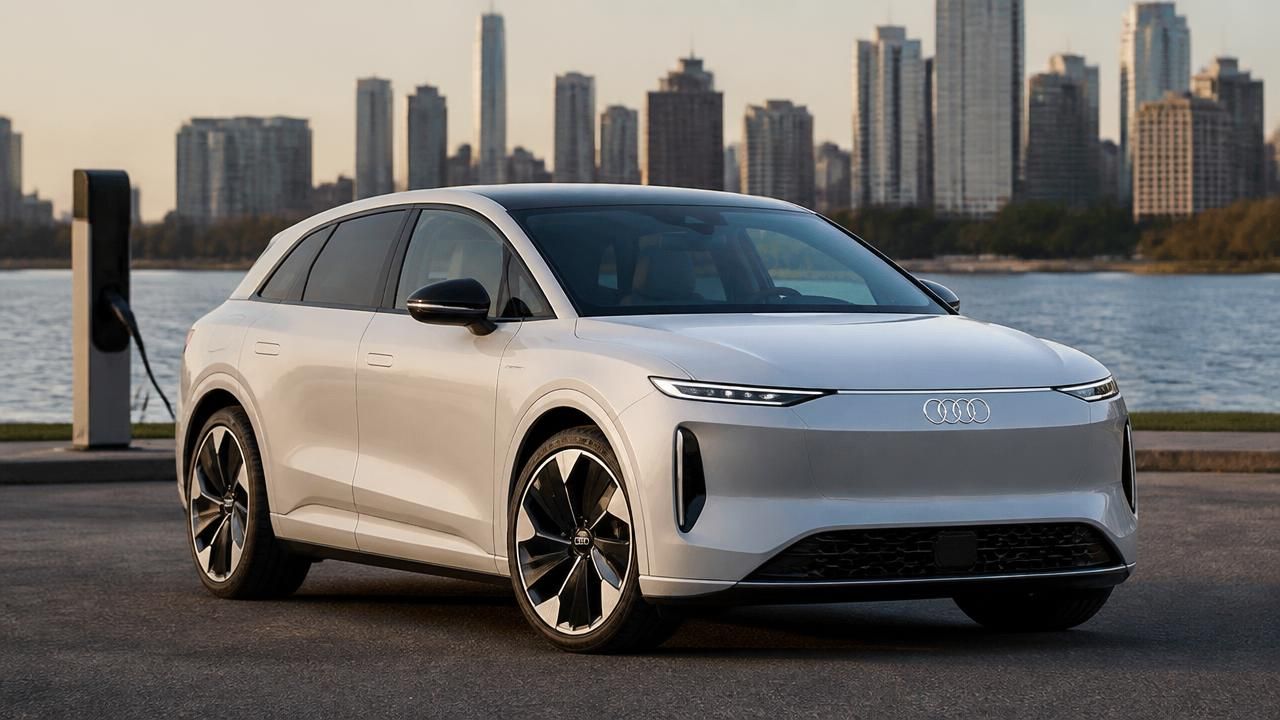
In an era where electric vehicles often force buyers to choose between affordability and efficiency, Audi has delivered a rare two-in-one. The German marque took the wraps off the new A2 E-Tron — a compact electric hatchback/crossover that revives one of its most underappreciated nameplates. Starting at £32,200 (about $45,000), the A2 E-Tron is not just Audi’s most affordable EV; it is also, by the company’s own measurement, the most efficient car it has ever built.
A name ahead of its time
The original Audi A2, produced from 1999 to 2005, was a technical tour de force that combined an aluminum spaceframe body with cutting-edge aerodynamics. It famously achieved fuel consumption figures that still look impressive today. Carscoops called it a “genius idea that was 25 years too early,” noting that its lightweight construction and slippery shape were too expensive for buyers of that era. The 2025 A2 E-Tron takes that ethos into the zero-emission era, with an ultra-low drag coefficient and a suite of drivetrain options.
Audi’s engineers have been coy about exact aerodynamic figures, but The Verge noted the car “absolutely impresses with an ultra low drag coefficient.” That efficiency translates into range that, in top configurations, reaches up to an estimated 400 miles on a single charge — a figure typically reserved for far more expensive luxury EVs. InsideEVs called the A2 E-Tron Audi’s cheapest EV and its most efficient machine ever, a combination that could prove potent in the compact segment.
More efficient than Lucid, Tesla or Hyundai?
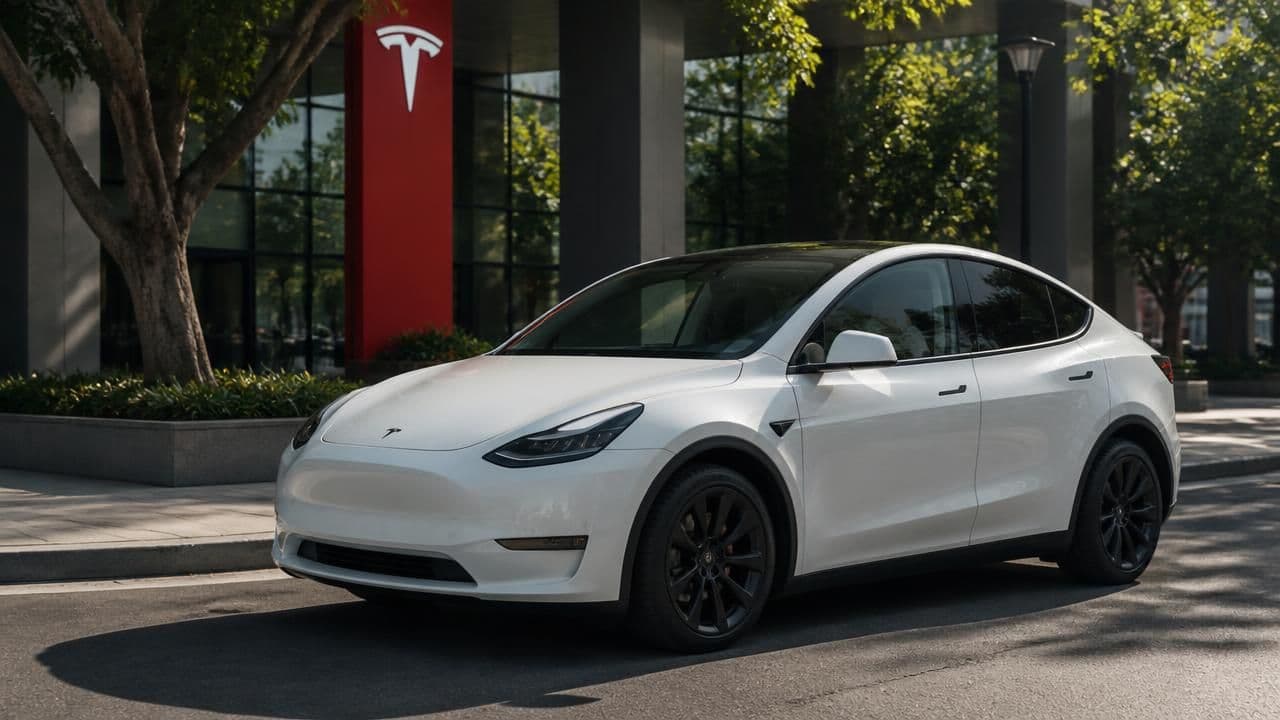
Perhaps the boldest claim comes from Autoblog, which wrote that Audi “built an EV more efficient than a Lucid, Tesla or Hyundai.” While exact efficiency ratings have yet to be finalized for all markets, the A2 E-Tron’s powertrain and battery options are engineered for minimal waste. Depending on the version chosen, drivers can expect energy consumption figures in the range of 10 to 12 kWh per 100 kilometers, putting it ahead of popular competitors like the Tesla Model Y, Hyundai Ioniq 5 and even the hyper-efficient Lucid Air.
The efficiency isn’t just about the environment — it also reduces charging stops and operating costs. For many buyers, the combination of a £32k sticker price and a real-world 400-mile range eliminates the usual compromises. As The Verge put it, “affordable and energy efficient is truly a rare breed,” and the A2 E-Tron appears to split the difference.
“Affordable and energy efficient is truly a rare breed.” — The Verge
Power your house with your car
Another key feature that emerged from the reveal is bidirectional charging, or vehicle-to-grid (V2G) capability. Phandroid highlighted that the A2 E-Tron “can even power your house.” This allows owners to use the car’s battery as a home backup or to store cheap solar energy during the day and discharge it during peak pricing. The feature aligns with Audi’s push toward energy ecosystems, much like the new Porsche and VW models.
Journalists from several outlets, including MSN, have already had a chance to sit inside the A2 E-Tron, suggesting the production-intent interior is more than a concept. Early impressions emphasize a clean, futuristic cabin that retains Audi’s usual build quality.
- Price: from £32,200 (approx. $45,000)
- Range: up to ~400 miles (WLTP target)
- Efficiency: Audi’s most efficient production car ever
- Extras: V2G / bidirectional charging capable
A regulatory quirk 12cm too long
Not everything is smooth sailing, however. The Next Web pointed out an irony: Audi built the A2 E-Tron in Germany, but the car is 12cm too long for rules meant to help efficient EVs. The exact regulatory framework varies by country, but in this case it likely refers to German or European incentives that cap the dimensions for an enhanced subsidy or tax break. Missing the cutoff by just 12 centimeters means buyers of the most efficient version might not qualify for the full “green” benefits that the car’s efficiency would otherwise earn.
This regulatory mismatch is emblematic of how legacy automakers are often forced to design cars around rulebooks rather than physics or customer needs. The Next Web’s coverage highlighted how a vehicle that should be celebrated by clean-vehicle regulators is rendered ineligible based on a seemingly arbitrary length limit. Audi has not yet commented on whether it will introduce a shorter variant or petition for a rule change.
Positioning and market impact
The A2 E-Tron enters one of the most competitive corners of the EV market. Compact electric crossovers and hatchbacks from Tesla, Hyundai, Kia, Volvo and a raft of Chinese automakers are all fighting for the same £30k-£45k price band. Audi’s entry brings a premium badge, iconic design, and efficiency leadership to the fight.
But the German automaker is also betting that the A2’s retro-futuristic nameplate holds meaning. The original A2 was a range of niche appeal; in the 2020s, it occupies a more central role as a volume model for Audi. The business rationale is clear: deliver an EV that undercuts the brand’s other models on price while overdelivering on efficiency and technology, creating a reason for ecosystem-minded customers to switch.
What experts are saying
The verdict from the press so far is overwhelmingly positive, though tempered by regulatory concerns. Carscoops described the resurrection as a “genius idea” finally arriving at the right time. InsideEVs called it a benchmark for the brand. The Verge says the A2 is a rare combination that “splits the difference” between range and affordability. And Autoblog’s headline suggests it has leapfrogged rivals that until now have defined efficiency.
There are still unknowns: final EPA range estimates, real-world winter performance, and whether the V2G feature will be active at launch. But the A2 E-Tron already stands as proof that electrification can bring back bold ideas from the past and make them work for the future.