Tesla has spent years promising its owners a passive-income future: park your car, tap a button, and let it earn money as a robotaxi while you sleep. This week, on the company's third-quarter earnings call, that promise finally acquired something it had long lacked — a date. According to Ashok Elluswamy, Tesla's vice president for autonomous driving, owners will be able to add their own vehicles to the company's robotaxi fleet in the second quarter of 2027.
The disclosure, first reported by The Verge, marks the most concrete timeline Tesla has offered for the consumer-facing half of its autonomy strategy. It also lands amid a broader push to commercialize the Cybercab, the steering-wheel-free, two-seat vehicle Tesla has positioned as the centerpiece of its robotaxi ambitions — a vehicle that has been appearing at events from Austin to Paris while the company's messaging oscillates between bold prediction and hedged delivery.
The promise, finally with a date
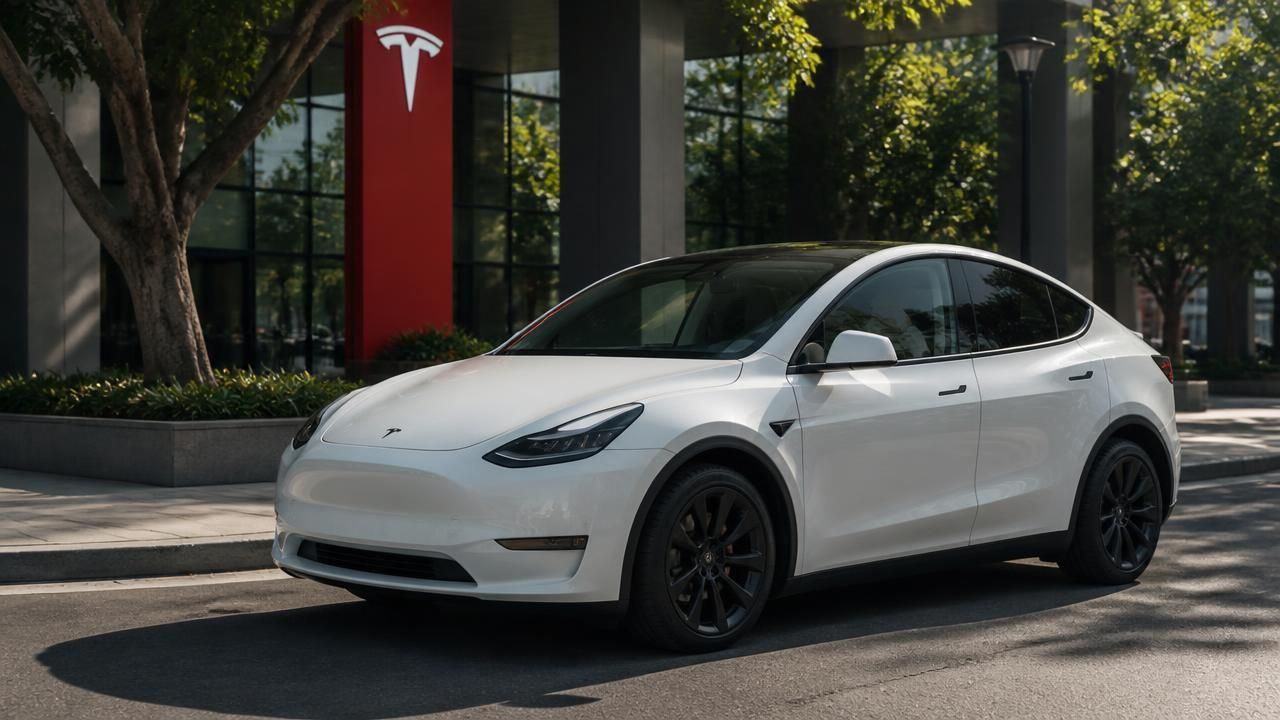
Elluswamy framed the owner fleet as a natural extension of Tesla's existing software roadmap rather than a separate product line. The same stack that powers the Cybercab, he suggested, will run on customer-owned Model Ys.
"Like I mentioned earlier, the software for Cybercabs and Model Y is the same. And pretty soon we'll be able to release the same software as part of the V15 release," Elluswamy said on the call.
That claim is central to Tesla's pitch. By tying the consumer fleet to the Cybercab's software, Tesla is arguing that the hard technical problem — unsupervised driving — will be solved once, then scaled across millions of vehicles already on the road. It is an attractive narrative for investors, and a familiar one for longtime Musk watchers: the company has repeatedly set, and missed, autonomy deadlines stretching back nearly a decade.
Selling the Cybercab itself
Parallel to the owner-fleet talk, reports indicate Tesla intends to begin selling Cybercabs by the end of the year, with a business model that appears to include selling entire fleets rather than only single vehicles. Coverage of the Cybercab's rollout has ranged from enthusiastic to openly doubtful. Forbes, reviewing the vehicle's prospects, called it "much to like as a robotaxi for 2031" — a framing that quietly concedes the gap between Tesla's marketing calendar and the timeline most industry analysts consider realistic.
Tesla has also been working the hardware into public view. The Cybercab made a surprise appearance at the Paris Motor Show, signaling that the company sees the vehicle as an international product rather than a U.S.-only experiment. Earlier, Tesla unveiled the robotaxi at an invitation-only event in Austin, the company's adopted hometown and the base of its Texas operations — a venue choice that emphasized how closely the robotaxi program is tied to Tesla's political and regulatory relationships in the state.
The service-loaner twist
One of the more unusual ideas to surface is that Tesla could offer customers a robotaxi as a substitute when their own vehicle is in for service — replacing the traditional service loaner with an autonomous ride from the company's own fleet. InsideEVs reported on the possibility, which would give Tesla a captive, low-friction way to accumulate real-world miles and rider feedback without needing to win over the general public first. It is, in effect, a soft launch disguised as customer service.
Critics: the math doesn't add up
Not everyone is convinced. A recurring theme in coverage is that the economics of the Cybercab and the owner-fleet model remain unproven. Critics argue that Tesla's robotaxi math — the implied per-mile costs, utilization rates, and revenue splits offered to owners — depends on assumptions about vehicle cost, maintenance, insurance, and regulatory approval that have not been demonstrated at scale.
The skepticism extends specifically to Tesla's pitch to consumers. The Street's assessment was blunt: the robotaxi payday Tesla promised owners "isn't coming" on the schedule and in the form buyers expected. For every owner imagining a car that pays for itself, there is an analyst noting that Tesla has yet to show a commercially operating, fully unsupervised fleet of meaningful size — the prerequisite for any of the downstream promises to hold.
Uber and Lyft on notice
If Tesla delivers, the implications extend well beyond its own balance sheet. Coverage has framed the Cybercab as a direct challenge to ride-hailing incumbents, putting Uber and Lyft on notice. Tesla's argument is structural: if a vehicle can drive itself, the network that dispatches it does not need to pay a human driver, and the company that owns both the car and the software captures a much larger slice of each fare.
Incumbents have responded by partnering rather than competing head-on, betting that demand aggregation and brand loyalty will matter even in a driverless world. But the arrival of a Tesla-operated fleet — particularly one built from customer-owned cars — would compress the cost structure of ride-hailing in ways that are hard for a marketplace model to match.
What to watch
- Q2 2027: The stated deadline for owners to add vehicles to the robotaxi network. Watch for whether Tesla converts this into a formal program with published terms.
- V15 software: The release Elluswamy tied to consumer-fleet readiness.
- Cybercab sales: Reports that Tesla will start selling the vehicle by year's end — and whether those are individual sales or fleet packages.
- Regulation: Unsupervised deployment requires state-by-state approval; Texas has been friendlier than most.
- The payday question: Any published revenue model for owners, and how Tesla splits fares, insurance, and charging costs.
The through-line across coverage is a company asking the market to believe two things at once: that unsupervised autonomy is imminent, and that the economics will work out once it arrives. Tesla has now put a date on the first claim. The second remains, for now, a projection — and the gap between the two is where the next two years of this story will be fought.