Community college students across the United States are getting new opportunities to turn their education into aerospace careers. NASA has revamped its Community College Aerospace Scholars (NCAS) student challenge, while separately investing $10.5 million in seven state-based aerospace workforce hubs. Together, these initiatives aim to broaden the pipeline of skilled professionals entering the space industry, and they are already making waves at institutions like Hartnell College in California.
What Is the NCAS Student Challenge?
The updated NCAS student challenge invites community college students to learn about NASA's missions, engage directly with agency experts, and explore aerospace careers. Participants compete for monetary awards while gaining a realistic view of what it means to work in science, engineering, and technology fields. The application period is open now, with a registration deadline of Monday, Sept. 28.
“What makes this opportunity unique is that it’s one of few that is specifically for community college students,” said Alicia Baturoni Cortez, project manager for NASA’s Minority University Research and Education Project, which administers NCAS. “The NCAS student challenge is designed to meet their needs and broaden their career awareness so they can either go right into the workforce or expand their goals to include a four-year degree in STEM.”
For NASA interns Kim Alexander and Ashley Rodriguez, NCAS became an unexpected launchpad. Both started at community college, and the program helped them transition into internships at NASA’s Glenn Research Center in Cleveland — a testament to the challenge’s ability to shift trajectories.
$10.5 Million for Aerospace Workforce Hubs
In a parallel move, NASA has invested $10.5 million in seven state-based aerospace workforce hubs. These hubs are designed to link students more directly to skilled aerospace careers, creating regional networks that align education with industry needs. The investment reflects NASA’s broader commitment to cultivating a diverse and ready workforce, particularly in areas where community colleges play a vital role.
The hubs are expected to partner with local educational institutions, industry stakeholders, and state governments to create clear pathways from two-year college programs into aerospace roles. While the NCAS challenge focuses on student engagement and exploration, the workforce hubs build the long-term infrastructure needed to sustain that talent flow.
Hartnell College Hosts NASA Engineering Challenges
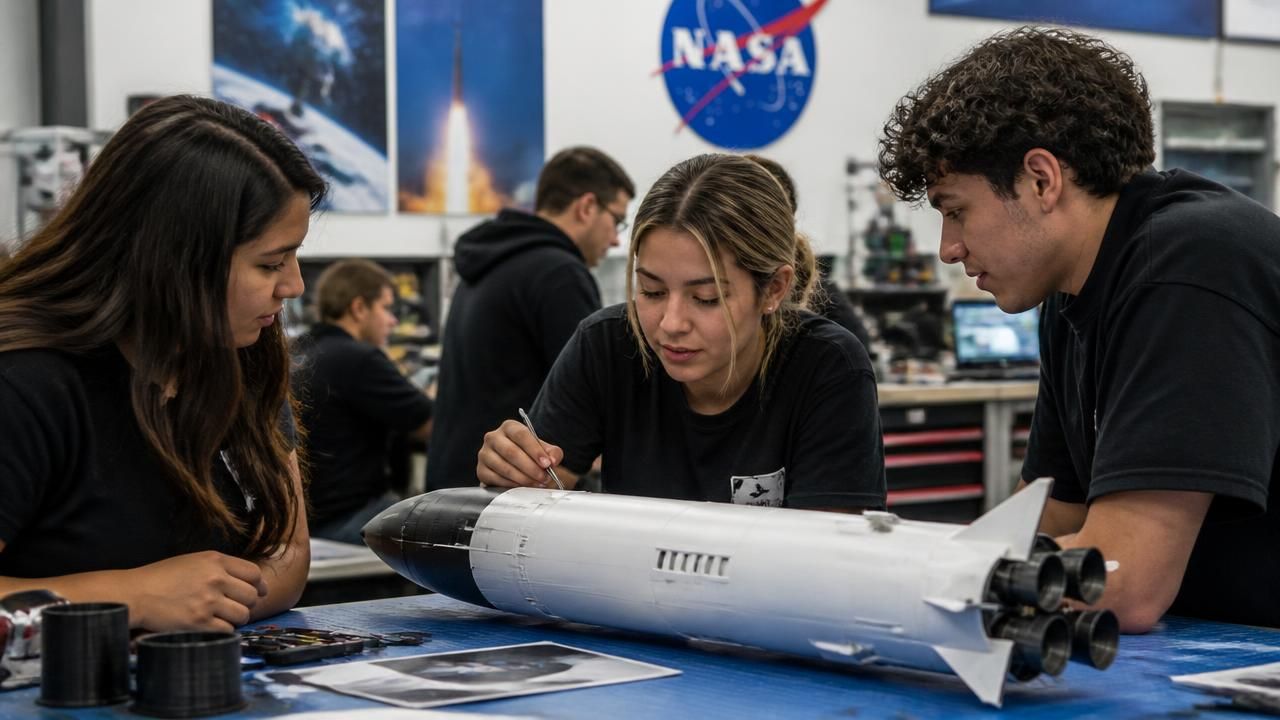
On the ground, these national efforts translate into tangible experiences for students. Hartnell College, a community college in California’s Salinas Valley, recently hosted NASA engineering challenges that gave local students hands-on exposure to real aerospace problems. Such events are increasingly common as NASA and its partners work to reach students wherever they are, especially those who might not otherwise see themselves in the space sector.
The Hartnell event is emblematic of how the NCAS revamp encourages local institutions to engage with NASA’s mission. Students get to collaborate on projects, interact with NASA engineers, and see how their classroom learning applies to the challenges of space exploration.
The Role of Educators and Mentors
Programs like NCAS do not operate in a vacuum. They thrive when faculty members guide and mentor students along the way. At the College of Charleston, for example, a geology professor’s commitment to students and science has been celebrated as “rock solid” — an illustration of how dedicated educators can inspire the next generation of STEM professionals. While that professor’s work is not directly tied to NASA, it underscores a key principle: students often need a personal spark to pursue ambitious careers in space and science.
NASA’s challenge and hub investments are designed to supplement that mentorship. By offering structured opportunities to interact with experts and compete for recognition, the agency gives community college students a supportive framework that encourages them to aim higher than they might have thought possible.
Why This Matters
The initiative comes at a critical time. The aerospace sector faces growing demand for skilled workers, yet traditional recruitment pipelines often overlook community college students. NCAS and the workforce hubs directly address that gap by signaling that two-year colleges are a valued entry point into high-tech careers.
For students, the benefits are clear:
- Learn about NASA missions and the variety of roles available in aerospace.
- Engage directly with NASA experts and potential mentors.
- Compete for monetary awards that can help fund further education.
- Gain skills and confidence to enter the workforce or transfer to a four-year STEM program.
Educators and community college leaders view these developments as a win-win. Students gain access to opportunities once reserved for those at four-year universities, while NASA gains a more diverse and talented workforce pool.
Perspectives From the Field
Coverage of NASA’s efforts has varied by outlet. NASA’s own announcement focuses on the inspirational stories of interns and the practical details of the NCAS challenge. EdTech Innovation Hub highlights the scale of the investment — $10.5 million — interpreting it as a strategic workforce development move. Local news from Hartnell College emphasizes the tangible impact on students in a specific community. And college news outlets, such as the College of Charleston’s feature on its geology professor, remind readers that the human element of teaching remains central to any successful STEM pathway.
Taken together, these perspectives show a coordinated effort: federal investment, local implementation, and dedicated educators working to ensure that no student is left behind in the journey to aerospace careers.
Looking Ahead
With the Sept. 28 deadline fast approaching, community college students eager to explore aerospace careers are encouraged to apply. Meanwhile, the seven new workforce hubs will continue to take shape, linking regional educational ecosystems to NASA’s long-term needs.
As NASA itself puts it, the NCAS challenge is “a launch pad for new possibilities.” With $10.5 million backing the effort and community colleges across the country opening their doors to NASA challenges, that metaphor is becoming reality for a new generation of scientists, engineers, and explorers.