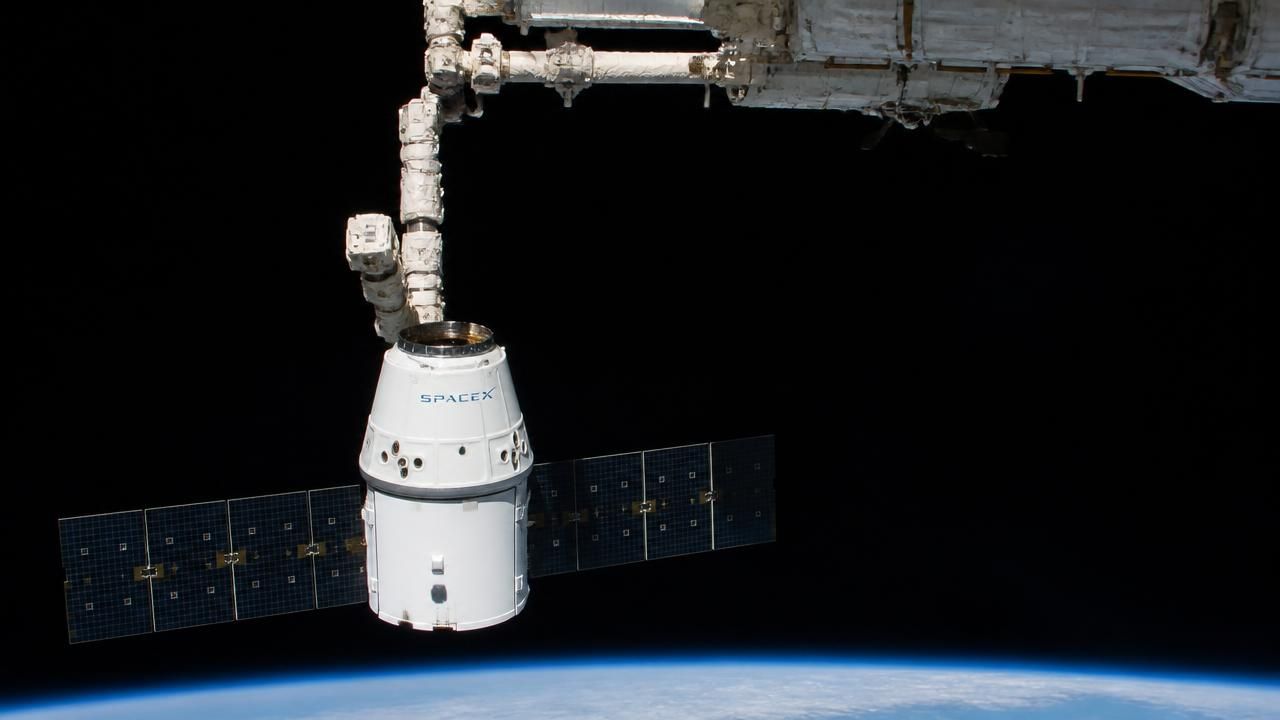
NASA's decade-long effort to re-power the International Space Station has reached its final chapter, after a SpaceX Dragon cargo capsule arrived at the orbiting laboratory carrying the last two of eight next-generation solar arrays, along with roughly 6,300 pounds of science experiments, equipment and fresh food for the station's crew.
The mission, designated SpaceX CRS-35, is the closing delivery in a modernization program that has progressively replaced the station's aging power hardware — a project that NASA frames as an engineering milestone, that contractor Redwire casts as a commercial triumph, and that the wider space press has covered through the twin lenses of a launch spectacle and a pair of upcoming spacewalks.
A Final Delivery to Orbit
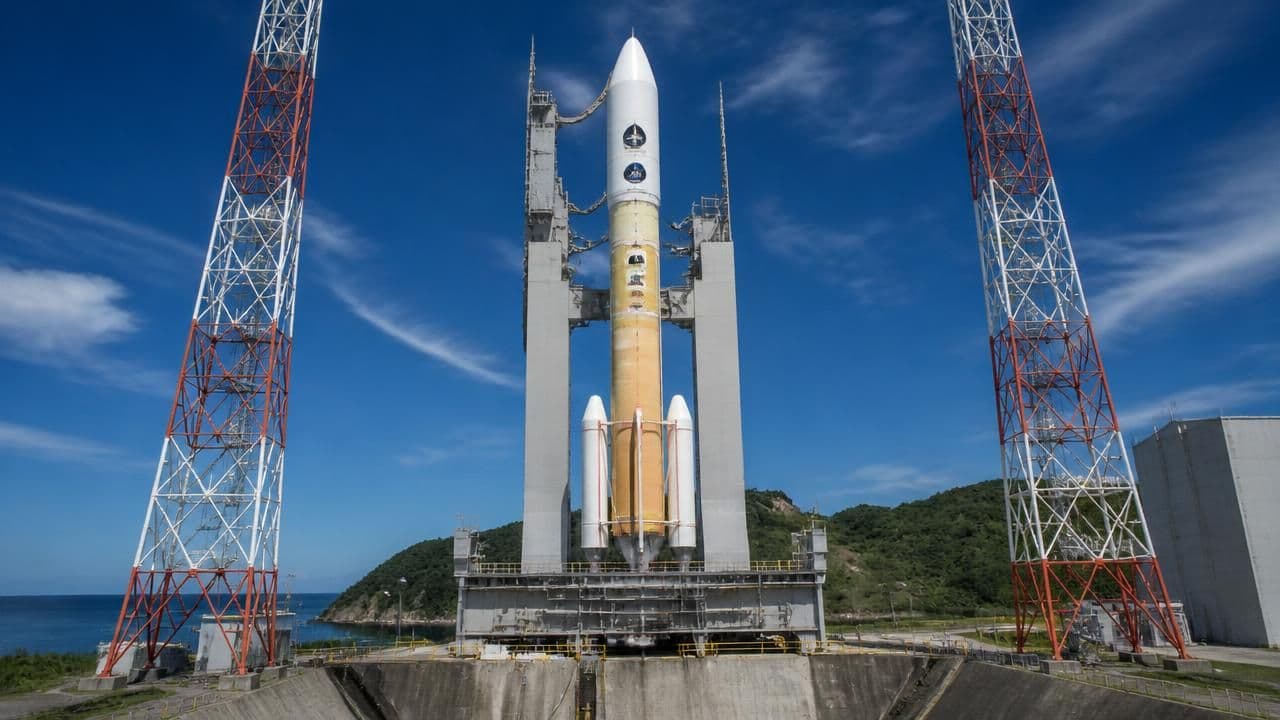
The Dragon spacecraft lifted off from a Florida launch pad atop a Falcon 9 rocket, carrying its cargo in a pressurized trunk. Among the payloads are the final two International Space Station Roll Out Solar Arrays, or IROSAs — hardware designed, manufactured and tested by Redwire under a contract with Boeing.
With this delivery, all eight IROSA units have now been launched to the station. Six are already installed and operating, and the last pair will be fitted during two planned spacewalks, formally completing what Redwire described in its own announcement as a historic power modernization effort.
How the Arrays Work
The IROSA design is a sharp departure from the station's original solar wings, which have been in orbit for more than two decades and have degraded steadily under the bombardment of radiation, micrometeoroids and thermal cycling.
- Compact at launch: Each array launches rolled into a cylinder and unfurls in orbit, a NASA description likens the process to opening a yoga mat.
- Lightweight and efficient: The rollout format reduces mass and volume at launch compared with rigid panel designs.
- Self-deploying: An autonomous deployment system minimizes the risk of a manual or crew-assisted unfurling.
- Small but powerful: The new arrays are about half the size of the station's legacy arrays, yet each can produce roughly 28 kilowatts of additional power.
- Additive, not replacement: The new wings are mounted at the base of the original arrays, which continue to operate alongside them.
The technology was not rushed into service. In 2017, a prototype rollout array was tested in a technology demonstration aboard the station, validating the concept before NASA committed to outfitting the full outpost.
Two Spacewalks to Finish the Job
Installation of the final pair will require two extravehicular excursions by station crew members, who will maneuver the rolled arrays into position on the station's truss and oversee their deployment. The spacewalks are the operational climax of the program: once complete, the station's power generation and distribution capability will have been substantially augmented, giving the lab more headroom for its life support systems, daily operations and the hundreds of research investigations conducted on board.
Solar power supports the station's life support systems, daily activities, and hundreds of research investigations that improve life on Earth and prepare humans for deep space exploration. — NASA
More Than Solar Panels
The CRS-35 manifest is not solely about power hardware. The Dragon is also delivering fresh food, science gear and equipment — a reminder that the station is, above all, a working laboratory. NASA has consistently stressed that upgraded power translates directly into more experiment capacity: more hours of instrument operation, more sample processing, and more margin for the commercial and academic research that now fills much of the crew's schedule.
Spaceflight Now's coverage emphasized the scale of the delivery, highlighting the 6,300-pound cargo total alongside the solar arrays, while aggregator headlines circulating on MSN focused on the human and operational angles — the two spacewalks and the fresh food shipment — illustrating how a single mission can be framed as an engineering story, a logistics story or a human-spaceflight story depending on the audience.
Why It Matters
The stakes extend beyond the station's remaining operational years. The ISS sits roughly 250 miles above Earth, far above the atmospheric filtering that protects terrestrial solar installations, and its power architecture must survive a hostile environment with no possibility of repair beyond what astronauts can do by hand.
NASA has repeatedly described the IROSA upgrade as a bridge to deep space. The same lightweight, self-deploying architecture is being adapted for use on smaller spacecraft and on the lunar Gateway, where mass and volume budgets are even tighter than they are on the station. Redwire, meanwhile, has positioned its rollout array technology as a commercial product line, signaling that a government-funded station upgrade is also a proof point for a broader market in compact deployable solar power.
Differing Perspectives, One Story
The eight source accounts of this milestone diverge in revealing ways. NASA's own blog and the electronics trade press frame it as a capability story: a technical description of how the arrays work and what they add. Spaceflight Now treats it as a launch story, leading with the rocket, the cargo weight and the countdown. Redwire's announcement, distributed through financial channels, leans corporate — a completion of a historic modernization effort and a validation of its manufacturing pipeline. And the aggregator headlines zoom out entirely, foregrounding spacewalks, supplies and the routine rhythm of station life.
Beneath the framing differences, the facts converge: eight arrays launched, two installs remaining, and a station entering its final decade with more electrical power than at any point in its history — a quiet but consequential upgrade for a laboratory that has now hosted a continuous human presence for more than two decades.