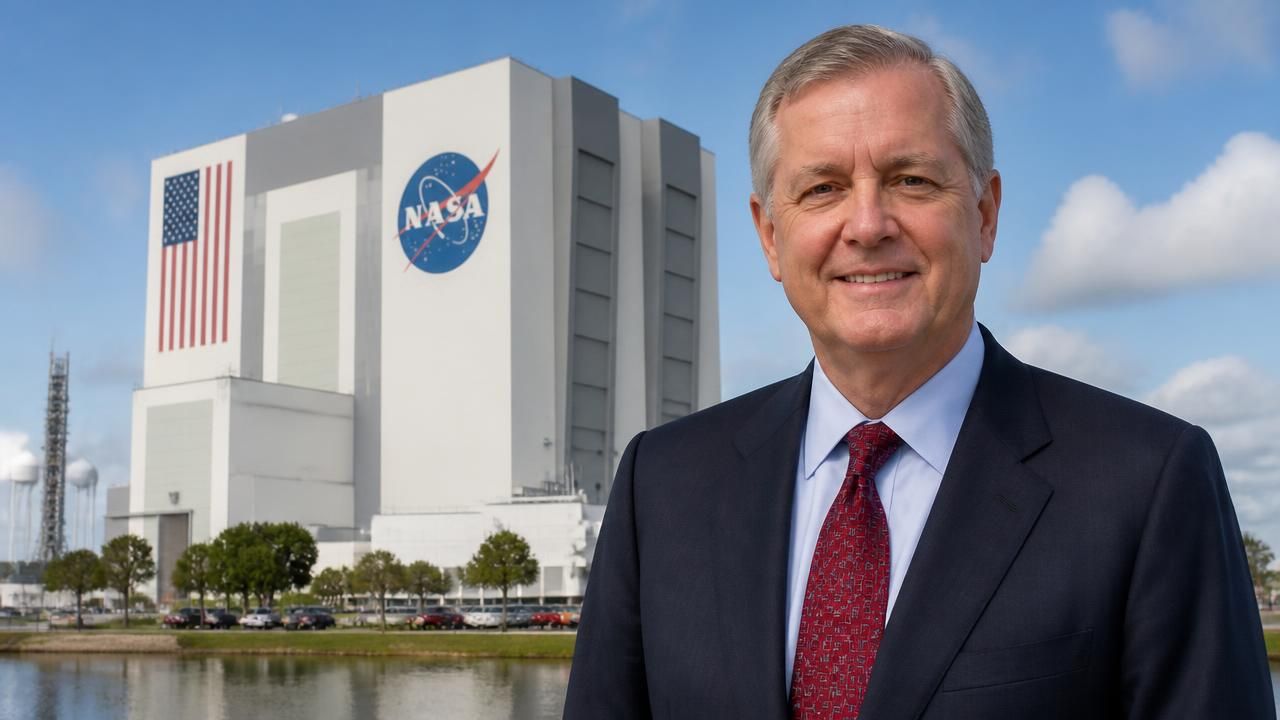
NASA has named Stephen Cash as the next director of its Marshall Space Flight Center in Huntsville, Alabama, effective Monday, Oct. 19, returning a four-decade agency veteran to the post he once held at the facility where his career began.
The appointment was announced by NASA Administrator Jared Isaacman, who framed the selection as a bet on institutional memory at a moment when the agency is juggling the Artemis lunar program, advanced propulsion research and nuclear power systems for deep-space exploration.
“Marshall contributions to NASA's missions are historic and it's no question why it's the Center of Excellence for propulsion,” Isaacman said. “Steve Cash is a Marshall legend, has spent his career around the hardware, the people and has been in the seat before making the decisions when human spaceflight is on the line.”
Isaacman added that as Marshall “continues its critical role in Artemis and takes on new challenges in advanced propulsion, nuclear power, and the systems that will carry us deeper into the solar system, Steve brings the experience, technical judgment, and mission focus needed to lead the center into that next chapter.”
A Return to Familiar Ground
Cash is described by the agency as both a veteran NASA engineer and an aerospace executive, a combination that gives him credibility on the technical shop floor as well as in programmatic and budget fights. More than 40 years after he first walked into Marshall, he inherits a workforce that numbers in the thousands and a portfolio spanning rocket propulsion, life support, science instruments and large-scale test infrastructure.
His prior stint in the director's seat — referenced by Isaacman as having “been in the seat before” — means the transition is expected to be unusually smooth for a center that has cycled through leadership changes amid shifting Artemis schedules and budget pressures.
Why Marshall Matters
Marshall's identity was forged in the Apollo era, when its engineers developed the Saturn V rocket that carried astronauts to the Moon. That legacy continued through the Space Shuttle's main engines and solid rocket boosters and into the present day, where the center manages the Space Launch System — the heavy-lift rocket at the heart of NASA's Artemis architecture.
The center's official nickname, the “Center of Excellence for propulsion,” reflects a mandate that now stretches beyond chemical rockets. Marshall has been tasked with maturing technologies for in-space nuclear thermal and nuclear electric propulsion, capabilities that NASA and its partners view as essential for shortening transit times to Mars and operating sustainably in cislunar space.
Analysts note that these are precisely the programs where a director's technical judgment and relationships with industry partners can determine whether ambitious concepts survive the transition from paper studies to hot-fire tests.
Workforce First
Amit Kshatriya, NASA associate administrator and chief engineer, underscored the people-centric expectations attached to the role — a recurring theme in internal discussions about how the agency retains scarce engineering talent.
“Leading a NASA center requires a commitment to its people and to the technical capabilities entrusted to them,” Kshatriya said. “Steve understands that the jewel of Marshall is its workforce and that engineering excellence is sustained by giving talented people the opportunity to design, build, test, and learn through han…”
That emphasis on hands-on development is central to Marshall's culture, where engineers routinely move between design desks, test stands and launch hardware. In an era when commercial launch providers compete for the same specialists, retaining that pipeline is as much a strategic priority as any single vehicle program.
A Leadership Transition
Cash succeeds — and in effect replaces — Rae Ann Meyer, who has led Marshall through an interim period. Isaacman publicly thanked her for “the leadership she has provided to Marshall during this transition and for her continued service to NASA,” signaling that she will remain within the agency rather than depart.
The handoff comes as NASA balances Artemis mission cadence against congressional funding levels, an environment in which center directors act as both technical leaders and advocates for their installations.
How the Story Was Reported
Coverage of the announcement has been consistent and largely procedural, as is typical for senior agency personnel moves. NASA's own release emphasized Cash's biography, Isaacman's endorsement and Kshatriya's framing of the leadership challenge. Aggregators including MSN carried headline-level reports on the same news, while international syndication outlets republished the agency's announcement under variations such as “NASA Names Stephen Cash Marshall Center Director,” mirroring the official language.
- Who: Stephen Cash, a NASA engineer and aerospace executive with more than 40 years of agency experience.
- What: Named director of NASA's Marshall Space Flight Center.
- When: Effective Monday, Oct. 19.
- Where: Marshall Space Flight Center, Huntsville, Alabama.
- Why: To steer Artemis propulsion work and emerging nuclear and advanced propulsion programs.
What Comes Next
Cash's to-do list is formidable: sustaining SLS production and testing, advancing nuclear propulsion concepts toward flight-relevant demonstrations, and maintaining the test facilities that make Marshall a national asset. Each carries schedule risk and political weight, and each depends on the workforce he has been asked to champion.
For observers of the space program, the appointment reads less as a dramatic pivot than as a deliberate continuity play — a signal that NASA wants proven hardware people in charge while it pushes further from Earth than it has in half a century.