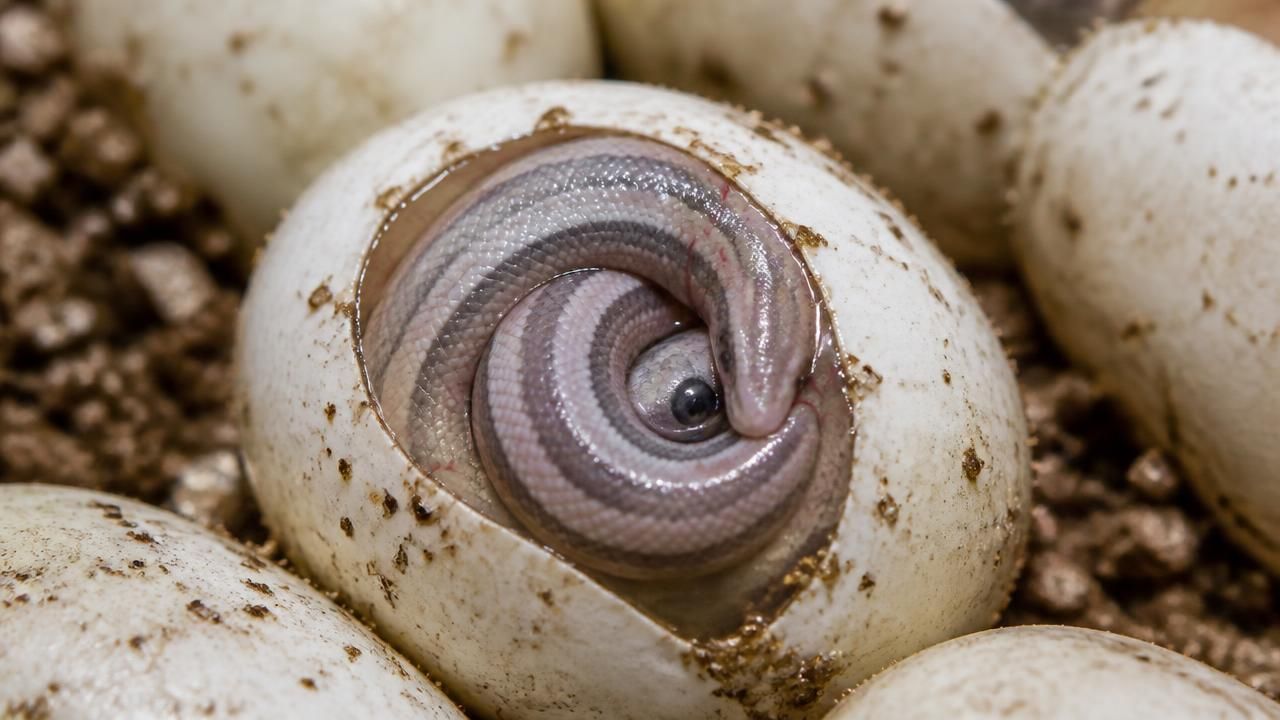
For centuries, the sight of a snake embryo coiled inside its egg has sparked wonder and curiosity. Why do these developing reptiles twist into such precise, uniform spirals? A new study, reported by Science Daily and UBC News, offers a compelling answer: the body grows faster than the gut, creating a tether that forces the lengthening embryo to buckle and twist into a distinctive right-handed spiral.
Researchers examined more than 900 snake embryos and used high-resolution CT scans to peer inside the eggs without disturbing the delicate tissues. What they found is a striking consistency: virtually every embryo coils in the same direction—a right-handed spiral. The findings, published by a team from the University of British Columbia, solve a long-standing biological mystery and shed light on the mechanics of embryonic development.
A Universal Right-Handed Coil
The spiral shape of a snake embryo is one of nature's most recognizable yet least understood patterns. Unlike mammals, where embryos float freely in the womb, snake embryos develop inside a confined egg with limited space. As the snake grows, it must fit its ever-lengthening body into a small, rigid container. The result is a tight, helical coil—but why always to the right?
The research team, led by scientists at UBC, discovered that the answer lies in the relative growth rates of different tissues. Early in development, the snake's body grows faster than its digestive tract. This differential growth creates a tether: the gut, lagging behind, pulls on the body like an anchor. As the body continues to elongate, that tension forces the embryo to buckle and twist, much like a rubber band when one end is held fixed.
“The embryo’s body outpaces its gut, and that mismatch creates the spiral,” explained the researchers in their report. “It’s a physical constraint, not a genetic instruction, that determines the coil’s direction.”
To confirm this, the team analyzed CT scans of embryos at various stages of development. They observed that the spiral begins at a specific point—where the gut attaches to the body—and propagates from there. The right-handed direction emerges naturally from the way the body buckles under tension, a phenomenon that can be replicated in simple physical models.
Studying Hundreds of Embryos
The study’s scale was unprecedented. By examining more than 900 embryos across multiple snake species, the researchers ensured their findings were not a quirk of a single species. CT imaging allowed them to visualize the internal arrangement of organs and the precise geometry of the coil in three dimensions.
“This is the kind of study that requires patience and precision,” said the team. “Each scan reveals a tiny, secret world inside the egg.” The data showed that even embryos from different species—from tiny thread snakes to larger pythons—followed the same right-handed pattern, suggesting a universal developmental constraint.
Why Does Direction Matter?
The direction of the coil has intrigued biologists because it is a rare example of consistent asymmetry in nature. Many animals exhibit left-right asymmetry—such as the heart’s position in humans—but the snake embryo’s universal right-handedness is exceptional. The new research suggests that this asymmetry is not driven by genes that specify “right” but by the physics of growth inside a confined space.
“It’s a beautiful example of how physical forces shape biology,” the researchers noted. “The embryo doesn’t ‘know’ which way to coil; it simply responds to the mechanical constraints of its environment.”
The findings also have broader implications for understanding developmental biology. Similar buckling processes may explain other embryonic shapes, from the looping of the gut in vertebrates to the folding of the brain’s cortex. By revealing the role of biomechanics, the study adds to a growing body of evidence that physical forces are as important as molecular signals in guiding development.
Different Perspectives on a Breakthrough
The story has been covered by multiple outlets, each with its own framing. Science Daily emphasized the mechanistic explanation, headlining “Scientists discover why snake embryos twist into spirals.” UBC News, the university’s own publication, highlighted the uniformity: “Snakes in an egg all coil in the same direction. Scientists think they’ve learned why.” Meanwhile, SSBCrack News, a defense-focused site, picked up the story for a broader audience, underscoring its appeal as a wonder of natural science.
While some online sources experienced technical errors when trying to access related articles—a reminder of the digital age’s fragility—the core findings have been consistently reported across the scientific media. The study is a testament to the power of curiosity-driven research, answering a question that may seem whimsical but has deep roots in evolutionary biology.
What This Means for Evolutionary Biology
Why do snakes have such long bodies in the first place? Their serpentine form evolved from limbed ancestors over millions of years. The coil inside the egg is a direct consequence of that extreme elongation. In a sense, the spiral is a fossil of evolution—a visible record of the trade-offs that come with a body plan built for burrowing and slithering.
The study also raises new questions. For instance, does the right-handed coil have any functional significance after hatching? Could it influence the snake’s future locomotion or even its internal organ arrangement? The researchers say these are avenues for future investigation.
For now, the mystery is largely solved. The snake embryo’s spiral is not a random quirk but a predictable outcome of growth dynamics. As the body outpaces the gut, the embryo buckles into a graceful, right-handed helix—a testament to the elegance of developmental mechanics.