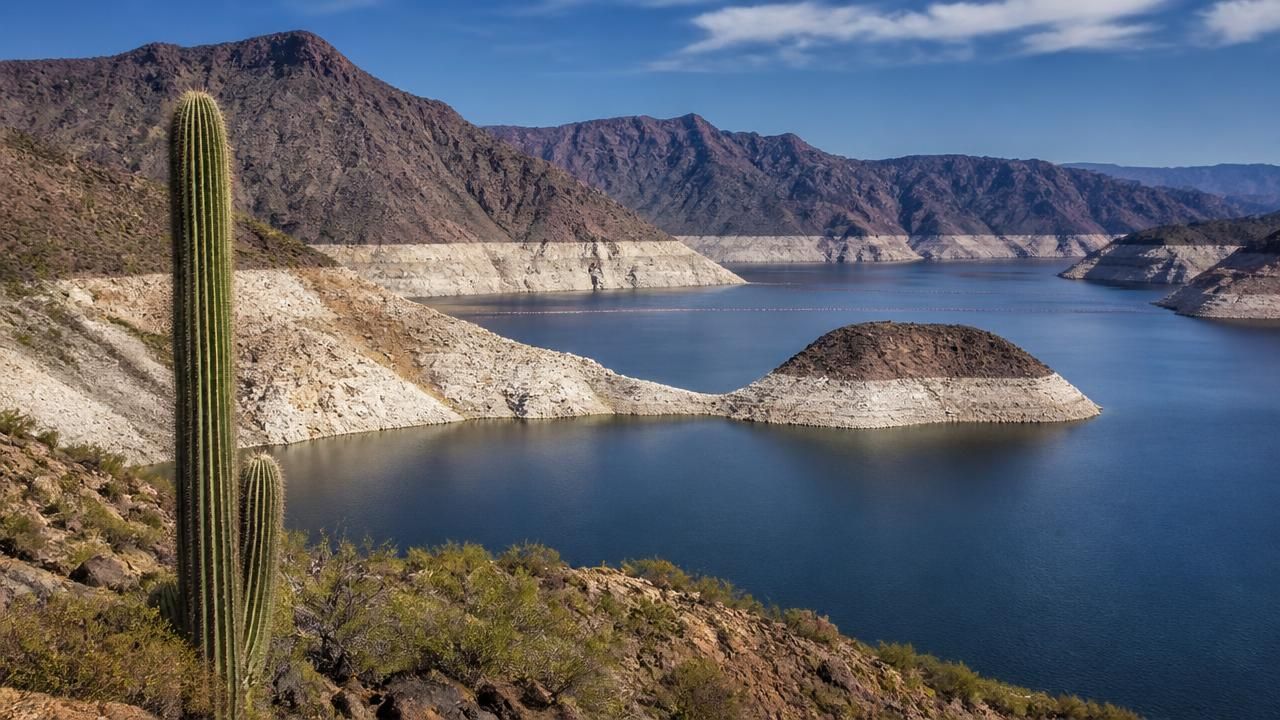
The Colorado River has long been the lifeblood of the American Southwest, but after two decades of drought and a changing climate, the federal government is imposing a new era of scarcity. For Arizona, the state hardest hit by mandatory cuts, the message from city leaders is reassuring—taps will keep flowing—but the price of adaptation is climbing, and a new political battle over who controls the West's most precious resource is intensifying.
A New Federal Plan for a Shrinking River
According to NPR and multiple Arizona outlets, the federal plan finalized under the Bureau of Reclamation will significantly reduce Arizona's apportionment of Colorado River water. The long-awaited update to the river's operating guidelines is designed to protect the collapsing reservoirs of Lake Powell and Lake Mead. Arizona, which holds the lowest priority among the Lower Basin states, will bear the brunt of the cuts.
City leaders in Phoenix, Tucson, and Scottsdale say they have been preparing for this moment for years, investing in groundwater recharge, water recycling, and conservation programs. “We've been planning for this for decades,” said a water resources manager in Phoenix. “We know how to stretch every drop.” But the planning comes at a cost.
Why Taps Won't Run Dry (But Bills Will)
The key message from municipalities is that the reductions will not result in residents turning on empty faucets. Because Arizona cities have deliberately diversified their water portfolios and banked water in underground aquifers, they can weather the cuts. However, those supply strategies come with steep price tags. Desalination, water treatment, and new pipelines are expensive. As a result, water bills across the state are set to rise.
“We've banked water, we've recycled, we've conserved. But nobody should pretend this is free. The era of cheap Colorado River water is over.” — Cynthia Campbell, water policy adviser to Phoenix
NPR reported that “keeping taps flowing is expensive,” and rate increases in the Phoenix metropolitan area could reach double digits over the next few years. For low-income households, the financial burden is especially acute. A recent analysis from the Arizona Republic noted that the average monthly water bill could rise by $15 to $30 over the next five years.
Rural vs. Urban: A Burning Political Flashpoint
The conflict is not just between Arizona and the federal government; it's also within the state. The Arizona Mirror reports that rural communities are fighting a proposed bill that would allow a hedge fund to purchase agricultural water rights and sell the water to Phoenix. Proponents argue that willing-seller water transfers represent a free-market solution to urban growth. Opponents, including farmers and rural residents, say it would destroy their communities and enrich speculators.
“They want to take our water and our community with it,” said a third-generation farmer in La Paz County. “Water is not just an asset; it's the lifeblood of our town.” The bill, which has sparked protests, would set a precedent for treating water as a commodity rather than a public trust. This conflict mirrors a broader regional tension between agricultural and municipal uses.
Investors and the Commodification of Water
Bloomberg's headline—Arizona Is Running Out of Cheap Water. Investors Saw It Coming—highlights how Wall Street views water scarcity as an opportunity. Hedge funds and investment groups are already buying water rights, anticipating that increasingly scarce water will become more valuable. This has alarmed rural residents, who fear being displaced by financial speculators.
The New York Times published a story about a small Arizona community where water taps ran dry after Meta built a data center next door, fanning fears that industrial water demands can outpace local supplies. The article, titled “Their Water Taps Ran Dry When Meta Built Next Door,” documents how residents in a subdivision near the Meta facility lost their well water after the company drilled deep for its own supply. Although Meta has since supplied water tankers, the episode underscores the vulnerability of rural water users when large corporations move in.
The Federal Backing and Political Shift
Politico reports that the Trump administration, facing a Western water crisis, has turned to the Inflation Reduction Act—a Democratic climate law—to fund water infrastructure projects. The move is a striking example of how water scarcity is breaking traditional partisan lines. Federal dollars are being directed to water recycling plants, canal lining, and rural water systems. However, critics argue these are stopgap measures that fail to address the fundamental over-allocation of the Colorado River.
“We're pouring money into the same broken system,” said a water policy expert at the Kyl Center for Water Policy in Arizona. “The only real solution is demand reduction, which means tough choices about growth and agriculture.”
The Bigger Picture: A Regional Crisis
Arizona is not alone. NBC News reports that hundreds of Arizona residents could see their faucets run dry by year's end, particularly in unincorporated areas like Rio Verde Foothills, which were cut off from Scottsdale's water supply. The Great Lakes News chronicles Chicago suburbs tapping Lake Michigan as their groundwater runs out. CNN notes that rural California communities are already tapped out while big cities fail to rein in use. In Las Vegas, officials insist the city won't run out—but they're paying billions for a new pipeline and strict ordinances on grass.
These stories are connected by a common thread: a warming climate and ever-growing demand. The federal plan for the Colorado River is just one chapter in a larger saga of water scarcity across the American West.
What You Can Do: Fix a Leak Week
Amid these macro struggles, the EPA is promoting Fix a Leak Week, an annual reminder that trillions of gallons of water are lost to household leaks each year. Kiplinger offers advice on getting a refund on your water bill if you have a leak—a sign that utilities are becoming more proactive in detecting losses. Simple steps, such as fixing a dripping faucet or replacing an old toilet flapper, can save hundreds of gallons per week and lower bills.
Conclusion: The New Cost of Water
As the Colorado River continues to shrink, the old assumption of endless, cheap water is gone. Arizona's leaders say they are ready, but the cost—financial, political, and personal—is only beginning to be felt. Rural communities fear losing their identity, cities face rising rates, and investors are circling. The federal plan is not a solution so much as an acknowledgment of gravity. The real work, as one city official put it, is “learning to live with less, without leaving anyone behind.”