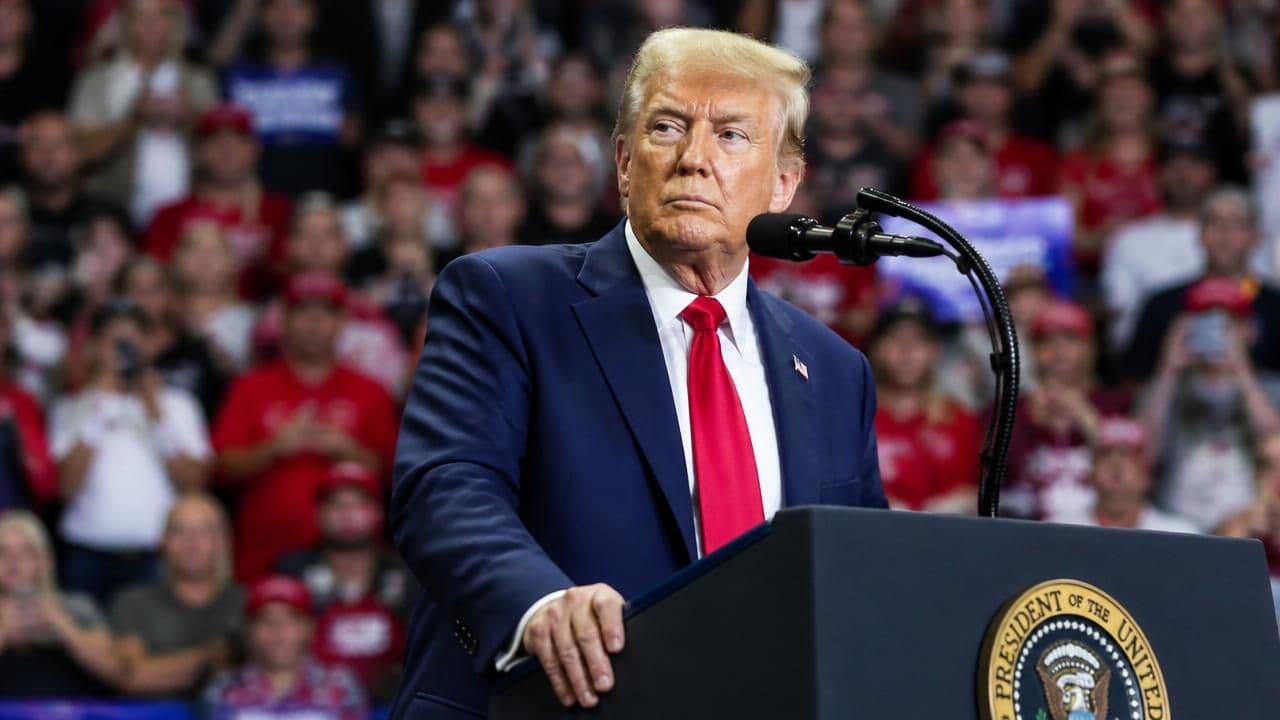
President Donald Trump is set to arrive in Ankara, Turkey, this week for the annual NATO summit, where his primary mission will be to enforce the defense spending commitments he secured from allies last year. The summit, which brings together leaders from the 29-member alliance, comes at a critical juncture as the alliance faces challenges from Russia's aggression in Ukraine, terrorism, and shifting global power dynamics.
The Spending Pledge: A Recap
At the 2018 NATO summit in Brussels, Trump pushed member states to increase their defense budgets to at least 2% of GDP, a target that many allies have been slow to meet. According to NATO estimates, only a handful of countries, including the United States, the United Kingdom, Greece, and Estonia, currently meet or exceed this benchmark. Trump's relentless pressure led to a collective pledge from allies to accelerate their spending plans, with several countries announcing incremental increases. However, progress has been uneven, and the president has often criticized allies for freeloading off American military might.
“The United States cannot be the world’s policeman if others do not carry their fair share,” Trump said during a pre-summit press conference. “NATO is a great organization, but it must be fair to American taxpayers.”
Meetings on the Sidelines
Beyond the formal sessions, Trump is expected to hold bilateral meetings with key leaders. According to reports, he will meet with Ukrainian President Volodymyr Zelenskyy to discuss continued support against Russian-backed separatists, as well as with Syria's de facto leader, Ahmad al-Sharaa, to address the ongoing civil war and the presence of Turkish forces in northern Syria. These meetings underscore the broader geopolitical context in which the NATO summit is taking place.
Turkey's Balancing Act
Ankara, the host city, itself is a focal point of tensions. Turkey, a NATO member, has purchased Russian S-400 missile defense systems, drawing sanctions threats from Washington. President Recep Tayyip Erdogan has also launched military operations in Syria against Kurdish forces that the U.S. considers allies in the fight against ISIS. Trump's relationship with Erdogan has been characterized by both cooperation and friction, and the summit will test their ability to find common ground.
Framing the Story: Differing Perspectives
Media outlets have framed Trump's approach to NATO in contrasting ways. NPR and its affiliates, such as nprillinois.org, emphasize the diplomatic pressure and the enforcement of promises, portraying Trump as a dealmaker who extracts commitments but struggles to secure delivery. The title “Trump won spending promises from NATO last year. This week, he'll try to enforce them” underscores the gap between rhetoric and reality.
Meanwhile, other outlets like times-news.com and msn.com highlight the “big” nature of the promises, suggesting that Trump's tough tactics have yielded tangible results, even if implementation lags. The variations in headlines reflect broader political divides: some view Trump's approach as necessary realism, while others see it as undermining alliance cohesion.
Historical Context and Implications
NATO's 2% spending target was established in 2006, but it remained aspirational until Trump made it a centerpiece of his foreign policy. Critics argue that his confrontational style has alienated allies and weakened the alliance, while supporters counter that it has spurred long-overdue increases. Data from NATO shows that European allies and Canada have added billions to their defense budgets since 2016, though the U.S. still accounts for roughly 70% of alliance defense spending.
The summit's outcomes could have far-reaching implications. If Trump successfully enforces the pledges, it may bolster NATO's capabilities amid Russian assertiveness. Failure to do so could deepen transatlantic rifts and embolden adversaries. Additionally, the meetings with Zelenskyy and al-Sharaa signal that the U.S. remains engaged in multiple theaters, even as Trump pushes for burden-sharing.
What to Watch
As the summit unfolds, key indicators of success will include: new concrete spending commitments from laggard nations; a unified stance on Russia; and resolution of the Turkey-S-400 dispute. Trump's ability to balance his transactional approach with the need for alliance solidarity will be closely scrutinized.
In the end, the NATO summit in Ankara is more than a routine gathering—it is a test of whether the alliance can adapt to a changing world and whether Trump's brand of diplomacy yields lasting results.