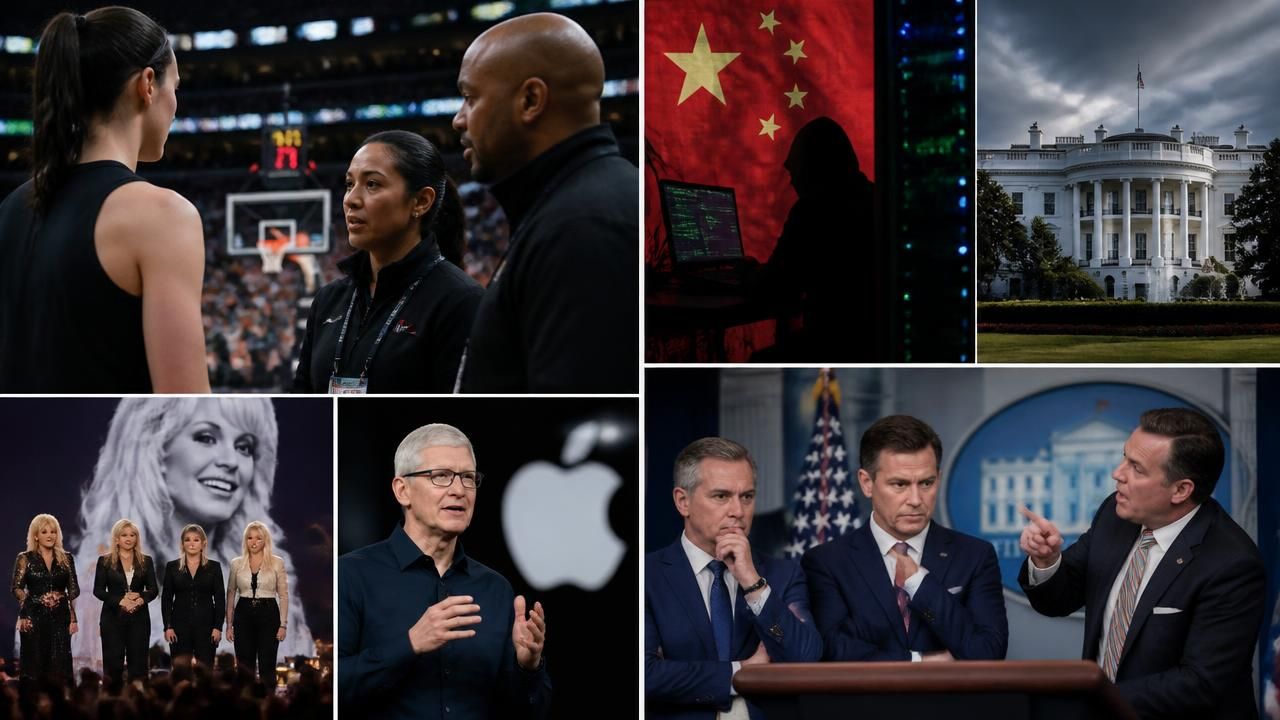
It was a week that laid bare the fragility of American institutions and the multiplying threats facing the nation. From a WNBA team quietly enlisting national security specialists to protect its players, to alarming reports of Chinese hackers burrowing into U.S. telecom networks, to a White House struggling with internal scandals and policy overreach, the news cycle offered a kaleidoscope of anxiety. Even as cultural and business stories — Dolly Parton tributes in Nashville and Tim Cook’s departure from Apple — provided momentary respite, the undercurrent of political and security instability dominated the national conversation.
Security Threats at Home and Abroad
The Women’s National Basketball Association has seen its popularity soar, but with that visibility has come a darker side. As NPR and Hawaii Public Radio reported, one WNBA team has taken the extraordinary step of partnering with experts on violent extremism and national security. The move reflects a broader trend: athletes, particularly women and people of color, are increasingly facing targeted harassment, doxxing, and even physical threats. The team’s approach, once reserved for government officials and corporate executives, signals how deeply the threat landscape has shifted into everyday American life.
That sense of pervasive danger was echoed by security experts quoted in The New York Times, who are bracing for a wave of "sleeper cells" and lone attackers. The warning, coming from analysts who track domestic extremism, suggests that the risk of political violence is not receding but evolving. "We are seeing a radicalization ecosystem that operates across social media platforms and messaging apps," one expert noted. "The barriers to entry for committing violence have never been lower."
Nowhere is that vulnerability clearer than in cyberspace. A hacker allegedly breached one of China’s supercomputers and is attempting to sell a trove of stolen data, according to CNN. Meanwhile, a separate report from the New York Post revealed that Chinese hackers roamed freely through U.S. telecom networks for 18 months, compromising the personal information of over one million people. These incidents echo warnings from a 2017 hacking attack that had security experts scrambling, but the scale and sophistication have grown dramatically. The telecom breach, in particular, has raised alarms about critical infrastructure and the ability of foreign adversaries to disrupt American life at will.
Public health, too, has become a national security flashpoint. The Atlantic reported on the return of Ebola just as the White House lost its top biodefense expert — a staffing vacuum that experts warn could prove catastrophic in containing an outbreak. The intersection of health and security was further strained by reports that the Trump administration’s proposed cuts to the Centers for Disease Control and Prevention could weaken chronic illness programs and, by extension, national preparedness. As The Guardian noted, retired military leaders have even suggested that renewable energy investment should come from defense budgets, framing climate change as a security threat.
The Erosion of Democratic Guardrails
Security concerns abroad were matched by a deepening crisis of governance at home. The New York Times published a sweeping analysis titled "Under Trump, National Security Guardrails Vanish," chronicling how internal checks on presidential power have been dismantled. Former officials now warn that the United States is "on a trajectory" toward authoritarian rule, a sentiment that has moved from the fringe to the mainstream of political discourse.
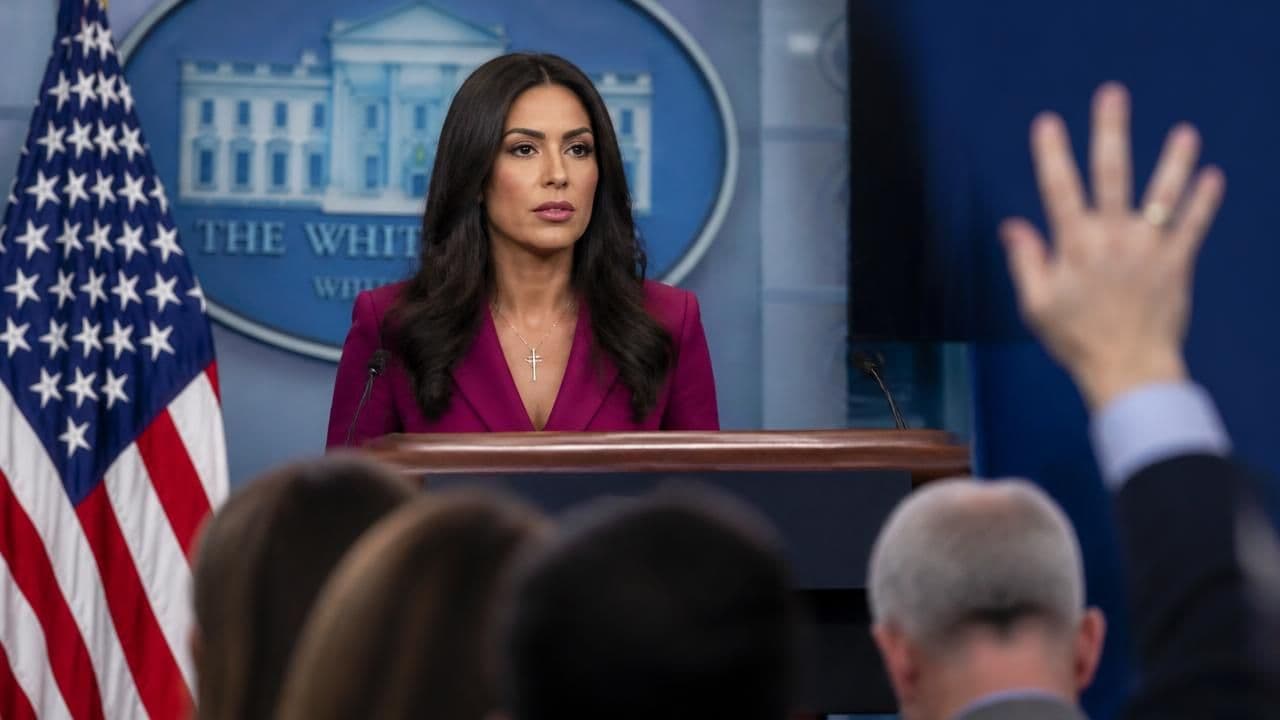
One flashpoint was the dismissal of Department of Homeland Security Secretary Kristi Noem. Hidden documents obtained by the New York Post revealed that Noem’s team had pushed to cut FEMA staff by 50% and radically devolve disaster response to states. But even more embarrassing was the revelation that Noem’s husband’s cross-dressing photos had slipped through the security vetting process — a lapse that experts called "crazy" and emblematic of a broken system. The scandal dovetailed with reports that an NSA acting director had tried to save a top scientist from a political purge, only to be overruled. And a Signal group chat among Trump officials, which accidentally included a journalist, exposed what one expert described as "really scary" intelligence being shared casually.
The administration’s approach to international threats has also raised eyebrows. The Justice Department, in a quiet but significant move, dropped its claim that Venezuela’s "Cartel de los Soles" is an actual organized group — a decision that could affect sanctions and prosecutions. Meanwhile, in Iran, a mass assassination has left the country led by a three-man council with conflicting views, creating a dangerous power vacuum. Allies and insiders have told the New York Post that Steve Witkoff, a real estate mogul turned diplomat, is out of his depth in negotiations with both Iran and Russia. His appointment, critics say, reflects a broader pattern of prioritizing loyalty over expertise.
Election Integrity and the Road Ahead
As The Guardian reported, Trump’s continued distrust of election integrity has experts eyeing his next move. With midterms approaching, concerns about democratic backsliding are no longer theoretical. The contrast with the outgoing Biden administration’s national security team, which took office in 2020 with a promise of returning to norms, could not be starker. That promise now seems like a distant memory.
Politics, Culture, and Business: A Week of Distractions
Amid the chaos, some stories offered a glimpse of normalcy. In Maine, state Senator Graham Platner announced he isn't going anywhere in his race for the U.S. Senate despite the latest controversy — a reminder that local politics churn on regardless of national turmoil. In Nashville, Americans gathered to celebrate and mourn Dolly Parton, the country legend whose music and philanthropy have made her a beloved figure across divides. And in the corporate world, Tim Cook’s decision to step down as Apple CEO, described in a letter reflecting on 15 years of emails, closed a chapter in Silicon Valley history.
A Fragile Moment
What ties these stories together is a sense that the United States is navigating a uniquely fragile moment. Security threats are no longer confined to battlefields or spy agencies — they touch sports arenas, public health systems, and the personal data of millions. The political institutions designed to weather such storms are buckling under the weight of partisan mistrust and executive overreach. As one former official told The Guardian, "The guardrails are gone, and whether they can be rebuilt depends on the choices made in the next few months."
For now, the experts are united in one message: vigilance is not a partisan value; it is a survival skill. Whether it is a WNBA team hiring counterterrorism specialists or a local candidate weathering a scandal, the imperative is the same — to protect the people and the principles that hold a nation together.