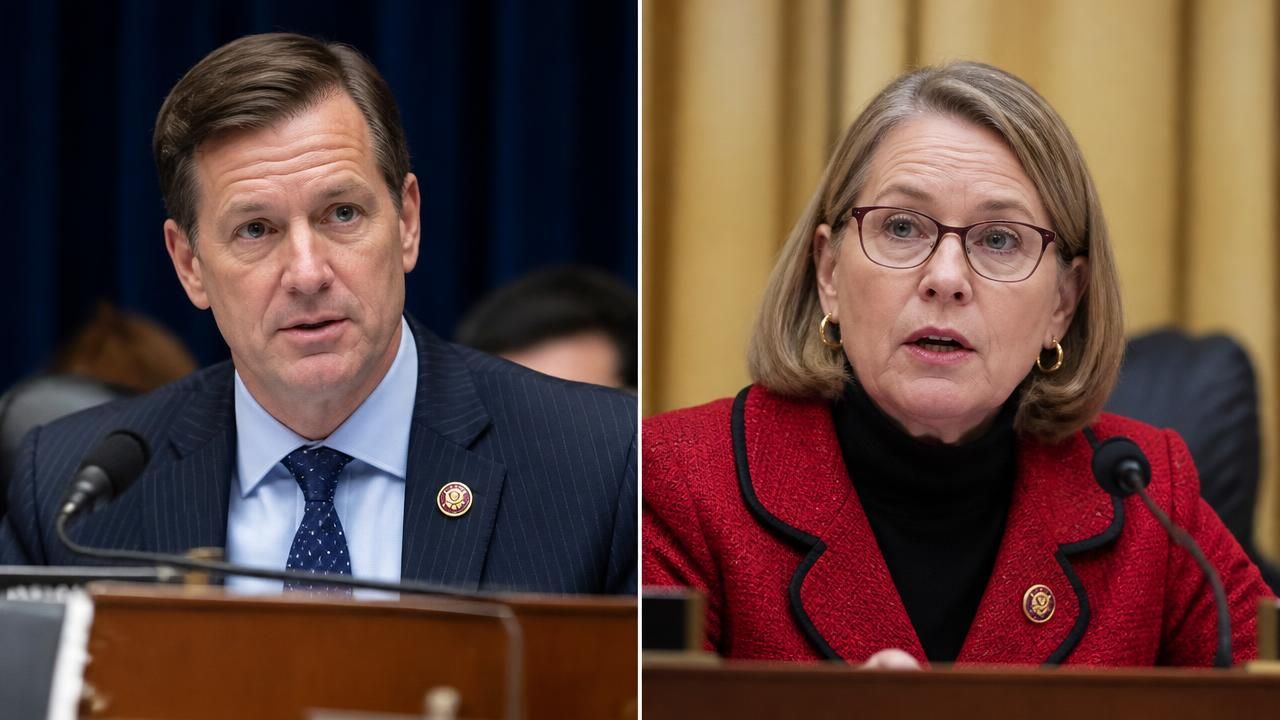
Two of the Republican Party's largest super PACs are withdrawing financial support from the re-election campaigns of incumbent Representatives Thomas H. Kean Jr. of New Jersey and Mariannette Miller-Meeks of Iowa, according to reporting by The New York Times, in a move that signals an early and unusually public round of triage as the GOP fights to hold its House majority.
The decision, described as an effort to concentrate limited resources on more winnable races, marks the first time in this cycle that major Republican outside groups have pulled money from sitting members of Congress. The story was amplified quickly across aggregators and wire services, with MSN framing it through a distinctly Trump-centric lens: "Trump-linked super PAC pulls funding from 2 House Republicans as GOP fights to keep majority."
Two Incumbents, One Hard Calculation
Kean, who represents a competitive New Jersey district that has swung between parties in recent cycles, and Miller-Meeks, whose Iowa seat has been among the narrowest Republican holds in the country, both now find themselves in the position no incumbent wants: defensible on paper, but expensive to defend in practice.
Super PAC strategists typically make such calls when internal polling shows a race drifting beyond the range where a late infusion of cash can change the outcome. The money saved is redirected to districts where a few million dollars still moves the needle — a calculus that has become sharper as overall spending in the midterms climbs and donor enthusiasm cools in certain suburban battlegrounds.
The Ten Most Vulnerable
Kean and Miller-Meeks appear on virtually every published list of the House's most endangered incumbents. MSN's roundup of the ten most vulnerable House members — published just over a month before Election Day — places both in the top tier, alongside a handful of other Republicans in suburban and swing districts.
The overlap between that list and the list of members losing outside money is not coincidental. It reflects a structural reality: the Republican majority rests on a small number of seats decided by narrow margins, and the party cannot afford to spend heavily everywhere at once.
Loyalty as a Liability
Complicating the picture is a finding from Roll Call, which reports that the House's most vulnerable Republicans have not deviated from President Trump's position on major 2026 votes.
"House's most vulnerable Republicans haven't deviated from Trump on 2026 votes." — Roll Call
The analysis cuts against a familiar campaign-season narrative: that endangered incumbents in swing districts will distance themselves from an unpopular president to woo independents and crossover voters. In this cycle, that pivot has largely not materialized. Vulnerable Republicans have instead voted with the White House at a rate that leaves them with little rhetorical room to run as moderates.
That creates a paradox. Base-first voting records can energize the party's core, but they also hand opposition groups a ready-made attack line — and they undercut the argument that a candidate deserves rescue funding on the grounds of local, independent appeal.
Why the Money Is Moving
Outside groups make triage decisions based on three questions: Is the seat still winnable? Will money change the outcome? And can the same dollars do more elsewhere? For Kean and Miller-Meeks, the reported answers — winnable but difficult, marginal returns on new spending, and better opportunities in cheaper media markets — point in the same direction.
The withdrawal does not mean the party has written off the seats entirely. Incumbents retain their own campaign accounts, national party committees may still engage, and a late shift in the national environment could revive interest. But the symbolism is significant: once major super PACs leave a race, other donors often follow, and the candidate's own fundraising becomes the sole lifeline.
Historical Echoes
Resource triage is as old as modern campaign finance. Parties have long abandoned incumbents when the map turns hostile, and challengers have long forced the issue from the other direction — sometimes from within their own party. A useful reminder comes from the 2012 presidential cycle, when a little-known attorney, John Wolfe, mounted a primary challenge to an incumbent Democratic president and won enough delegates to secure a speaking slot at the convention, despite being denied some state ballot access. The episode illustrated a durable truth: incumbency guarantees money and institutional backing only as long as the institution believes the incumbent can win.
What to Watch
- Follow the money. Watch whether the super PACs' withdrawal from Kean and Miller-Meeks is followed by similar moves in other competitive districts — that would confirm a broad triage strategy rather than a targeted retreat.
- Watch the candidates' messaging. If vulnerable Republicans begin distinguishing themselves from the White House in ads, it would contradict Roll Call's voting-record analysis and suggest a late strategic shift.
- Watch the polls. A narrowing national environment could bring outside money back; a widening one could turn a two-seat pullback into a dozen.
Taken together, the three threads — the funding retreat, the vulnerability rankings, and the unbroken loyalty to Trump on 2026 votes — describe a Republican Party managing scarcity, not abundance. The fight to keep the House majority has entered its most transactional phase, and the first incumbents have been asked to fend for themselves.