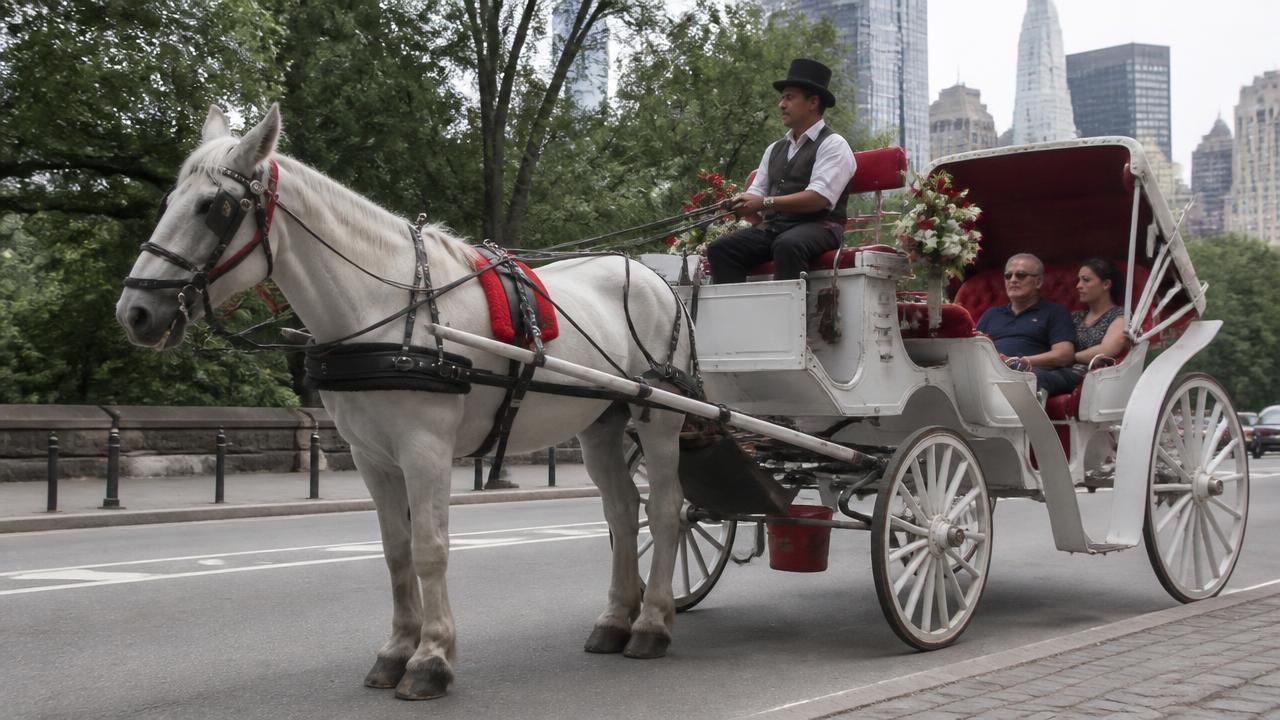
NEW YORK — New York City is poised to end one of its oldest and most photographed traditions. Mayor Zohran Mamdani and City Council Speaker Julie Menin have reached a deal on legislation that would ban horse-drawn carriages from city streets, with the prohibition set to take effect in 2028, according to Bloomberg Markets.
The agreement, first reported by Bloomberg and quickly amplified by Yahoo News and MSN, would end an industry that has operated in and around Central Park for more than 150 years and remains a fixture of postcards, films and tourist itineraries. Bloomberg characterized the legislation as potentially "putting an end to a Central Park staple and tourist magnet that began operating more than 150 years ago."
Details remain thin. Neither the mayor's office nor the speaker's office has released the full text of the bill, and none of the reports specify how the phase-out would be funded, what would become of the roughly 200 horses stabled in Manhattan, or what compensation carriage drivers and stable workers would receive. The deal's political significance, however, is unambiguous: with the mayor and the speaker aligned, the legislation appears to have the votes to pass.
Why the Carriages Became a Political Target
For animal-welfare advocates, the carriage trade has long represented a preventable form of animal suffering: horses working in dense traffic, on pavement, and in summer heat, often for hours a day. Viral incidents — horses collapsing in Midtown traffic, spooking near vehicles, or struggling in heat waves — have periodically reignited calls for a ban, feeding an organizing effort that stretches back more than a decade and has drawn support from groups including NYCLASS and PETA.
Industry figures counter that the horses are well cared for, regularly inspected and rotated off the job, and that the work itself is light: slow, short loops through a park with a 25-mile-per-hour speed limit. The city caps carriage licenses at 68, a number set decades ago, and drivers say the business supports hundreds of families, many of them unionized members of the Transport Workers Union Local 100.
A Promise Deferred Since 2014
This is not the first attempt to end the practice. In 2014, then-Mayor Bill de Blasio made a ban a signature early pledge, only to abandon the effort in the face of fierce opposition from drivers, the tourism industry and some Central Park advocates — and, crucially, a divided City Council.
"We are going to get rid of the horse carriages, period," de Blasio said in 2014, a promise he never fulfilled.
The intervening decade brought piecemeal changes — new rules on working hours, veterinary oversight, stabling standards and summer heat thresholds — but no outright ban. Mamdani's deal, if enacted, would finish what his predecessor started, and would do so via a four-year runway that supporters hope avoids the bruising fight of 2014.
The Drivers' Case — and the Transition Question
The most consequential unanswered questions concern the people and animals the ban would displace. Any credible phase-out must address:
- The horses. Roughly 200 animals would need placement, typically in sanctuaries or private farms, an expensive undertaking that past proposals estimated in the millions.
- The drivers. Carriage operators hold a limited number of licenses and would likely seek buyouts, retraining or priority access to replacement work, similar to taxi-medallion compensation programs.
- The stables. Several Manhattan stables, including facilities on the far West Side, would lose their core business, raising questions about the fate of the real estate.
Industry representatives have argued that a ban without a funded transition amounts to confiscation of a lawful business, and that the 2028 deadline is designed to soften the political cost rather than solve the practical one. Advocates say the four-year window is precisely the point: time to retire horses humanely and move workers into new jobs.
How the Story Is Being Framed
The coverage so far reflects each outlet's instinct. Bloomberg, a markets-first publication, framed the news as the end of a durable tourist business with more than a century of operating history. Yahoo News led with the mechanics of city government — the Mamdani–Menin alliance — while MSN's syndicated versions emphasized the deal-making and the personalities behind it, describing a plan "to end NYC horse carriage industry." None of the reports carried the bill's text, and all relied on sources rather than on-the-record confirmation, a reminder that the deal is political agreement, not law.
What Comes Next
The legislation must still pass the Council and receive the mayor's signature. If it does, New York would join a growing list of cities to retire horse-drawn carriages: Montreal banned them in 2020, Paris in 2024, and Rome and Barcelona have imposed steep restrictions. For Mamdani, the deal is an early demonstration that his administration can legislate with a Council leadership that is not automatically aligned with him — and a signal that animal welfare, long a niche issue in city politics, has become a mainstream one.
For now, the carriages still roll through Central Park. They have until 2028.