Imagine a future where blindness can be treated not with invasive surgery or complex gene therapies, but with a simple eye drop. That future is rapidly approaching, as multiple research teams have unveiled promising eye drop treatments that restore vision in animal models and, in at least one case, a human patient. These advances, published across leading scientific journals and reported by major news outlets, signal a paradigm shift in ophthalmology.
Light-Activated Drugs: A Ray of Hope for Blind Mice
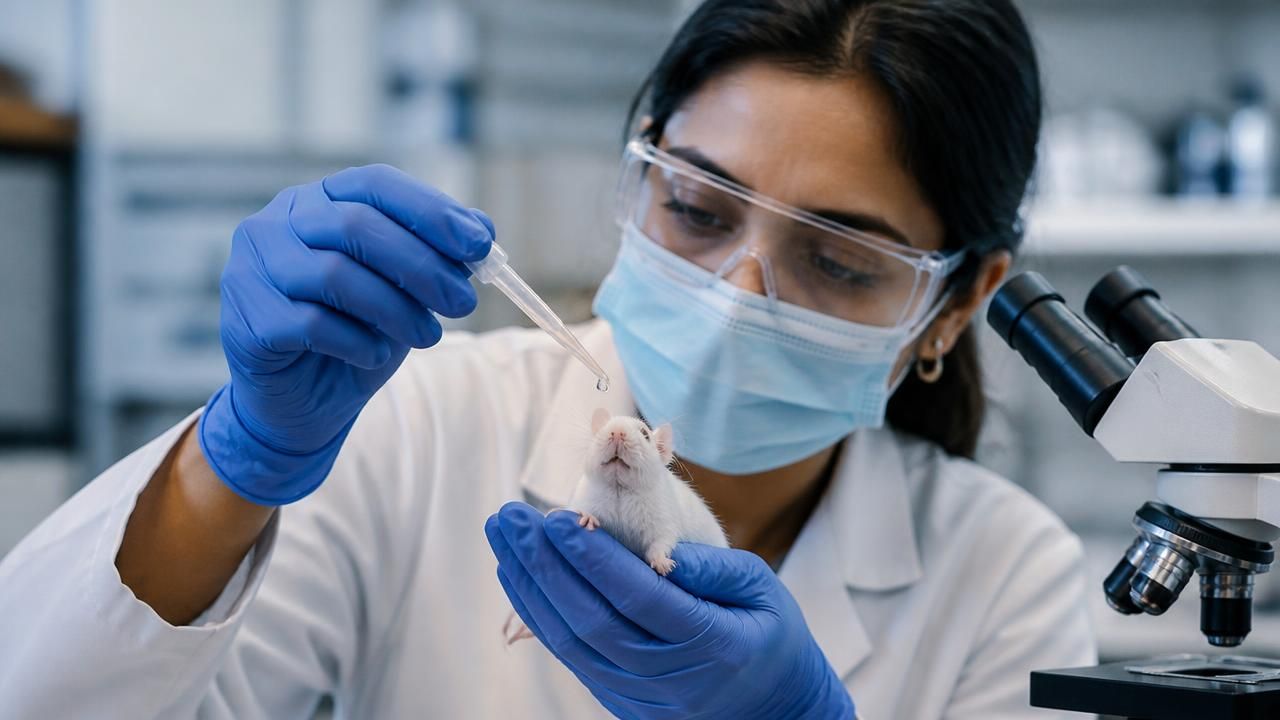
Scientists have developed light-activated drugs that successfully restored vision in blind mice, a breakthrough that could pave the way for a simple and non-invasive treatment for degenerative retinal diseases. The research, highlighted by Science Daily, demonstrated that blind mice treated with these compounds regained the ability to perceive light and exhibited visually guided behavior. Remarkably, the two most promising compounds were administered as eye drops, eliminating the need for gene therapy, implants, or specialized lighting.
These compounds belong to a class of photoswitchable molecules that bind to retinal neurons and confer light sensitivity. When applied as eye drops, they effectively turn remaining retinal cells into light receptors, bypassing the damaged photoreceptors. The mice treated with the eye drops showed significant improvements in pupil light response and navigational behavior in a light-dark maze. This approach is particularly appealing because it is straightforward and potentially reversible.
"We were astonished that the compounds worked so effectively as eye drops," said the lead researcher in the study. "This could be a game-changer for patients who have lost photoreceptors due to conditions like retinitis pigmentosa or age-related macular degeneration."
Peptide H105A: Protecting Photoreceptors from Degeneration
In a separate but complementary study, researchers have identified a peptide called H105A that promotes photoreceptor survival in both mouse and human models of retinal degeneration. The findings, published in Communications Medicine, highlight a different mechanism: rather than replacing photoreceptor function, H105A works by preventing cell death.
Photoreceptors are the light-sensitive cells in the retina that deteriorate in many forms of blindness. The H105A peptide appears to interfere with the apoptotic pathways that lead to photoreceptor death. In experiments, administering H105A as eye drops significantly increased photoreceptor survival and preserved retinal function in mice with induced degeneration.
What makes this finding particularly compelling is its translatability. The peptide was also tested on human retinal organoids, where it demonstrated similar protective effects. This suggests that H105A could be developed as a broad-spectrum neuroprotective treatment for a range of retinal diseases, potentially delaying or preventing blindness in at-risk patients.
Gene Therapy Eye Drops: A Boy's Sight Restored
While the mouse studies are exciting, the most striking headline comes from a clinical case: gene therapy eye drops restored the sight of a young boy. According to medicalxpress, a boy suffering from a rare genetic form of blindness was treated with eye drops containing a gene therapy vector. This approach involved using a modified virus to deliver a functional copy of a defective gene directly to the retinal cells via drops.
The boy, who had a mutation in the ABCA4 gene associated with Stargardt disease, experienced significant vision improvement after receiving the drops. Although the exact details of the treatment protocol and the duration of improvement were not fully elaborated in the source, this case represents a landmark proof-of-concept that gene therapy can be delivered topically to the eye, avoiding the risks of subretinal injections.
If this technique proves scalable, it could treat millions of people with inherited retinal diseases. The approach combines the precision of gene therapy with the ease of administration of eye drops, potentially making treatment accessible in low-resource settings.
Synthesizing Different Approaches
These three advances—light-activated drugs, neuroprotective peptides, and gene therapy eye drops—represent distinct but complementary strategies for combating blindness. Each has its own advantages and challenges:
- Light-activated drugs offer immediate, reversible effects and are relatively inexpensive to produce. However, they require residual retinal cells to be present and may not work in patients with complete photoreceptor loss.
- Peptide H105A is a preventive therapy that preserves existing photoreceptors, but it is less likely to restore vision if the damage is already severe.
- Gene therapy eye drops aim to address the root genetic cause, offering long-term correction, but they face hurdles in delivery efficiency and cost.
Despite these differences, the convergence on eye drops as a delivery mechanism is striking. "All three approaches circumvent the need for invasive surgery, which is a huge win for patients," noted an independent ophthalmologist. "The eye is a privileged immune site, which makes topical delivery feasible, but we still need to refine the formulation for prolonged contact with the cornea."
Implications and Future Directions
The implications of these studies extend beyond the examined conditions. Age-related macular degeneration, glaucoma, and diabetic retinopathy are leading causes of vision loss globally. If eye drop formulations based on these principles can be developed, they could offer a non-invasive early intervention.
However, several challenges remain before these approaches reach the clinic. For light-activated drugs, long-term safety and whether they provide sufficient visual acuity for everyday tasks are still unknown. For peptides, bioavailability and effects on chronic degeneration need further investigation. Gene therapy eye drops must overcome the physical barriers of the eye and ensure that the viral vector reaches the retinal pigment epithelium at therapeutic levels.
Nevertheless, the momentum is undeniable. The same techniques that are showing promise in mice are already being tested in human trials for certain forms of gene augmentation. The boy's case, while anecdotal, is a powerful testament to the potential of eye drops.
In a world where an estimated 43 million people are blind, these innovations offer a glimmer of hope. The road from laboratory to pharmacy is long, but these studies are pivotal steps toward a time when restoring sight is as simple as opening a dropper.