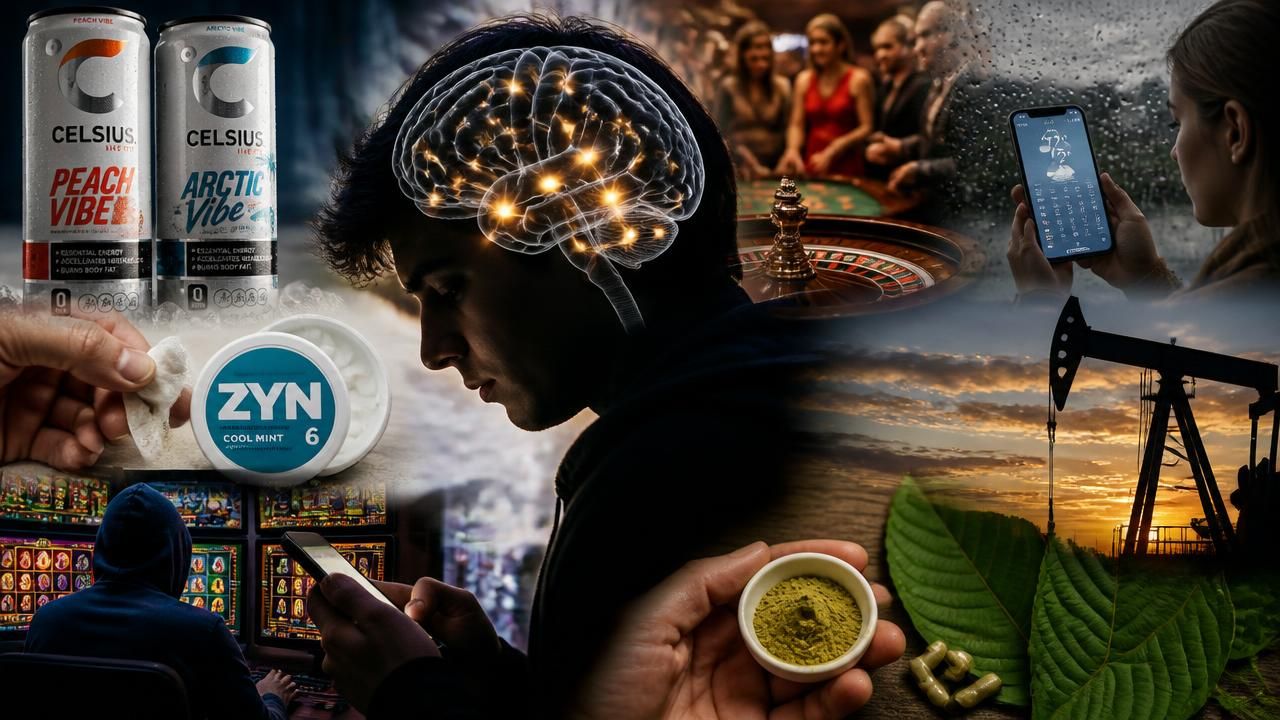
In a culture defined by instant gratification and relentless stimulation, the line between habit and addiction has never been blurrier. From the caffeine jolt of a can of Celsius to the discreet nicotine hit of a Zyn pouch, from the obsessive pull of a weather app to the neural fireworks of a casino floor, Americans are navigating a landscape where many different products and behaviors compete for our attention—and our brains. A closer look at several recent narratives reveals a common thread: the human brain’s vulnerability to reward, and the industries that exploit it.
Energy Drinks: Celsius and the Caffeine Gold Rush
In a corner of the beverage industry known as much for over-caffeinated hype as it is for outrageous naming conventions, new brands appear just as quickly as others disappear. Yet Celsius has managed not only to outlast most of its competition, but to stand apart. As Bloomberg's Deena Shanker reports, the brand has become a phenomenon, riding a wave of fitness culture and social media endorsements. Celsius markets itself less as a sugary pick-me-up and more as a performance-enhancing tool, with a proprietary "MetaPlus" blend that supposedly accelerates metabolism. That positioning has allowed it to command premium prices and a loyal following, even as regulators and health experts eye the energy drink sector with increasing concern.
Nicotine Pouches: Zyn’s Quiet Conquest
Meanwhile, the American mouth has found a new obsession: Zyn. GQ's investigation into how Zyn "conquered the American mouth" details how the smokeless, spitless nicotine pouch has slipped into offices, schools, and even the NFL. Unlike vaping, which draws clouds and scrutiny, Zyn users can consume nicotine discreetly. The pouches deliver a potent hit without the tobacco leaf, hooking users on the drug itself rather than the plant. Public health officials worry that Zyn, like Juul before it, is creating a new generation of nicotine addicts who might otherwise never have started.
Behavioral Addiction: The Weather App Check
Not all addictions involve substances. The Guardian's piece on weather apps asks: "We used to check every day, now it’s every minute." That’s the reality for many who have developed a compulsive relationship with their phones, refreshing weather updates far more often than is rational. Weather apps are designed to deliver unpredictable, variable rewards—a sunny sky, an incoming storm—that activate the same dopamine pathways as slot machines. The weather, it turns out, is the perfect hook: always changing, always important, and always just a swipe away.
Substances of Concern: The 7-OH Kratom Alarm
Some addictions are more dangerous. Women's Health magazine reports that the FDA is sounding the alarm on 7-OH kratom products, a potent derivative of the herbal supplement kratom. The agency has pushed for a ban, noting that 7-OH is far more potent than plain kratom leaves and carries significant risks of addiction, overdose, and death. What was once a niche botanical remedy sold at smoke shops has evolved into a powerful synthetic-like opioid that has already triggered a wave of emergency room visits. The FDA's call for action underscores a recurring pattern: new forms of old drugs periodically emerge, catching both regulators and users off guard.
The Brain’s Vulnerable Wiring: Gambling as a Window
To understand why these products and behaviors take hold, Scientific American explains the neuroscience of addiction through gambling. The brain's reward system is a finely tuned circuit, and gambling hijacks it by providing intermittent, unpredictable rewards. Each near miss, each tiny win, releases a surge of dopamine, reinforcing the behavior. Over time, the brain learns to crave the anticipation rather than the payoff. This same mechanism underlies addiction to everything from caffeine to cocaine, from weather feeds to slot machines. "The brain doesn't distinguish between a chemical addiction and a behavioral one," the article notes. "It simply thrives on the promise of a reward."
Historical Addiction: Oil and the Modern Economy
On a societal level, addiction isn’t limited to individuals. Earth Day’s essay "How Oil Got Us Hooked" draws a direct parallel between personal substance dependence and the global economy's reliance on fossil fuels. Oil has reshaped every aspect of modern life—transportation, agriculture, manufacturing—creating a structural dependency that is difficult to break, even in the face of climate catastrophe. Like any addiction, the oil era began with perceived benefits, escalated over decades, and now demands systemic intervention. The essay argues that just as individuals need treatment plans, nations need energy transition strategies to kick the habit.
Synthesis: The Shape of Addiction in Modern Life
Viewed together, these stories from Bloomberg, GQ, The Guardian, Women's Health, Scientific American, and Earth Day paint a complex portrait. Addiction, whether to a substance, a behavior, or an economic system, grows out of a fundamental human need for reward and relief. Industries have become adept at exploiting that need, crafting products that are progressively more potent, more accessible, and more discreet. Celsius and Zyn are crafted to slip seamlessly into daily routines; weather apps turn the sky into a slot machine; kratom derivatives push legal boundaries; gambling exploits neuroscience itself; and oil has become the invisible bloodstream of civilization.
Yet there are also counterforces. The FDA’s push to ban 7-OH kratom, the growing scrutiny of nicotine pouches, the public conversation around energy drink risks, and the inevitable transition to renewable energy all signal that societies can, when sufficiently alarmed, push back. The question is whether we can break these cycles before they break us—or whether we are simply destined to find new ways to get hooked.
"The brain doesn't distinguish between a chemical addiction and a behavioral one. It simply thrives on the promise of a reward."
As the science of addiction deepens, one thing becomes clear: the next big thing, whether it's a drink, a pouch, an app, or a policy, will be designed to exploit that promise. Recognizing the pattern is the first step toward regaining control.