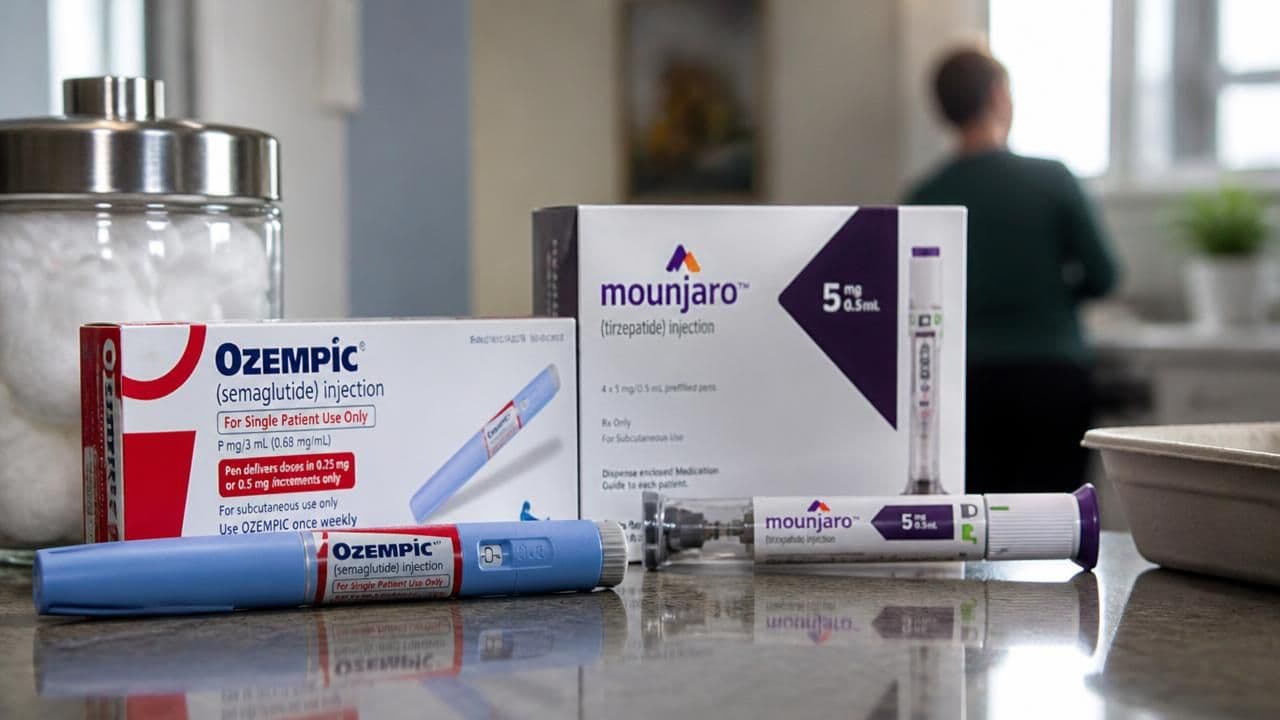
Just days after its July 1 launch, Medicare’s new “Bridge” program for GLP-1 obesity drugs has already shown remarkable early momentum. CVS and Walgreens report that they have each filled 100,000 prescriptions under the initiative, which caps out-of-pocket costs at $50 a month for eligible beneficiaries. Yet as pharmacies race to meet demand, a more complicated picture is emerging. The program—officially a three-year demonstration designed to expand access to weight-loss drugs like Wegovy—comes with significant caveats that could exclude some of the sickest patients and create practical barriers for many others.
What Is the GLP-1 Bridge Program?
For years, Medicare Part D was barred by law from covering drugs prescribed specifically for weight loss. That left millions of older adults with obesity—but without diabetes or heart disease—paying full price for medications that can exceed $1,000 a month. The Bridge program, announced earlier this year, changes that calculus for a limited group. It classifies obesity as a disease that can be treated with medication, and it offers a federal subsidy to participating Part D plans to keep copays predictable.
According to the Centers for Medicare & Medicaid Services (CMS), up to 3 million beneficiaries could be eligible. The program is being rolled out through standalone Part D plans and Medicare Advantage plans, with beneficiaries paying no more than $50 per month for a covered GLP-1 drug. Participating pharmacies include CVS, Walgreens, Walmart, and Publix, several of which have launched dedicated assistance hotlines to help seniors navigate the new benefit.
The Catch: Who Doesn’t Qualify?
“Some sick patients don’t qualify.” — Medical Xpress headline
That blunt line captures the program’s central paradox: the very patients who might benefit most from these drugs—those with obesity-related complications—are often the ones left out. The Bridge program is designed for beneficiaries who do not already have coverage through other Medicare rules. People with type 2 diabetes, for instance, can already get GLP-1s like Ozempic for glucose control. Similarly, Medicare covers Wegovy for beneficiaries with established cardiovascular disease. The new $50-a-month guarantee only applies when obesity is the sole qualifying condition.
- Must have a body mass index (BMI) of 30 or greater.
- Must not already qualify for GLP-1 coverage under Medicare’s diabetes or cardiovascular indications.
- Must be enrolled in a Medicare Part D plan or a Medicare Advantage plan with prescription drug coverage.
- Must obtain the prescription from a participating healthcare provider, and many plans may require prior authorization or step therapy.
For patients with conditions such as chronic kidney disease or heart failure—conditions often linked to obesity—the exclusion stings. “It seems backwards that sicker people face higher costs,” noted a geriatric specialist quoted in a recent Forbes analysis. “The program was built to help people who are merely overweight, not those with full metabolic syndrome.”
Early Success: Pharmacies Report High Demand
Despite the restrictions, early data indicate strong uptake. In the first two weeks alone, CVS and Walgreens each filled 100,000 prescriptions under the Bridge program, according to NPR. The numbers suggest that the $50 price point is dramatically reducing financial friction for eligible patients. Walmart has also seen a surge, and Publix has posted step-by-step guidance on its website, explaining which drugs are covered and how to check eligibility.
Pharmacies are stepping in as critical navigators. CVS launched a dedicated line for seniors to verify coverage and coordinate prior authorizations; Walgreens has trained pharmacists to handle Medicare billing quirks. As one CBS MoneyWatch reporter put it, “Walmart, CVS step in to help seniors navigate Medicare coverage of obesity drugs.”
Administrative Hurdles and Burdens
Optimism, however, is tempered by warnings from policy experts. STAT News reported that the program is “burdensome” and may keep patients from accessing the medications. The issue: many Medicare Advantage plans are using strict utilization management tools, including step therapy (requiring patients to try cheaper alternatives first) and frequent prior authorizations. These processes, while common in insurance, can be particularly challenging for seniors who are not tech-savvy or who have limited mobility.
Forbes amplified these concerns in a piece titled “Medicare's GLP-1 Bridge Program Offers Access, But Isn't Straightforward.” The piece noted that even eligible beneficiaries may face delays because some pharmacies lack real-time eligibility systems. “It’s not a simple discount card,” one insurance expert said. “It’s a demo project with lots of moving parts.”
Divergent Frames: Hope vs. Caution
The news coverage splits into two clear camps. Local outlets like the Palm Beach Post and NBC Chicago focus on practical advice—how to sign up, which pharmacies participate, and what to expect at the counter. Their tone is largely helpful and optimistic. Meanwhile, national publications like STAT News and Forbes emphasize the fine print, warning that complexity could undermine the program’s reach.
NPR’s initial report celebrated the 100,000-prescription milestone, framing the program as an accessible success story. By contrast, a Forbes advisory argued that Medicare’s broader obesity strategy—paying billions for the consequences of obesity—makes the Bridge program a smarter, preventive investment. “Medicare pays billions for obesity’s consequences,” the headline read. “Its GLP-1 bridge offers a better way.” That long-term perspective suggests the demo is a policy wedge, even if imperfect.
The Bigger Policy Picture
The Bridge program does not exist in a vacuum. It comes as the cost of GLP-1 drugs has exploded, and as states and employers debate whether these medications are worth the price. Medicare itself spends heavily on obesity-related hospitalizations, surgeries, and complications. By making these drugs affordable for a subset of enrollees, CMS hopes to reduce future costs and improve quality of life.
Yet the program is explicitly temporary. Set to run for three years, it will be evaluated on outcomes like weight loss, diabetes prevention, and cost savings. That data could shape whether Medicare permanently covers obesity drugs—a decision that has huge implications for the 60% of Americans with obesity.
What Beneficiaries Should Know
If you’re a Medicare beneficiary with obesity, the Bridge program could be life-changing—but you need to do your homework. Verify your plan’s participation, ask whether the drug is on your formulary, and be prepared to advocate for yourself if you hit a denial. Retired pharmacist Marcus Ling in Florida told the Palm Beach Post, “The $50 price tag is real, but it’s not automatic. You need a doctor to document your BMI and confirm you don’t have diabetes or heart disease.”
The program’s early numbers show that the public appetite is enormous. Whether that appetite translates into lasting policy change depends on how well CMS, insurers, and pharmacies can streamline the process. For now, the Bridge program is a first step—one that offers hope and, just as visibly, friction.