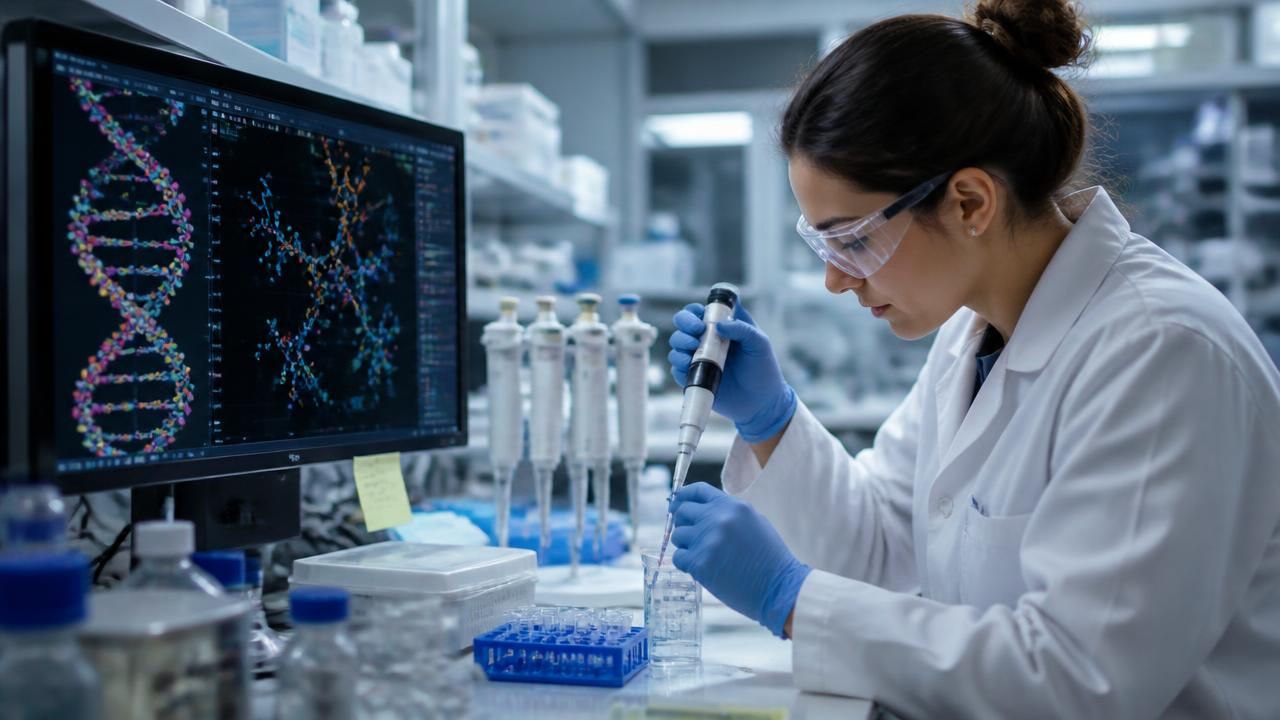
For billions of years, nearly every organism on Earth has spoken the same molecular language: the genetic code. A string of DNA letters—A, T, G, C—is translated into proteins that build and run cells. That universality is both a testament to a shared origin and a formidable barrier to change. But a flurry of recent breakthroughs suggests the code is not as fixed as once believed. In a landmark experiment described by Ars Technica, researchers have managed to operate two separate genetic codes simultaneously inside the same system—a feat that could accelerate synthetic biology and reshape medicine.
The Genetic Code: Life's Universal Operating System
The genetic code is the set of rules by which information encoded in DNA is translated into proteins. With minor variations, it is used by all known life—from bacteria to blue whales. "It's not an easy thing to change, because so many things in every cell depend on it," noted Ars Technica. Previous attempts to expand the code required painstaking re-engineering of entire genomes. Now, scientists have found a workaround: instead of rewriting the native code, they introduced a second, orthogonal code that coexists with the first. This "dual code" approach sidesteps the need to compensate for alterations, although the researchers have not yet tested it in living cells.
Rewriting the Alphabet: Adding New Letters and Amino Acids
The new work builds on years of efforts to expand the genetic alphabet. In 2014, The New York Times reported that scientists had added letters to DNA's alphabet, raising both hope and fear. More recently, researchers have added four new letters to the genetic code, as covered by Singularity Hub. These synthetic bases can be used to create novel proteins with noncanonical amino acids—molecules that go beyond the standard 20. According to Nature, scientists are "hacking the genetic code to give proteins new powers," a pursuit with vast therapeutic potential. Genetic Engineering & Biotechnology News highlighted how noncanonical amino acids are inspiring the development of novel drugs, while the Guardian described organisms created with synthetic DNA that "pave the way for entirely new life forms."
A Bacterium with a Bigger Code
New Scientist reported on a "itsy bitsy bacterium" that was engineered to carry a larger genetic code. This microbe, developed by synthetic biologists, can incorporate unnatural amino acids into proteins, opening avenues for materials science and medicine. Meanwhile, ScienceDaily covered a microbe that "breaks a fundamental rule" of the genetic code, and a separate discovery of DNA that "breaks the rules of life." These findings suggest that nature itself is more flexible than textbooks suggest, and that the code's universality may be an accident of history rather than a necessity.
Beyond the Code: AI, Gene Editing, and Disease
The implications extend far beyond the lab. BBC News reported that artificial intelligence has been used to design brand-new viruses, a tool that could help prepare for pandemics—or, worryingly, be misused. On the medical front, NBC News detailed a one-time gene editing therapy that cut harmful cholesterol levels in half in an early trial. Mayo Clinic researchers are using AI and genetics to identify early signs of a rare, life-threatening heart condition. Stanford-led research found a rare mutation that protects against Alzheimer's disease. Even aging is being targeted: BBC Science Focus described a new drug that may have "cracked the cheat code for reversing ageing."
These breakthroughs are part of a broader movement to not only read but write and rewrite genomes. As Nature asked recently, "Why is it so hard to rewrite a genome?" The answer involves the intricate web of interactions that any change can disrupt. Yet tools like CRISPR-Cas9, discussed by HDBuzz in the context of Huntington's disease, are making targeted edits more feasible. The NIH Intramural Research Program highlighted a cutting-edge technique that simultaneously edits multiple genetic targets, and ScienceDaily reported that scientists "just cracked the code to editing entire chromosomes flawlessly."
Broader Perspectives and Ethical Considerations
The scientific community is buzzing with both excitement and caution. Stanford News called a generative AI tool "a milestone in biology," while Phys.org traced the genetic code's origins to early protein structures, suggesting that the code evolved stepwise. SpaceDaily ran a provocative piece asking whether life on Earth began twice, noting that bacteria and archaea may have inherited one ancient code but independently evolved the machinery to become free-living cells. Such evolutionary insights are reshaping our understanding of life's deepest history.
But with great power comes great responsibility. The New York Times' 2025 article "Scientists Are Learning to Rewrite the Code of Life" captures the promise and peril. Yale Insights asked bluntly, "Is CRISPR Worth the Risk?" Public concerns are not new: in 2014, the Times noted that adding letters to DNA's alphabet raised hope and fear. Now, as AI accelerates discovery—from designing viruses to mapping DNA's physical code via large-scale simulations (as reported by News-Medical)—ethical frameworks are struggling to keep pace.
The Road Ahead
The ability to run two genetic codes at once is a creative workaround that could make genome engineering vastly more efficient. Instead of rebuilding an entire organism's genome, researchers can simply add a parallel code that biosynthetic machinery reads. This could lead to cells that produce entirely new classes of materials, drugs, and even living sensors. The work is still in early stages, and hurdles remain—especially when moving from cell-free systems to living organisms. But the momentum is undeniable.
As the line between natural and synthetic blurs, we are entering an era where the code of life is no longer a fixed inheritance but a malleable language. Whether we use that language to cure disease, create new life forms, or unlock the secrets of ageing, one thing is clear: the genetic code is a canvas, and scientists are just beginning to paint.