Nine years after more than 700,000 Rohingya fled ethnic violence in Myanmar's Rakhine State, the crisis has entered what aid workers and diplomats describe as a "dangerous phase." The exodus has not stopped, humanitarian funding is shrinking, and a generation of refugees is growing up in sprawling camps in Bangladesh with little prospect of ever going home.
A Decade of Displacement
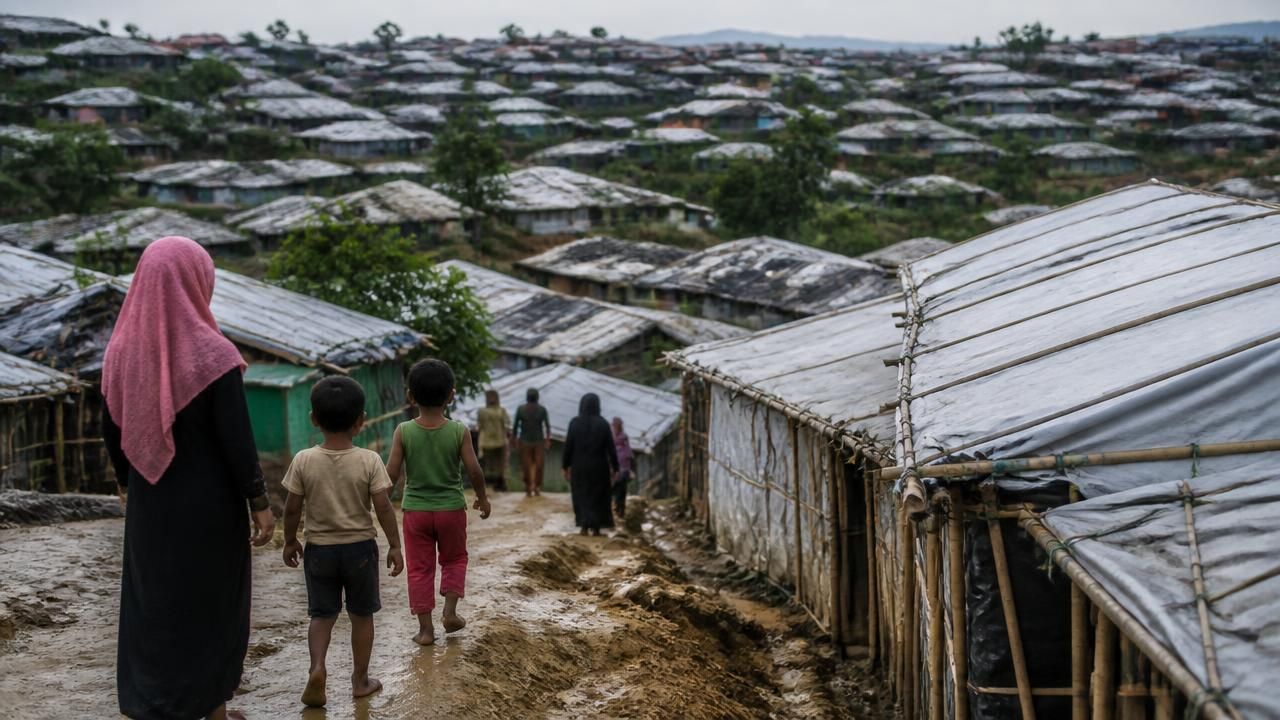
In August 2017, the Myanmar military launched a brutal crackdown against the Rohingya, a stateless Muslim minority. The violence — characterized by the United Nations as "ethnic cleansing" — forced hundreds of thousands across the border into Bangladesh. Today, nearly a million Rohingya live in the world's largest refugee camp at Cox's Bazar, in crowded conditions that aid agencies say are untenable.
But the world's attention has drifted. As NPR's latest report notes, "the world largely moved on from the Rohingya crisis." Yet the underlying drivers remain unresolved, and new waves of refugees continue to arrive, driven by persecution, violence, and despair.
International Community: No Safe Return
A growing coalition is now publicly acknowledging what refugees have long said: Myanmar is not safe for return. The European Union, joined by 15 other countries, issued a statement declaring that conditions in Myanmar are not fit for the Rohingya to go back — a rebuke to the military junta's claims that voluntary returns are possible.
The declaration cites ongoing human rights abuses, lack of citizenship for Rohingya, and a security environment that places returnees at risk. "We do not see the conditions in Myanmar as being conducive for safe, voluntary and dignified returns," the statement reads.
Diplomatic missions in Dhaka have also pledged to sustain the Rohingya issue on the global agenda. According to sources familiar with the discussions, representatives from multiple countries have committed to a coordinated, long-term approach to resolve the crisis, recognizing that rhetoric alone will not solve it.
A Generation in Limbo
For the Rohingya refugees, the statistics are stark. According to UNHCR, over half of the refugee population in Bangladesh is under 18. These boys and girls have never seen Myanmar; they have been born and raised in camps where education is limited, freedom of movement is restricted, and hope is in short supply.
One refugee, quoted by NPR, captured the sentiment: "Forget about going back." The phrase has become a grim refrain among a community that has watched peace processes fail and promises evaporate.
The humanitarian situation is deteriorating further as funding shrinks. In 2024, the Joint Response Plan for the Rohingya humanitarian crisis received less than a third of its required funding, forcing sharp cuts to food rations, healthcare, and education programs. Aid agencies warn that further cuts will lead to malnutrition, disease outbreaks, and increased protection risks for women and children.
Framing the Crisis: Differing Perspectives
The coverage of the Rohingya crisis reveals divergent emphases. Western media, including NPR, have focused on the international community's abandonment — the gap between promises and action. Reports from Bangladesh-based outlets, such as the Bangladesh Sangbad Sangstha (BSS) and Daily Sun, highlight the diplomatic efforts to keep the issue alive, showcasing statements from foreign envoys who stress the need for a durable solution.
Meanwhile, Malaysian and regional outlets warn that the crisis deepens as it enters its tenth year, pointing to mounting pressure on host communities and the instability that could spill across borders.
These are not contradictory narratives but rather two sides of the same coin: diplomats speak in Geneva and Dhaka, while the Rohingya in Cox's Bazar struggle to survive the monsoon seasons and the uncertainty.
The Path Forward
What comes next? International organizations and host governments are calling for a coordinated strategy that goes beyond humanitarian aid to include a political solution in Myanmar. "We need sustained attention, not just during emergencies, but until the Rohingya can return home with dignity," said a senior humanitarian official in Dhaka.
Some have proposed expanding resettlement opportunities for Rohingya refugees in third countries. Others argue that pressure on Myanmar's military junta must be maintained through sanctions and diplomatic isolation. Yet such measures have so far yielded little change on the ground.
As the crisis enters its tenth year, the risk is that the world's memory continues to fade. But for the Rohingya, forgetting is not an option. They remain in camps, watching their children grow up under tarpaulin roofs, as an uneasy silence settles over their fate.
"Forget about going back," one refugee told NPR, speaking for a generation that has never known home. Yet the international community's latest statements suggest that, at least for now, going back is not a possibility — and also not the solution.