Guinea-Bissau is battling its first-ever mpox outbreak, and children are bearing the brunt of the epidemic. According to local authorities and UNICEF, more than half of the suspected cases are children, with 16 under the age of four. The outbreak, declared on 4 July, has so far resulted in seven confirmed cases and 46 suspected cases, raising fears that the virus may be spreading undetected in the West African nation.
The first confirmed case was a 27-year-old woman, reported just over a week before the outbreak was officially declared. Since then, the number of cases has climbed steadily, prompting urgent public health responses from national authorities and international organizations.
Children at the Center of the Outbreak
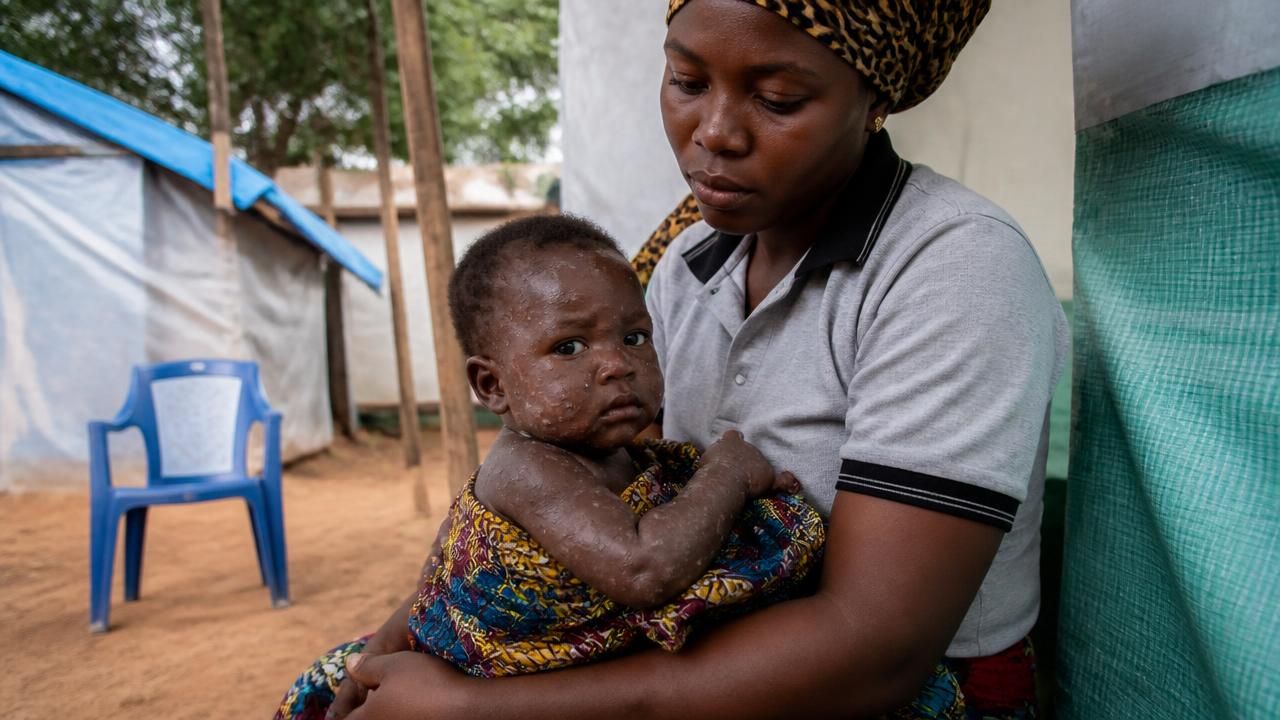
UNICEF has highlighted the alarming demographic pattern emerging from Guinea-Bissau. Data from the Ministry of Health indicate that half of all patients are children, a disproportionately high figure compared with mpox outbreaks elsewhere. In an official statement, UNICEF’s Regional Director for West and Central Africa, Gilles Fagninou, said: “It is deeply concerning that in this first outbreak in Guinea-Bissau, children account for half of the suspected cases. Young children, especially those under five, are more vulnerable to severe illness and complications, and we must do everything we can to protect them.”
The age breakdown is particularly worrying: 16 of the suspected cases are children under four years old, suggesting active community transmission among the youngest populations. Health experts warn that this could be due to increased household exposure, limited access to information, and weaker immune systems in children.
Regional Outbreak in Context
Guinea-Bissau is not alone in facing mpox. Across Africa, several countries are reporting rising case numbers, with the Democratic Republic of the Congo (DRC) experiencing a surging outbreak that has put children at significant risk. UNICEF has documented severe impacts among children in Burundi and other countries in Eastern and Southern Africa, where the disease is spreading in new areas.
Mpox, a viral zoonotic disease, has historically been endemic in parts of Central and West Africa. However, the current outbreaks are occurring in more diverse locations, including urban areas, and affecting populations that were previously untouched. The WHO declared mpox a global health emergency in 2022, and although the global outbreak was largely brought under control in Western countries, Africa continues to face recurring and newly emerging outbreaks.
“The situation in Guinea-Bissau reflects a broader regional threat. In the DRC alone, thousands of cases have been reported, and children are among the most affected. This is not just a local emergency; it is a regional public health crisis that demands a coordinated African and global response.” — UNICEF spokesperson
Health Systems Under Strain
The concurrent outbreaks of other infectious diseases—cholera, measles, and Ebola—are stretching already fragile health systems in West and Central Africa. UNICEF has repeatedly warned that multiple disease outbreaks are heightening public health emergencies for children across the region. In the DRC, for example, measles and cholera outbreaks have claimed hundreds of lives, while Ebola outbreaks continue to flare up periodically. Guinea-Bissau, one of the poorest countries in the world, has limited laboratory capacity and disease surveillance infrastructure, which hampers both detection and response.
Health workers in Guinea-Bissau are facing a double challenge: managing the cluster of mpox cases while also maintaining routine immunization and maternal and child health services. With the outbreak spreading in communities with close family structures, household transmission is a primary concern. “Children are often in close physical contact with parents and siblings, which increases their risk of exposure,” says Dr. Ibrahima Sory, an epidemiologist at the National Institute of Public Health in Bissau. “We need to raise awareness about symptoms, modes of transmission, and the importance of early medical care.”
Vaccine Access and International Response
In response to the growing crisis, UNICEF has issued an emergency tender for mpox vaccines in collaboration with the Africa Centres for Disease Control and Prevention (Africa CDC), Gavi, the Vaccine Alliance, and the World Health Organization. This initiative aims to secure vaccines for the countries most affected, including Guinea-Bissau, the DRC, and Burundi. The vaccines are expected to be delivered over the coming months, targeting priority populations such as children, health workers, and close contacts of infected individuals.
However, vaccine access remains a major challenge. Mpox vaccines are in short supply globally, and many African countries have limited experience with mpox vaccination campaigns. “The tender is an important first step, but it must be matched with funding, operational support, and community engagement to ensure vaccines reach the children who need them most,” said a Gavi representative.
Framing the Outbreak
The international media has focused on different aspects of the story. The Guardian emphasizes that the outbreak was declared “almost two months ago” and that there are fears the virus may be spreading undetected, pointing to weak surveillance and limited testing capacity. UNICEF’s communication stresses the child-centered impact and calls for immediate protection measures. Other outlets, such as India Blooms and Devdiscourse, frame it as a “first outbreak” that has “sparked alarm,” highlighting the novelty and unpreparedness of the country.
The diversity of these framings reflects deeper questions about how the global community responds to emerging infectious disease threats in already vulnerable settings. While mpox may no longer dominate headlines in the West, the outbreak in Guinea-Bissau is a stark reminder that disease outbreaks anywhere pose a threat everywhere.
What Must Be Done
UNICEF and WHO are urging the government of Guinea-Bissau and international partners to:
- Strengthen disease surveillance and contact tracing to identify hidden chains of transmission.
- Educate communities, especially caregivers, about mpox symptoms and prevention measures.
- Ensure rapid access to diagnostics and appropriate medical care for affected children.
- Deploy vaccines to high-risk groups once available.
- Maintain vital health services for children, including routine immunization and nutrition.
As the outbreak evolves, the priority is to prevent further spread and to protect those most vulnerable. Children in Guinea-Bissau and across Africa are counting on a swift and effective response. The world must not look away.