The James Webb Space Telescope (JWST) has once again thrown cosmology into question. Astronomers using the observatory have discovered that massive galaxies in the early universe contain far more small, faint stars than expected. This hidden population of stars could make some of these galaxies three to four times more massive than previous estimates, according to new research published in a peer-reviewed study. The finding makes it even harder to explain how enormous, mature galaxies formed so soon after the Big Bang – and suggests that planets around low-mass stars may have been more common in the early universe than scientists realized.
A Hidden Stellar Population
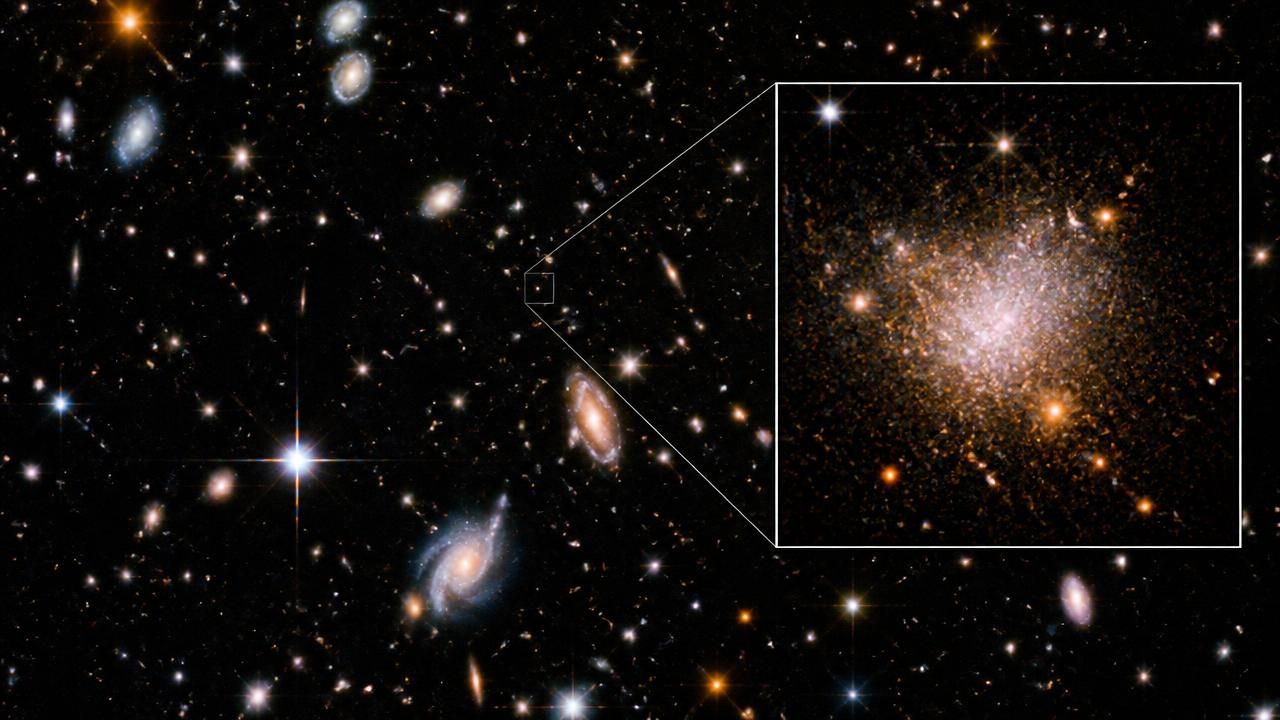
The research, reported by sources including Science Daily, focused on galaxies observed by JWST as they existed only a few hundred million years after the Big Bang. Earlier analyses assumed that these galaxies were composed primarily of massive, bright stars, similar to those seen in nearby galaxies. But the new analysis reveals a substantial population of low-mass, faint stars that had been invisible in previous measurements. When astronomers account for these hidden stars, the total stellar mass of some early galaxies jumps dramatically – in some cases by a factor of three or four.
“This is a significant discovery because it means the galaxies we thought were already surprisingly massive are even more massive,” said an astronomer involved with the study. “It challenges our models of galaxy formation from the ground up.” The finding adds to a growing list of JWST observations that suggest the early universe matured far faster than standard cosmological models predict.
‘Universe Breakers’ and the Crisis in Cosmology
This is not the first time JWST has found seemingly impossible galaxies. In 2023, astronomers announced the discovery of six galaxies from just 500–700 million years after the Big Bang that contained as much stellar mass as the Milky Way does today. Dubbed “universe breakers,” these galaxies were 100 times more massive than anything theorists had expected at that epoch.
“These objects are way more massive than anyone expected,” said Joel Leja, assistant professor of astronomy and astrophysics at Penn State, who modeled light from those galaxies. “We expected only to find tiny, young, baby galaxies at this point in time, but we've discovered galaxies as mature as our own in what was previously understood to be the dawn of the universe.”
The new hidden-star findings intensify this problem. If the early galaxies are not just massive, but even more massive than initially measured, the gap between observation and theory widens further. Some researchers have proposed that these galaxies are not truly massive but rather contain active supermassive black holes that make them appear brighter and more massive. However, the new study’s identification of a large population of low-mass stars is difficult to reconcile with that explanation.
Galaxies That Shouldn’t Exist
The puzzle goes beyond galaxy masses. JWST has also found galaxies that were already “quenched” – meaning they had stopped forming stars – just two billion years after the Big Bang. One such galaxy, ZF-UDS-7329, was already dead only 2 billion years after the Big Bang, defying the expectation that galaxies need more time to consume their gas.
Other observations have revealed spiral galaxies with structures that should not have survived the chaotic early universe. The so-called “Big Wheel” galaxy, discovered by JWST, is a grand-design spiral galaxy that existed just two billion years after the Big Bang. It is five times more massive than the Milky Way, and its delicate spiral arms should have been disrupted by frequent mergers at that epoch. Meanwhile, a separate galaxy found by JWST contains several times more stars than the Milky Way, formed 12 billion years ago, and does not rotate at all – a state that models say is virtually impossible for such a massive galaxy.
The Role of Black Holes
JWST has also uncovered a menagerie of early black holes, including supermassive black holes with masses exceeding a billion suns when the universe was only 670 million years old. Some of these appear “overmassive” relative to their host galaxies, meaning the black hole is more massive than would be expected based on the galaxy’s stellar mass. Yet a study from June 2026 suggests that many of these early overmassive black holes may actually be statistical outliers – the extreme tail of a normal distribution – rather than a distinct population requiring exotic formation mechanisms.
Other JWST observations have identified “Little Red Dots” – small, very distant, strikingly red galaxies that shine brightly in infrared light. Initially mysterious, these objects are now thought to be galaxies containing overmassive black holes that dominate their host galaxy’s light. The sheer number of these red dots has led astronomers to propose that black holes were more common in the early universe than expected, and that they may have played a major role in quenching star formation.
Explaining the Impossible
Astronomers are scrambling to explain these observations. One possibility, supported by ALMA observations of the galaxy Y1, is that early galaxies underwent episodes of extremely rapid star formation, producing many more low-mass stars and a higher total stellar mass than standard models predict. Another idea invokes “monster stars” – Population III stars with masses of up to 1,000 suns – whose collapse could directly form supermassive black holes without a long period of growth.
Yet the new hidden-star results complicate the picture. If the hidden stars are common, it suggests that the star-formation process in the early universe was skewed toward low-mass stars, which would make the galaxies even more massive in total. As one researcher put it, “We may have to rethink the initial mass function in the early universe.”
Planetary Implications
The discovery also has implications for planet formation. Low-mass stars are known to host planets more frequently than massive stars. If the early universe was filled with such stars, then the first generation of planets may have been more abundant than previously thought. This could mean that planetary systems, and perhaps the conditions for life, emerged very early in cosmic history – a tantalizing possibility that JWST could explore further.
What’s Next?
Astronomers caution that the hidden-star interpretation still needs to be confirmed. The galaxies are extremely distant, and their light is faint and redshifted, making detailed analysis challenging. Future JWST observations, as well as those with ground-based telescopes like ALMA and the upcoming Extremely Large Telescope, will be essential to pin down the true masses and stellar populations of these early galaxies.
Regardless of the outcome, the “hidden stars” discovery reinforces the sense that the early universe was far more complex and vigorous than anyone imagined. The James Webb Space Telescope continues to challenge our understanding of the cosmos, and each new finding seems to raise as many questions as it answers. As one team lead noted, “We are rewriting the history of the universe.”