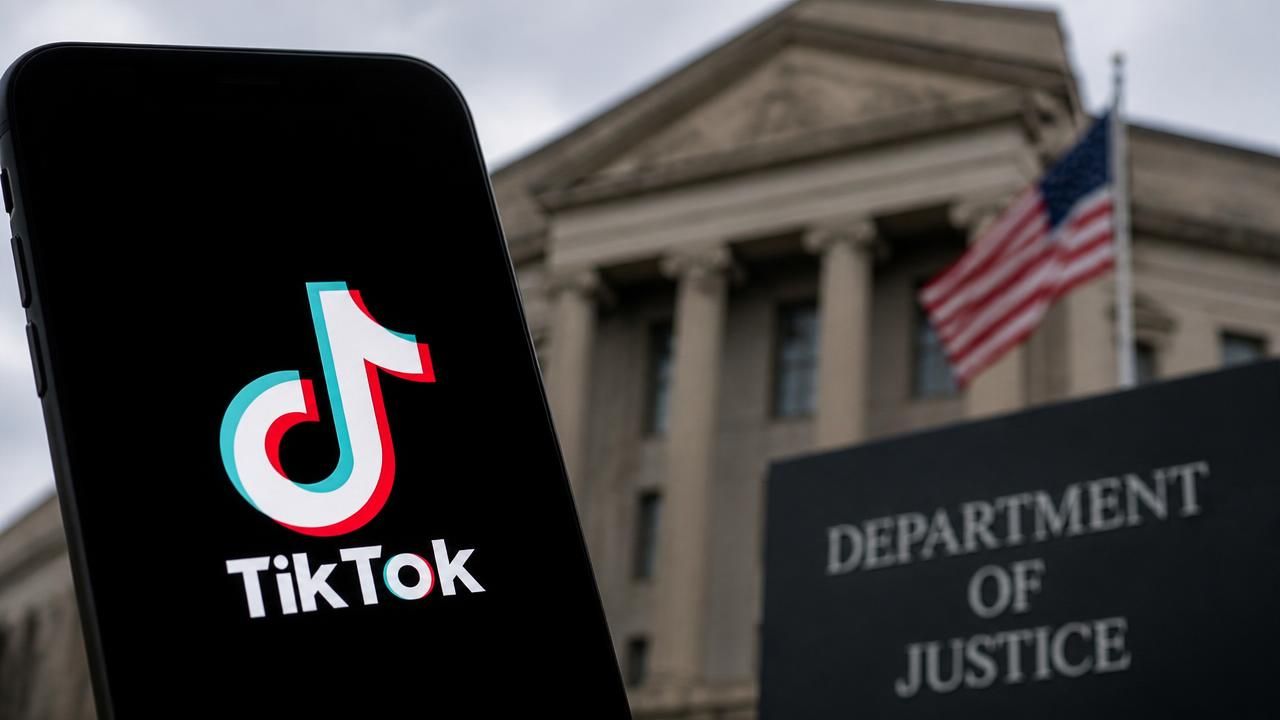
The U.S. Department of Justice announced on Friday that TikTok has agreed to pay $400 million to settle a lawsuit alleging the popular short-form video app violated the Children's Online Privacy Protection Act (COPPA). The settlement, one of the largest ever obtained under the federal children's privacy law, resolves claims that TikTok collected personal data from children under 13 without notifying parents or obtaining verifiable parental consent, and failed to delete children's accounts when parents requested removal.
The agreement comes after months of negotiations and marks a significant escalation in U.S. government enforcement against tech platforms that handle children's data. The DOJ filed the lawsuit in 2024, accusing TikTok and its parent company ByteDance of knowingly allowing children to create accounts and interact with the platform while harvesting their location, device identifiers, and viewing habits.
A Record Settlement with a Staged Payment Structure
Under the terms of the settlement, TikTok will pay $300 million immediately upon the agreement's execution. A further $100 million will be paid “upon entry of an order vacating a prior consent decree entered against TikTok's predecessor, Musical.ly,” according to the DOJ's press release. This two-part structure links the final payment to the formal dissolution of an earlier regulatory order that had been in place since 2019.
“This settlement is one of the largest recoveries ever obtained under COPPA,” the DOJ said, underscoring the significance of the enforcement action.
The Justice Department characterized the settlement as a clear message to tech companies that profit from children's engagement will be held accountable for violating federal safeguards. Legal experts note that the $400 million figure far exceeds the previous record COPPA penalty — a $170 million fine levied against Google and YouTube in 2019 by the Federal Trade Commission and the New York Attorney General.
The Allegations: A Systemic Failure to Protect Children
The lawsuit alleged that TikTok's data practices were fundamentally at odds with COPPA's requirements. COPPA mandates that online services directed at children must provide notice of data collection practices and obtain verifiable parental consent before collecting personal information from kids under 13. The DOJ's complaint claimed that TikTok:
- Collected users' age but did not enforce age minimums effectively, allowing children to sign up with fake birthdates.
- Linked device identifiers and precise geolocation data to profiles of users it knew were likely children.
- Failed to delete accounts and personal data even after parents submitted takedown requests, contrary to both COPPA and the platform's own stated policies.
- Shared children's data with third-party advertisers and analytics vendors without proper authorization.
These practices allegedly persisted for years, even after TikTok's predecessor Musical.ly was fined by the FTC in 2019 for similar violations. That earlier consent decree required the company to implement safeguards specifically designed to prevent underage users from accessing the platform. The new settlement alleges those protections were inadequate and frequently ignored.
Context: A History of Regulatory Scrutiny
Friday's settlement is the latest chapter in a long-running saga between TikTok and U.S. regulators. The app, which has more than 1 billion global users, has faced numerous investigations into its data practices, content moderation, and potential foreign influence. The 2019 FTC fine against Musical.ly — which TikTok acquired in 2018 — was itself a landmark action, but advocates argued it did little to change the platform's underlying behavior.
In 2023, the FTC referred a complaint to the DOJ that accused TikTok of violating the 2019 consent decree. That referral eventually led to the 2024 lawsuit. Separately, multiple state attorneys general have launched investigations into TikTok's effects on minors, and the company has faced congressional hearings and attempted bans in several states.
TikTok has consistently denied wrongdoing, maintaining that it invests heavily in family safety tools and age verification technology. In a statement following the settlement, the company stressed that it has expanded parental controls and launched a dedicated kids' experience in recent years. However, the company did not admit liability as part of the settlement, a common feature in civil enforcement agreements.
How Different Outlets Framed the Story
The settlement generated extensive coverage across news organizations, each providing a slightly different lens. The Verge emphasized the legal mechanics and the fact that the payment is tied to vacating the Musical.ly consent decree. CNN and NBC focused on the record-breaking magnitude of the payout, calling it one of the largest child privacy settlements in U.S. history. The Wall Street Journal and Bloomberg highlighted the business implications for ByteDance, noting that the settlement could set a precedent for future enforcement against other social media giants.
Conversely, some outlets like the New York Post and Washington Examiner framed the agreement as a political victory for the DOJ, tying it to broader concerns about tech accountability. BBC and Reuters noted that the settlement comes as TikTok already faces a potential nationwide ban if its Chinese parent ByteDance fails to divest the app's U.S. operations. This legal backdrop adds another layer of complexity to the company's future in the American market.
What This Means for the Future
The settlement reverberates well beyond TikTok. Privacy advocates see it as a wake-up call for the entire social media industry, which has long relied on advertising models that collect massive amounts of personal data. The message is unmistakable: regulators are now willing to impose penalties that are significant enough to dent a company's bottom line.
“This is a watershed moment for children's privacy enforcement,” said one regulatory policy expert quoted by multiple outlets. “For years, tech companies treated COPPA as a check-the-box exercise. A $400 million settlement shows that the consequences can be substantial.”
The settlement also puts pressure on Congress to update COPPA, which was enacted in 1998 and has not been comprehensively amended since 2013. Bipartisan proposals to strengthen the law — such as the Children and Teens' Online Privacy Protection Act (COPPA 2.0) — have stalled in recent sessions, but this enforcement action may give lawmakers renewed momentum.
For TikTok, the financial cost is real but manageable. The company generated an estimated $16 billion in U.S. revenue in 2024, making the $400 million payout roughly 2.5% of annual revenue. Yet the reputational damage and regulatory scrutiny are unlikely to fade quickly. The company still faces unresolved questions about data security, addictive design, and foreign ownership.
As part of the settlement, TikTok will be required to comply with enhanced monitoring and reporting to the DOJ. The consent decree that replaces the old Musical.ly order will remain in effect for several years, giving regulators a direct window into the company's operations. That oversight, perhaps more than the monetary penalty, could drive long-term changes in how TikTok protects its youngest users.
The announcement has been met with cautious approval from child safety groups, though many say more must be done. “A fine is not a solution,” noted a representative from one advocacy organization. “We need structural changes that make privacy the default, not the exception. Still, this settlement is a step in the right direction.”