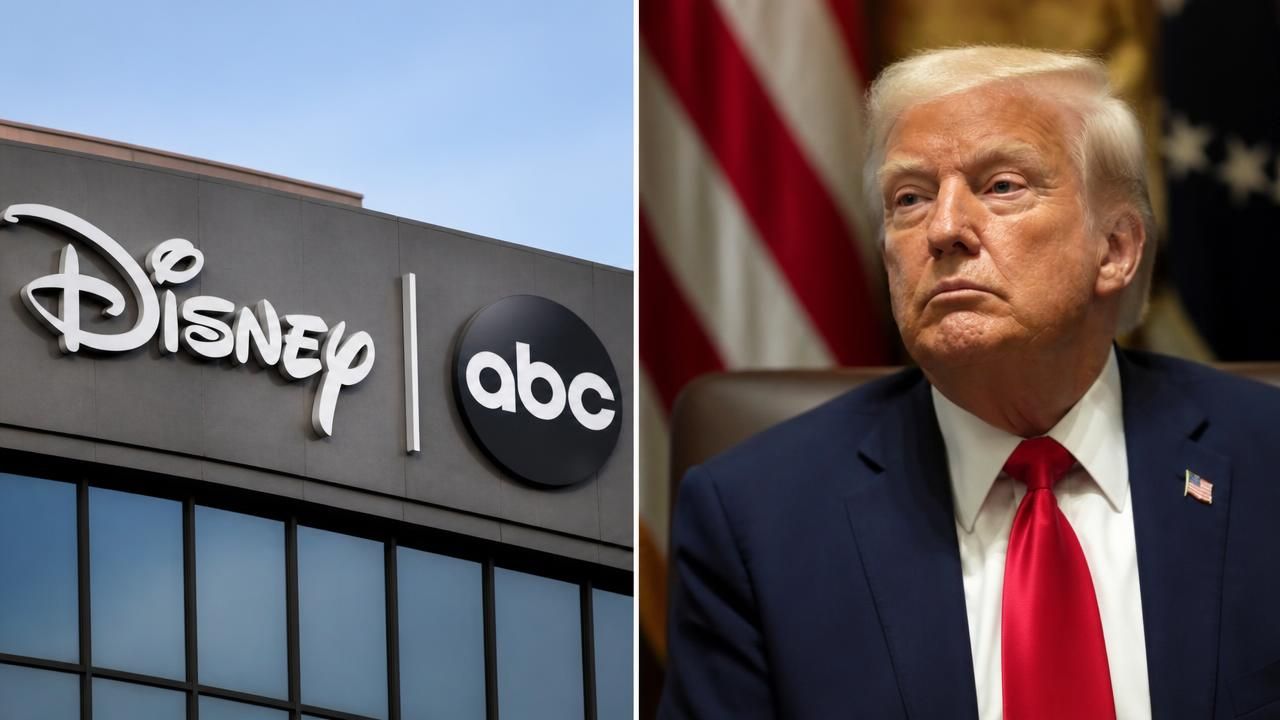
Disney and its ABC broadcast network have taken the Federal Communications Commission to court, escalating a long-simmering confrontation with the Trump administration over whether the federal government can use the threat of revoking broadcast licenses as leverage against programming it dislikes.
The lawsuit, which multiple outlets reported as a direct challenge to the FCC's authority, centers on the First Amendment protections that shield broadcasters from government retaliation over content. At its heart is a simple but legally weighty question: can regulators threaten the licenses that stations need to operate because of what a network's hosts say on air?
How the Fight Escalated
The dispute did not begin in a courtroom. It began with the president's public statements. According to NPR, President Trump has repeatedly called on Disney to fire ABC late-night host Jimmy Kimmel for mocking him, and has routinely denounced ABC's daytime talk show The View, accusing it of unfairness toward him.
Those comments moved from rhetoric to regulatory pressure as the FCC—led by Chairman Brendan Carr—opened inquiries touching on ABC's broadcast licenses. Broadcast stations operate under licenses granted by the FCC, a structure that dates back to the Communications Act of 1934 and gives the commission sweeping authority over the public airwaves. That authority has long been understood to include content-neutral rules, but not the power to punish speech.
"The government cannot use its licensing power to punish a broadcaster for the views it airs," the lawsuit argues in substance, according to reports—a claim that puts Disney squarely in the middle of America's oldest free-speech debate.
Why the Case Matters Beyond One Network
For Disney, the stakes are both financial and constitutional. As the parent company of ABC, Disney holds a sprawling portfolio of local stations whose licenses must be renewed periodically. A credible threat of license revocation—or even prolonged regulatory review—can chill coverage, cost the company money and reshape programming decisions across the industry.
For the FCC, the case raises uncomfortable questions about the line between oversight and censorship. Legal scholars note that the Supreme Court has held broadcasters to a somewhat lower First Amendment standard than print or online publishers, citing the scarcity of the spectrum. But even under that doctrine, the courts have consistently rejected the idea that the government may retaliate against a specific speaker for a specific viewpoint.
Media analysts describe the suit as a bellwether. If Disney prevails, it could reinforce a bright line: regulators may set rules, but they cannot campaign against speech. If the FCC gains the upper hand, the precedent would be far-reaching—potentially emboldening future administrations of either party to lean on broadcasters during tense political moments.
Differing Frames Across Outlets
Coverage of the story has reflected the polarized media environment it concerns. NPR and KRWG, which carried the same headline framing the case as a battle over "free speech protections," emphasized the president's pressure campaign on Kimmel and The View, positioning the lawsuit as a defense of core constitutional principles. The New York Times framed it more institutionally, headlining the story as the battle between Disney and the FCC "moving to the courts"—a procedural framing that underscores how quickly a political feud has become a legal one. USA Today's touchdownwire.com headline cast the fight in blunt terms: "Disney, ABC sue FCC over threats to broadcast licenses."
Each framing reveals a different emphasis—constitutional principle, institutional conflict, or regulatory threat—but they converge on a single fact: the dispute has now left the arena of press releases and entered the realm of judicial review.
What Happens Next
- Both sides are expected to file motions and briefs in the coming weeks, with initial hearings likely focused on procedural questions and preliminary injunctive relief.
- Disney is likely to seek protection against further regulatory action while the case proceeds, arguing that continued pressure causes irreparable harm.
- The FCC has defended its oversight role, arguing that license review is a routine part of its mandate—not retaliation.
- Industry observers will watch whether other broadcasters and tech platforms weigh in with amicus briefs, turning a single company's fight into an industry-wide cause.
However it is resolved, the case arrives at a moment when the boundaries of speech, regulation and executive power are being tested across the federal government. Broadcasters who once viewed license renewal as a bureaucratic formality now see it as a potential pressure point. And for a media industry already navigating declining ratings, streaming disruption and consolidation, the added uncertainty of a constitutional fight with the government is one more headwind.
The courtroom showdown between Disney and the FCC will not only decide the fate of one network's licenses. It will help define how far the government can go in shaping what Americans hear—and who gets to say it.