Introduction: Two Bond Stories, One Credit Market
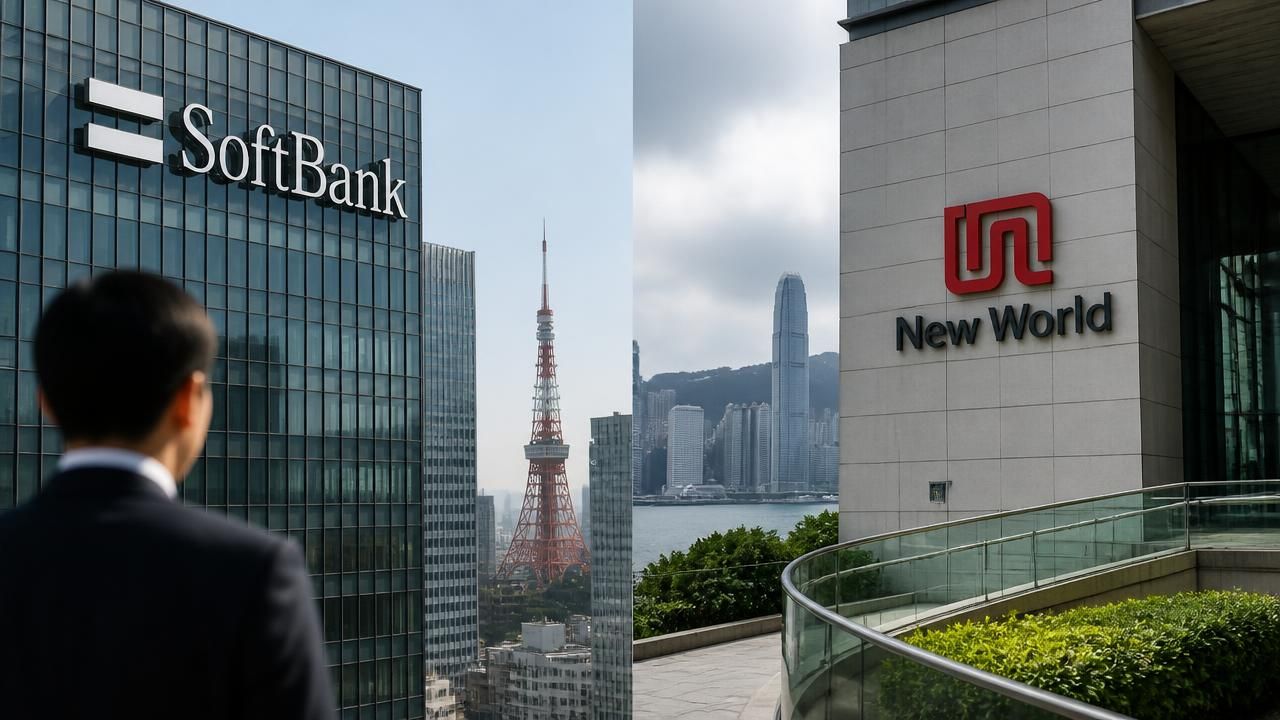
Two major debt market developments are drawing attention from investors across Asia and beyond. In Tokyo, SoftBank Group is raising $11.1 billion through what is being described as the world’s biggest high-yield corporate bond sale, with proceeds earmarked for its financing push around OpenAI. In Hong Kong, New World Development Co., the stressed property developer that has become a symbol of the city’s real estate slump, is seeking more time to pay creditors through a new bond exchange offer valued at up to $1 billion.
Together, the moves reveal a credit market that is simultaneously funding the AI arms race and managing the slow-burn fallout from a property downturn. They also underscore how bond investors are being asked to underwrite very different risks: SoftBank’s ambitious technology bets versus New World’s effort to avoid a default.
SoftBank’s Record High-Yield Sale for OpenAI
SoftBank is issuing $11.1 billion in bonds, according to reports from MSN, in a sale that ranks as the world’s largest high-yield corporate bond offering. The Japanese conglomerate is directing the capital toward its OpenAI financing push, deepening its exposure to the generative artificial intelligence boom.
The size of the sale is notable for several reasons. High-yield bonds—often called junk bonds—carry higher interest rates because they are considered riskier than investment-grade debt. For SoftBank, which has a history of bold, debt-fueled tech investments through its Vision Fund, the offering tests investor appetite for AI-related risk at a moment when valuations are high and competition is fierce.
The financing push comes as OpenAI, the maker of ChatGPT, continues to require enormous capital for computing power, talent, and infrastructure. SoftBank’s willingness to raise billions in the high-yield market suggests it sees AI as a generational opportunity—and that bond investors are willing to fund it, at least for now.
The offering is the world’s biggest high-yield corporate bond sale, according to MSN reports, highlighting the scale of capital being marshaled for AI.
New World’s $1 Billion Swap: Buying Time in Hong Kong
On the other side of the credit spectrum, New World Development is seeking to buy more time to pay off creditors with a new bond exchange offer. Bloomberg Markets reports that the Hong Kong developer, which has become a symbol of the city’s efforts to move past its property slump, is asking bondholders to exchange existing debt for new notes.
The move is a classic liability management exercise. Rather than defaulting, New World hopes to extend maturities and ease near-term repayment pressure. The exchange offer is valued at up to $1 billion, a significant sum for a company navigating a prolonged downturn in Hong Kong’s property market.
Hong Kong’s real estate sector has been hit by a combination of higher interest rates, weakened demand, and structural shifts in the Chinese economy. New World has been under pressure to reduce debt, sell assets, and reassure lenders. The exchange offer, if successful, would give the company breathing room—but it also signals that creditors are being asked to accept new terms and potentially lower recoveries.
Diverging Signals from the Bond Market
The contrast between the two deals is stark. SoftBank’s $11.1 billion sale shows that parts of the high-yield market remain open to growth stories, particularly those tied to AI. New World’s exchange offer, by contrast, reflects the defensive posture of a developer trying to survive a property slump.
- SoftBank: Raising record high-yield debt to finance OpenAI, betting on AI-driven growth.
- New World: Seeking a $1 billion bond swap to extend maturities and avoid default.
- Investor takeaway: Credit markets are differentiating between speculative growth and distressed restructuring.
Both stories matter because bond markets are a leading indicator of risk appetite. When investors are willing to fund a massive high-yield sale for AI, it suggests confidence in the technology cycle. When a major Hong Kong developer needs to exchange bonds to buy time, it suggests lingering stress in real estate and the broader Chinese economy.
What to Watch Next
For SoftBank, the key questions are how the bond sale is received, what interest rate it must pay, and how quickly the capital is deployed toward OpenAI. Any hiccup in AI sentiment could make future borrowing more expensive.
For New World, the focus will be on creditor participation. If bondholders reject the exchange offer, the company could face a more difficult restructuring or even default. A successful swap would buy time, but it would not solve the underlying challenges in Hong Kong’s property market.
Together, the two deals illustrate a credit market that is not monolithic. It can finance the future of AI while also managing the unfinished business of a property downturn. For investors, the lesson is that bond markets are pricing two very different realities—and both will shape the financial landscape in the months ahead.