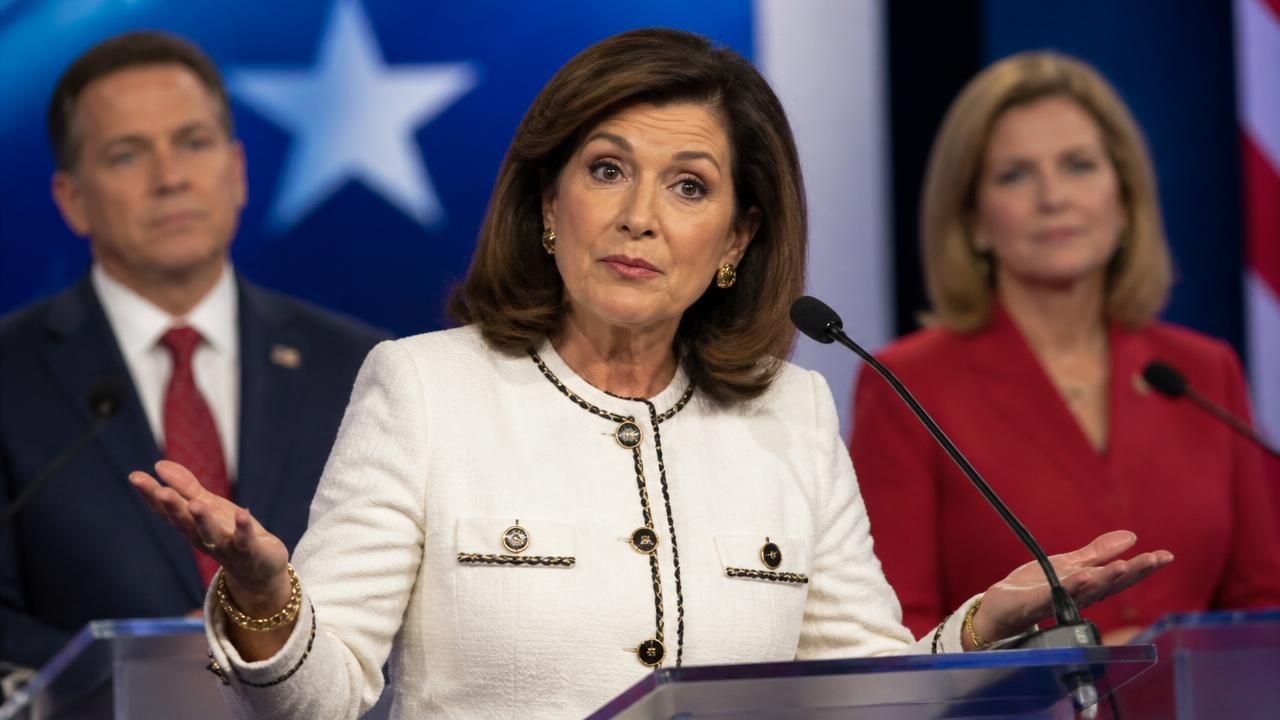
In a high-stakes debate in South Carolina, Darline Graham, the Republican senator running to succeed her late brother Lindsey Graham, delivered a moment that stunned supporters and opponents alike. When asked about U.S. policy toward Taiwan, Graham paused, then admitted, "National security is not my thing." The remark, captured on video, instantly went viral and has become a central test of her campaign promise that her lack of political experience is an asset, not a liability.
The debate, held in Columbia on Tuesday night, was the first major face-off between Graham and her primary opponents. It was meant to showcase her readiness for the Senate, but instead it reinforced doubts about her depth on foreign policy—a portfolio that defined her brother’s 20-year career. "She inherited the name but not the expertise," said one longtime South Carolina political operative. The gaffe drew sharp rebukes from rivals and even some allies, who called it "embarrassing and inexcusable" in interviews with national media.
A Debate Misstep and Its Fallout
Graham, a businesswoman with no prior political office, has positioned herself as an outsider who will "shake up Washington." In the debate, she contended that her lack of experience allows her to bring fresh perspective, arguing, "I don’t need to know every policy detail; I need to know how to lead and hire the right people." But her answer on Taiwan—where she failed to articulate the U.S. commitment to deter Chinese aggression—became the defining moment. Critics quickly drew parallels to other political newcomers who struggled with basic policy questions, from Senate candidates to presidential aspirants.
"National security is not my thing." — Darline Graham, during the South Carolina Senate debate
Graham defended herself afterward, telling reporters she was "honest" about her areas of weakness and would rely on military and diplomatic advisors. "I’m not going to pretend to be something I’m not," she said. "I’m a learner, and I’ll surround myself with the best minds." Yet the damage was done. A post-debate focus group conducted by a local news outlet found that undecided voters cited her stumble as a reason to doubt her readiness.
Echoes of a National Trend
Graham’s predicament is not unique. Across the country, political newcomers are testing whether inexperience can be sold as a virtue—often with mixed results. In Wisconsin, House candidate Michael Alfonso has run a similar outsider campaign, though his lack of policy specifics has become an issue, as local media noted. In Kansas, Republicans are trying to flip the governor’s mansion with a primary field featuring several novice politicians. And in West Texas, a scandal-plagued Republican candidate has given Democrats hope in a traditionally red district, as the incumbent’s ties to a sex scandal and a book report on Mein Kampf dominate headlines.
Washington’s Political Whirlwind
While South Carolina grabbed attention, other political developments unfolded on the national stage. The House approved a bill restricting stock trades by members of Congress, a rare bipartisan move aimed at ethics reform. Democrats shifted their tactics on the defense bill, while the House GOP’s already thin majority grew thinner with more member departures, leaving leaders able to spare just one vote on party-line measures.
In a controversial appointment, a staffer accused by Defense Secretary Pete Hegseth of leaking information was hired for an intelligence role, raising eyebrows. The Antisemitism Task Force severed ties with the Heritage Foundation, citing ideological differences. President Trump announced plans to dismiss Kennedy Center board members and install himself as chair, sparking a culture clash. And the administration moved to fund Gaza peacekeepers even as the broader peace plan falters, according to officials.
Beyond Politics: Other Headlines
Beyond the Beltway, an American missionary kidnapped in Niger was released from captivity. In Arizona, health officials confirmed a rare plague death. A Boston University student faced backlash after calling ICE on workers. And Yale University sought a deal with the Trump administration amid a sprawling investigation. These stories, while not all political, reflect the intersection of policy, culture, and governance.
The Road Ahead in South Carolina
For Graham, the debate may not be fatal. Her name recognition and Trump’s tacit support—she has aligned herself with the former president—could carry her through a crowded primary. Yet the misstep has energized her opponents and given national Democrats a potential talking point in the general election. Political analysts say the race will now turn on whether voters prioritize Graham’s outsider narrative or demand a deeper command of the issues.
As one strategist put it: "In a primary, you can get away with inexperience if you have the right last name and the right allies. But in a general election, you have to answer the tough questions—and that moment on stage will be replayed again and again."
Graham’s campaign is doubling down, releasing an ad that highlights her business acumen and family legacy. But the debate has become a cautionary tale for political newcomers everywhere: confidence is not a substitute for competence.