The Senate Commerce Committee voted Wednesday to advance President Donald Trump's pick for the Federal Communications Commission, moments after every Democratic member of the panel boycotted the session — a procedural rupture that turns a routine confirmation into an open fight over who controls the nation's top communications regulator.
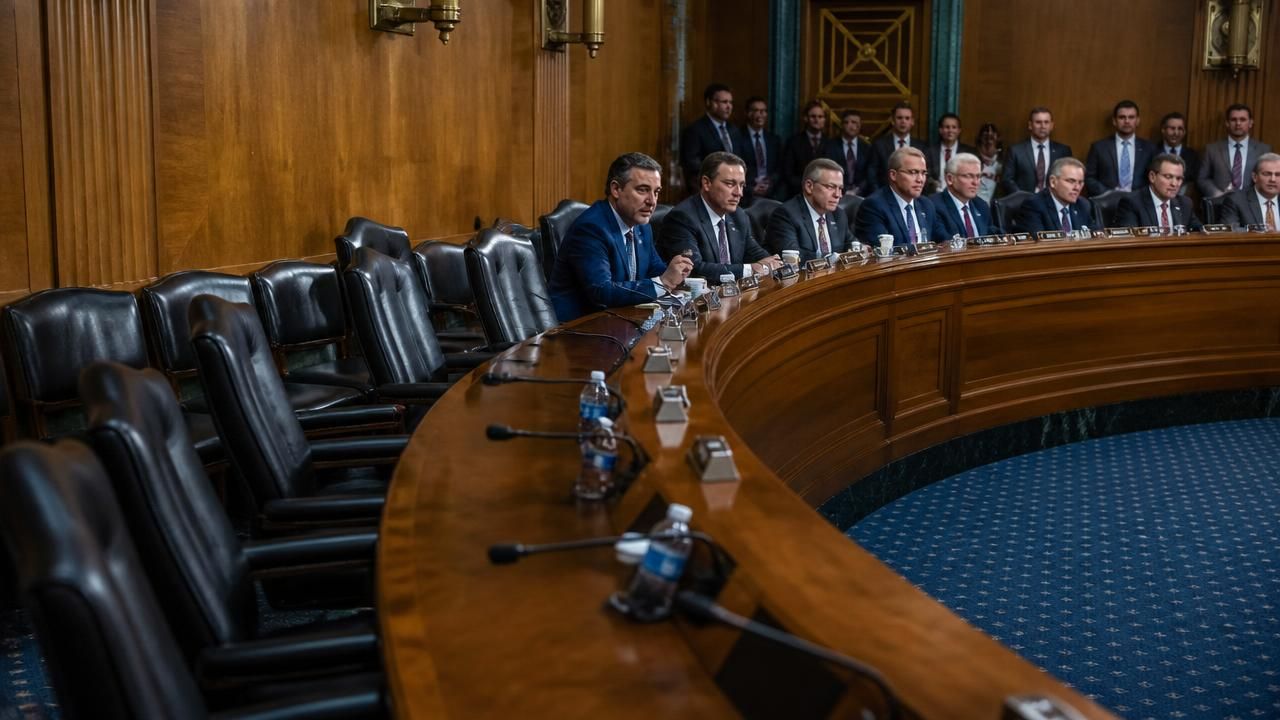
Committee Chair Ted Cruz (R-Texas) opened the meeting to a lopsided dais: all 14 Republican members seated to his right, including Senate Majority Leader John Thune (R-S.D.), and roughly a dozen empty chairs to his left. Cruz said he had learned the night before that Democrats intended to stay away, according to The Verge. Democrats, for their part, say they had repeatedly raised alarms about moving a Republican FCC nominee without pairing the pick with a Democratic counterpart — concerns they say went unanswered.
The nominee, a senior adviser to FCC Chairman Brendan Carr, was reported favorably to the full Senate. The practical effect is that the nomination now waits on floor time in a chamber Republicans control.
Why one seat matters so much
The FCC is structured for a 3-2 split between the president's party and the opposition, a design meant to force some measure of bipartisanship at an agency that governs broadcast licensing, spectrum auctions, broadband subsidies and the conduct of the country's largest media and telecommunications companies. Filling the open seat would give Republicans a working majority on a five-member commission at a moment when Carr has moved aggressively on deregulation, license challenges and investigations touching major broadcasters and tech platforms.
That agenda is precisely why the vacancy has become a flashpoint. Coverage of the fight from aggregators such as MSN framed the dispute in unusually blunt terms, with one widely circulated headline accusing Democrats of opposing Carr's effort to "rush the appointment of a lackey to FCC." The language signals how quickly a personnel matter has become a proxy war over the commission's direction.
Democrats cry foul — and cite Cruz's own record
Democratic members did not simply stay home. In statements and in the lead-up to the boycott, they invoked Cruz's own past words about how the committee should treat nominations — an argument that the Texas senator has previously championed regular order and warned against railroading picks through a divided panel. One source described Democrats using the chairman's historical rhetoric "in a bid to block" the vote, an unusual turn in which a senator's archived floor statements become the opposition's exhibit A.
Democrats say they raised their concerns repeatedly about advancing a Republican FCC nominee without a Democratic one — and that moving ahead anyway sets a precedent that will be used against Republicans the next time the White House changes hands.
The caucus has also signaled that the fight will not end with this nomination. According to reports, Senate Democrats are promising New Year investigations into Carr's stewardship of the agency, and at least one Democrat is pushing for the chairman to appear for monthly testimony before the committee — a demand designed to generate a steady public record of the commission's actions. The same senator predicted Carr would leave his post within months, a claim that, if nothing else, frames the coming year as a war of attrition.
Republican urgency, Democratic delay
Republicans cast the boycott as obstruction. Cruz told the panel he had been notified only the previous evening, and the presence of Thune — the majority leader rarely attends committee markups — underscored leadership's interest in keeping the nomination on track. Conservative-leaning outlets covered the episode as a story of Democratic retreat, with one framing the GOP push as an effort to confirm the nominee before the political window narrowed.
The Verge, by contrast, centered its account on process: the empty chairs, the timing of the notification, and the fact that a nominee can be reported to the floor with only one party in the room. Roll Call's coverage emphasized the same procedural outcome — the pick was "advanced by Senate Commerce after Democratic boycott" — treating the maneuver as a notable break with the committee's usual comity.
What happens next
The nomination now sits on the Senate Executive Calendar, where Thune can call it up at his discretion. Several factors will shape the timetable:
- Floor math: Republicans can confirm on a simple majority, but absences and scheduling can stretch a nomination across days of floor time.
- Democratic leverage: Democrats can slow the process through procedural objections and by demanding recorded votes, though they cannot block the nominee outright.
- The oversight campaign: Demands for monthly Carr testimony and promised investigations could keep the FCC chairman in the headlines independent of the confirmation fight.
- Pairing precedent: If Democrats successfully extract a commitment to pair future nominations, the episode becomes a template; if not, the boycott is remembered mainly as protest theater.
The deeper question is institutional. Committee markups have long depended on a norm that both parties show up even when they lose. Boycotts are rare, and they tend to escalate: each side can point to the other's violations the next time it holds power. For an agency whose decisions shape what Americans watch, read and pay for internet access, the dispute over an empty row of chairs is really a dispute over how much the minority gets to say about who runs the FCC — and for how long the majority's advantage lasts.