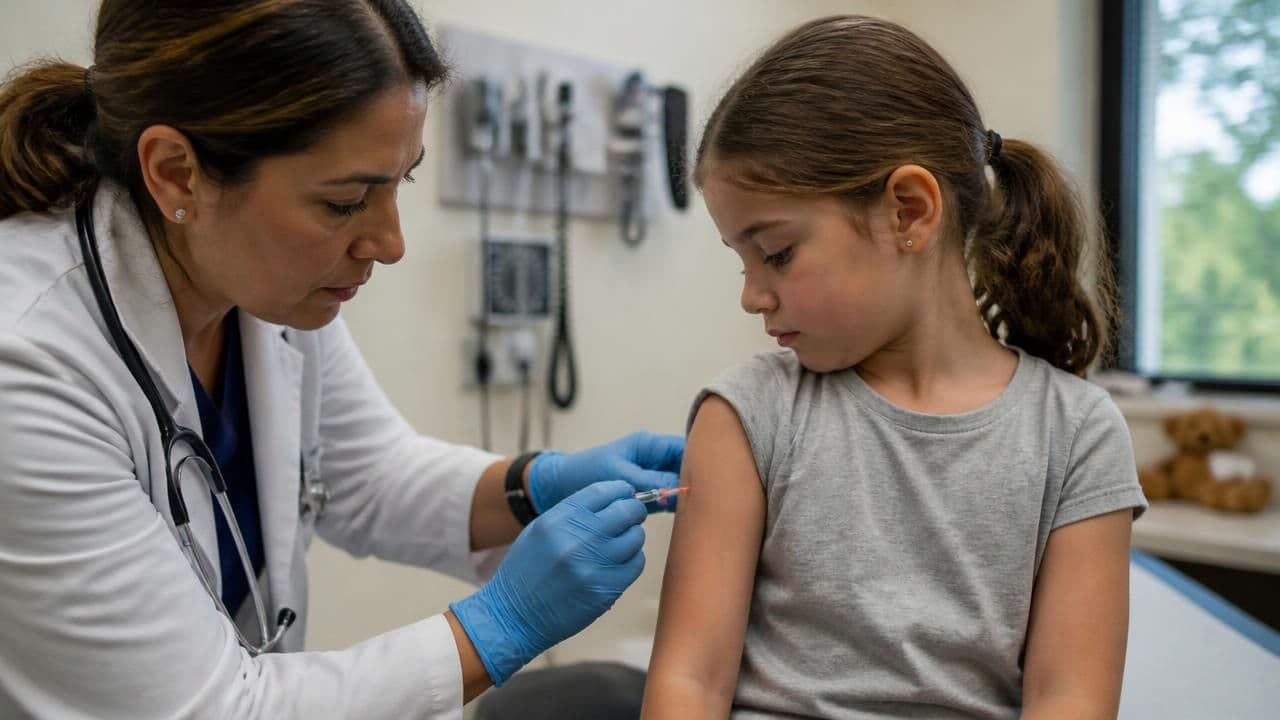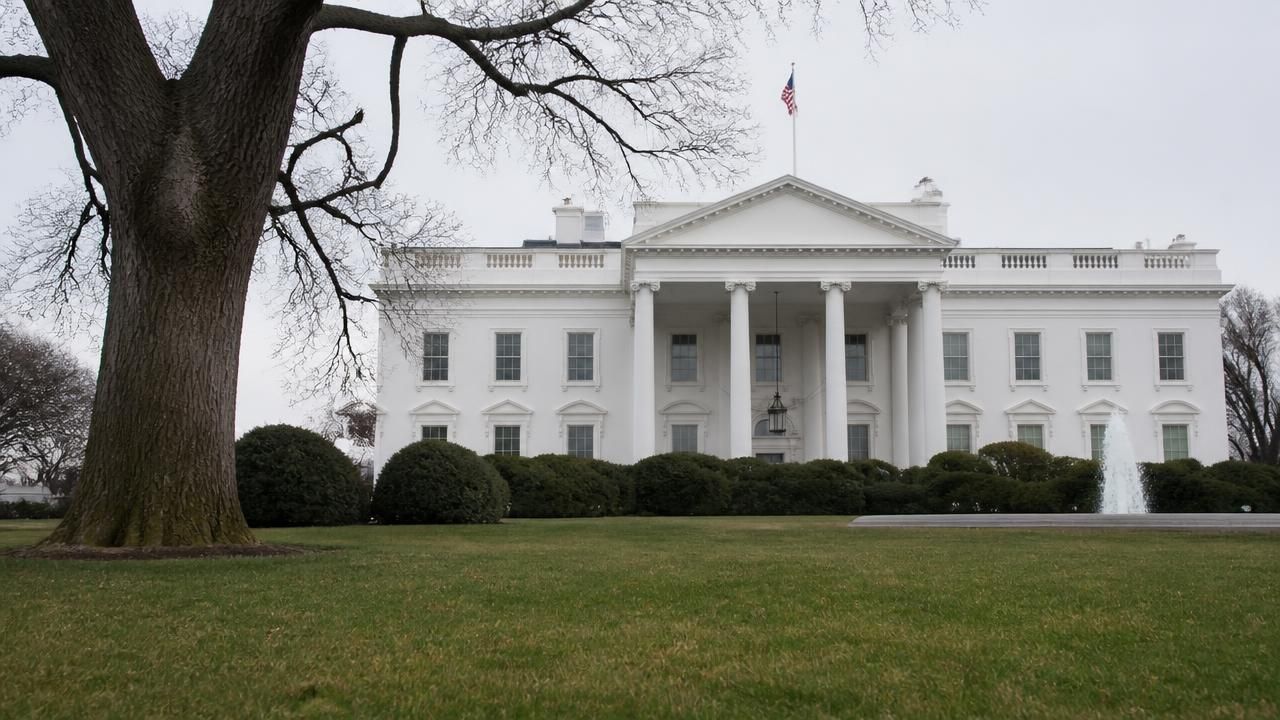
The White House abruptly withdrew Heidi Overton's nomination to lead the Food and Drug Administration late Tuesday, hours before a Senate committee was set to vote on her confirmation — the first of two swift blows to President Trump's science and health nominees in less than 24 hours.
By Wednesday, a key Senate committee had also declined to take up the nomination of Jim O'Neill to lead the National Science Foundation, according to Scientific American, leaving both agencies without Senate-confirmed leaders at a moment when the FDA is weighing major regulatory decisions and the NSF is navigating deep budget and policy turbulence.
A nomination pulled on the eve of a vote
Axios first reported that the White House had withdrawn Overton's name, a development subsequently covered by MSN, Yahoo News, Nation of Change and others. Overton, a senior conservative domestic policy aide inside the White House, had been an unusual pick to run the FDA: a policy operative rather than a physician-scientist or a regulator with agency experience, elevated to oversee an institution of roughly 18,000 employees responsible for drugs, vaccines, medical devices and much of the nation's food supply.
Her nomination had drawn skepticism from Republicans and Democrats alike over her positions on vaccines, abortion, vaping and birth control. She opposes abortion — though, as Ars Technica noted, perhaps not emphatically enough to satisfy some Republicans — and had backed the administration's contested vaccine policies, alienating Democrats.
Her September confirmation hearing did not repair the damage. In the words of Ars Technica's account:
“Overton consistently stonewalled senators on every topic, refusing to directly answer even softball questions from friendly Republicans, leaving lawmakers on both sides of the aisle openly frustrated.”
Among the questions she declined to answer directly: how she would handle the FDA's safety review of mifepristone, the abortion pill whose safety is well established in extensive clinical data; whether she agreed with Trump's false claim that the measles vaccine is “quite lethal,” or that children receive vaccine doses “the size of a soda bottle”; and whether the president could ever be wrong. She also refused to say whether she backed the administration's own anti-vaccine rhetoric.
The non-answers mattered because the FDA's next commissioner inherits a live docket: the mifepristone review, vaccine label and approval questions, tobacco and vaping policy, and decisions on abortion-pill access that states and courts are watching closely.
Why the White House blinked
Reporting across outlets converged on the same explanation: the votes were not there. Seeking Alpha framed the arithmetic bluntly, noting that the fate of the nomination would fall on Senate Democrats — a signal that at least some Republicans were unpersuaded and that confirmation would have required cross-party support the White House could not count on. Withdrawing the nomination before a public committee vote spared the administration a televised defeat and preserved the option of naming a replacement.
The withdrawal also underscores a familiar pattern in confirmations: the hearing, not the paperwork, is where nominations die. Overton's refusal to engage gave wavering senators no political cover to support her.
The NSF: a committee declines to act
Within a day, the second shoe dropped. According to Scientific American, a key Senate committee refused to vote on Trump's nominee to lead the National Science Foundation, Jim O'Neill. O'Neill, a former deputy secretary of Health and Human Services under George W. Bush, is a management-and-investment figure with a long record in biomedical policy rather than a conventional academic research résumé — an unconventional profile for an agency whose mission is basic science funding.
A committee's refusal to schedule a vote is a quieter form of defeat than a failed roll call, but functionally similar: the nomination simply stalls, and the agency continues to operate under acting leadership. For the NSF, that means continued uncertainty over grant priorities, workforce decisions and the agency's posture toward politically sensitive research areas.
How the story is being framed
- Institutionalist framing: Scientific American and Ars Technica treat the twin setbacks as a story about expertise and congressional oversight — committees refusing to rubber-stamp nominees who will not answer questions.
- Horse-race framing: Seeking Alpha and Axios emphasize vote counts, Senate math and the timing on the eve of a committee markup.
- Political framing: Outlets such as Nation of Change cast the withdrawal as a defeat for an ideological nominee whose views on vaccines and reproductive health put her outside the mainstream.
The two withdrawals landed in a crowded and volatile political news cycle. The same week brought the publication of Joe Biden's White House memoir, an unapologetic defense of his four years in office, and a Forbes report that Elon Musk had apparently deleted a “Vote Red Today!” post — a deletion flagged by his own platform's Grok chatbot after Republican losses. Coverage of the 2026 Senate map, including Tennessee's race, is already underway. Together the developments sketch a political environment in which nominees with thin records and controversial records face far less shelter than in past cycles.
What happens next
The FDA and NSF will keep running on acting leadership, which limits both agencies' authority to set long-term direction. The White House must now decide whether to re-nominate Overton, pick a less polarizing figure with a conventional regulatory background, or leave the seat open. Much depends on whether Senate Democrats — whose votes the math appears to require — see a replacement as a negotiating opportunity or a target.
The deeper signal is about the pipeline itself: when nominees decline to answer questions, committees increasingly decline to vote, and the agencies that regulate vaccines, drug approvals and federally funded science are left to drift.