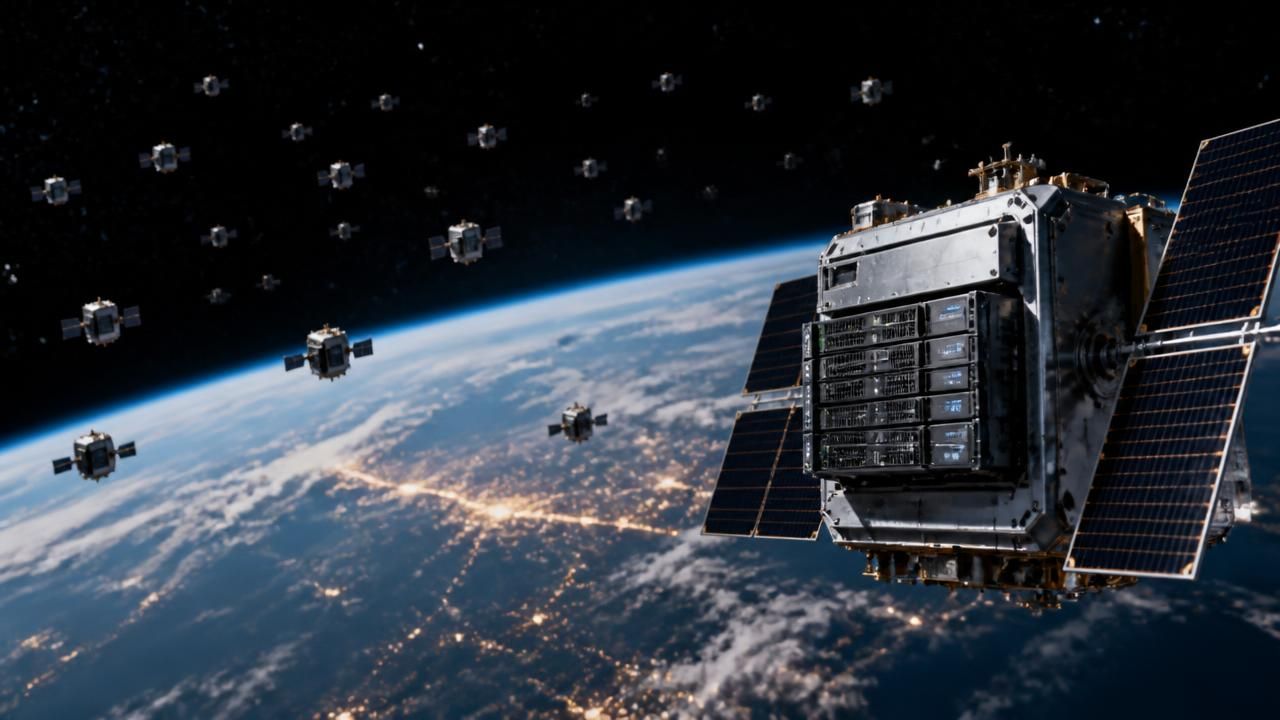
SpaceX has unveiled plans to launch a constellation of AI data centers into low-Earth orbit, a proposal that has sparked both excitement and alarm across the tech, environmental, and financial worlds. The ambitious project, known internally as 'AI1' and informally as 'Project Suncatcher,' aims to deliver 1 gigawatt of space-based compute power by late 2027. Elon Musk, SpaceX's CEO, has touted orbital data centers as 'the only way to scale AI' beyond terrestrial limits, but experts warn of severe technical, environmental, and economic hurdles.
The Vision: AI Compute in Orbit
At the core of the proposal is a constellation of up to 1 million AI-optimized satellites, each equipped with GPUs for machine learning workloads. According to a May 29 FCC filing, these satellites would be solar-powered and use liquid cooling systems—though not water, as PCMag notes, likely relying on dielectric coolants capable of operating in vacuum microgravity. The orbital data centers would beam data via laser links and radio, offering round-the-clock solar energy without atmospheric interference or terrestrial land constraints.
Google is reportedly in talks with SpaceX to partner on the initiative, which would see AI workloads processed in orbit. SpaceX has also discussed the plan with JPMorgan CEO Jamie Dimon, who told investors, 'I have seen the numbers, and this could actually work.' The company is planning an IPO for its Starlink satellite division, and orbital data centers could become a major growth story—one that analysts say could benefit Nvidia, a key GPU supplier, as well as specialized cooling and satellite manufacturers.
'Space is the only way to scale AI,' Musk said, doubling down on the vision during a recent investor presentation.
However, not everyone is convinced. Geopolitical analyst Peter Zeihan called the idea 'so many levels of dumb,' while a Reuters analysis argues that the near-term AI payoff for SpaceX will remain tethered to Earth, pointing to the company's existing terrestrial AI data centers in Memphis as the more immediate revenue driver.
Environmental Fallout: From E-Waste to Ozone
The most vocal criticism comes from environmental and astronomical communities. Ars Technica warns that the megaconstellation would create a new category of e-waste: valuable materials launched into orbit and never returned. Based on the typical five-year lifespan of data center GPUs, roughly 200,000 satellites would need decommissioning each year. Of those, about 40,000 would deorbit and burn up in the atmosphere, dispersing aluminum and other metals into the stratosphere. This could cause unknown amounts of ozone depletion over decades, as aluminum particles catalyze ozone-destroying reactions.
DarkSky International, an advocacy group for dark skies, has launched an open letter urging SpaceX to abandon the million-satellite plan, citing light pollution that would obscure the night sky and interfere with astronomical research. The nonprofit points out that Starlink alone has already doubled the mass of objects in low-Earth orbit, and a constellation 10 times larger would be catastrophic for ground-based observatories.
Phys.org further contends that moving data centers to orbit does not erase AI's environmental footprint; it merely shifts it. Manufacturing those millions of satellites requires energy and raw materials, and rocket launches produce substantial carbon emissions and black carbon soot that can accelerate global warming. A single Falcon Heavy launch emits hundreds of tons of CO2 equivalents, and deploying 1 million satellites would require tens of thousands of launches.
Engineering and Economic Realities
Even setting aside environmental concerns, engineers question the practicality of maintaining a fleet of orbital data centers. Ars Technica's technical review highlights the enormous challenges: heat dissipation in a vacuum, radiation hardening of electronics, orbital debris risk from micrometeoroids and other satellites, and the sheer complexity of servicing and upgrading GPUs in space. The FCC filing acknowledges that some satellites would be moved to a 'disposal orbit' rather than deorbited, potentially creating a new belt of dead hardware around Earth.
SpaceNews reports that another company, Orbital, has filed plans for 100,000 orbital data centers of its own, suggesting the concept is gaining traction beyond SpaceX—but it remains unproven at any scale. The cost of launching a single Falcon Heavy is roughly $100 million, and putting a usable data center satellite in orbit could cost tens of millions more. Even Dimon, despite his optimism, admitted there are 'technical and valuation risks.'
Investor Interest and Political Scrutiny
Wall Street is already positioning for the orbital compute race. CNBC's analysis identifies potential winners in semiconductor makers, satellite manufacturers, and laser communications firms. Nvidia stands out as a likely massive beneficiary, given its dominance in AI accelerators. Meanwhile, SpaceX is facing questions from a U.S. House Energy Committee demanding a tour of its Memphis AI data centers, signaling heightened regulatory scrutiny of the company's expanding compute empire.
Digital Trends editorializes that the space-based data center hype is 'already in orbit,' with Bezos's Blue Origin also exploring similar concepts. The publication warns that the rush to build orbital compute could outpace safety and environmental regulations, echoing concerns from astronomers and sustainability advocates.
The Road Ahead
As SpaceX races toward a late 2027 target, the debate over orbital data centers represents a broader conflict between technological ambition and planetary responsibility. Proponents see unlimited solar power and the ability to bypass terrestrial grid constraints as key to AI's exponential growth. Detractors see a reckless expansion of space junk and a unsustainable use of resources.
For now, the concept remains largely theoretical, but the FCC filing and corporate partnerships indicate serious momentum. Whether orbital data centers become a transformative platform or a cautionary tale will depend on addressing the engineering, environmental, and economic questions that Earthbound critics have raised. As with many Musk ventures, the gap between vision and reality is vast—but history has shown that dismissing his ideas outright can be equally foolhardy.