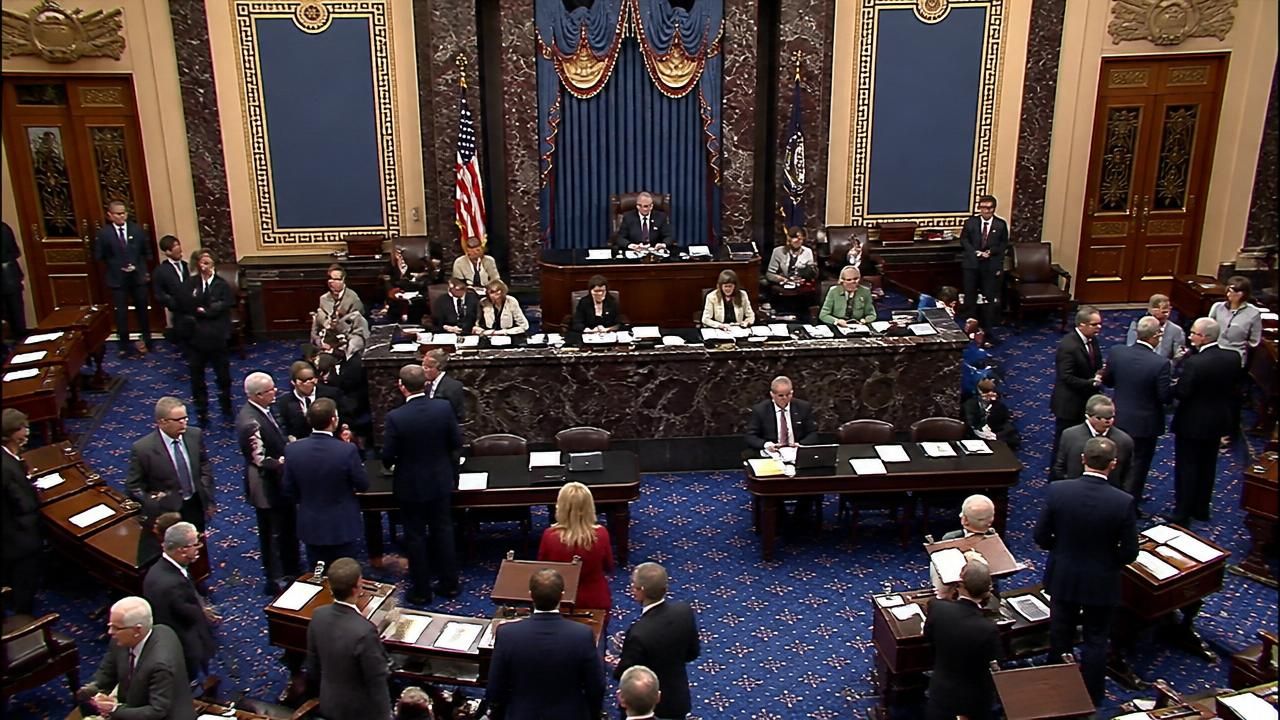
The U.S. Senate on Tuesday approved a sweeping bipartisan permitting overhaul intended to accelerate the construction of power plants, transmission lines, pipelines and the sprawling data centers underpinning the artificial-intelligence boom, clearing the chamber in a 62-33 vote that cut across party lines.
The bill — referred to by supporters and lobbyists as the BAAJA permitting reform package — marks the Senate's first major legislative action since the midterm elections and, according to its Republican authors, a rare breach of Washington gridlock on energy policy. It now heads to the House, where its fate is far less certain.
What the Bill Would Do
At its core, the legislation compresses the federal approval process for large energy and infrastructure projects, setting firmer deadlines on the environmental reviews mandated by the National Environmental Policy Act and consolidating the web of agency sign-offs that developers say can stretch for a decade or more.
It also imposes new cost obligations on data centers, requiring the facilities to shoulder a greater share of the grid upgrades and generating capacity their enormous electricity demand makes necessary — a provision that supporters frame as a matter of basic fairness to ordinary ratepayers.
- Faster reviews: Binding timelines and consolidated interagency reviews for qualifying projects.
- Data center accountability: New requirements for hyperscale facilities to pay for the energy infrastructure they require.
- Broader scope: Covers power generation, transmission, pipelines and related infrastructure.
- Bipartisan backing: 62 senators voted in favor, well beyond the 60-vote threshold.
The AI-Fueled Demand Crunch
The bill arrives at a moment of acute energy anxiety. Americans are grappling with rising electricity costs at the same time that demand is surging — driven in significant part by the data centers powering AI models. Grid operators have warned that load growth, flat for two decades, is now climbing sharply, and developers argue that the existing permitting regime cannot deliver capacity fast enough to keep pace.
That argument has assembled an unusual coalition. Energy companies, utilities, labor unions and major technology firms have all pressed for speed, casting the overhaul as an economic competitiveness issue as much as an environmental one. Republicans, including Sen. Shelley Moore Capito of West Virginia, have championed the measure as a way to unlock domestic energy production of every kind, and celebrated its passage while immediately pivoting to the House fight.
A Democratic Party Divided
Yet the vote exposed the deepest rift in the Democratic caucus on energy policy in years. Supporters, including Sen. Martin Heinrich of New Mexico, argued that a faster, more predictable permitting system is a precondition for building the clean-energy infrastructure Democrats want — and that opposing it cedes the affordability debate to Republicans.
"It's hard to disagree with your friends," Heinrich said amid the debate over the bill, a remark that captured the awkward position of Democrats caught between environmental constituencies and voters demanding lower utility bills.
Opponents within the party counter that the bill's timelines amount to a shortcut around meaningful environmental scrutiny, and that streamlining reviews inevitably advantages fossil-fuel projects over wind, solar and transmission. The split has been closely tracked by agriculture and rural-interest groups as well as environmental organizations, with the push to pass the measure intensifying as the vote approached.
Environmentalists Sound the Alarm
Environmental advocates have focused much of their criticism on the data center provisions — or rather, on what they see as the bill's failure to grapple with the sector's full footprint. Reporting from Inside Climate News has highlighted how hotly contested the data center impact remains in the federal permitting fight, with critics arguing that faster approvals for gas-fired generation to serve AI load could lock in decades of new emissions.
The counterargument from industry is that without new capacity, the grid risks reliability failures and price spikes that would hit lower-income households hardest. Both sides agree on the underlying diagnosis — demand is rising and the system is slow — but diverge sharply on whether speed or scrutiny should be the priority.
What Happens Next
Attention now shifts to the House, where the bill's coalition is narrower and the calendar more crowded. Speaker-aligned conservatives have their own permitting priorities, while House Democrats face the same internal tensions that played out in the Senate. Lobbyists on both sides say the measure's survival depends on whether the Senate's lopsided margin can be converted into pressure for a floor vote.
If enacted, the legislation would be the most consequential rewrite of federal infrastructure review in a generation — reshaping how quickly the country can build the power generation and transmission that the AI economy demands, and who pays for it. If it stalls, the underlying problem remains: a grid straining under demand it was never designed to meet, and a Congress that has now demonstrated it can pass a fix but not yet that it will.