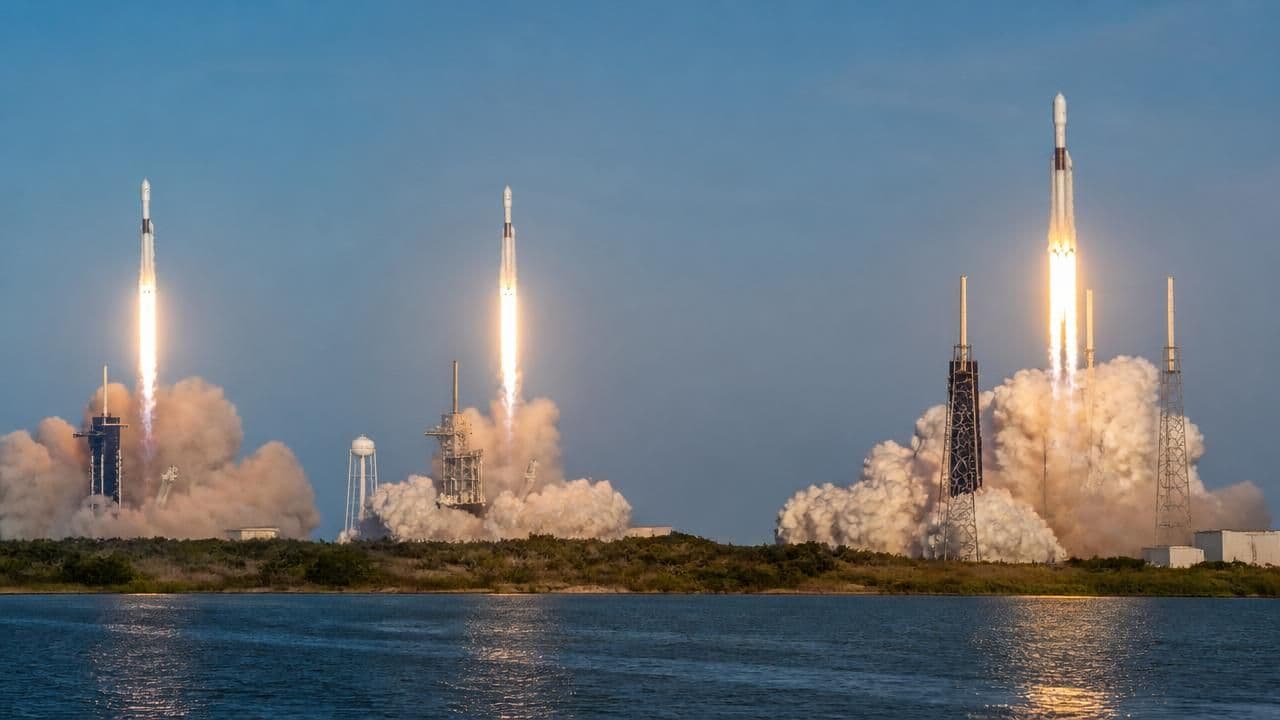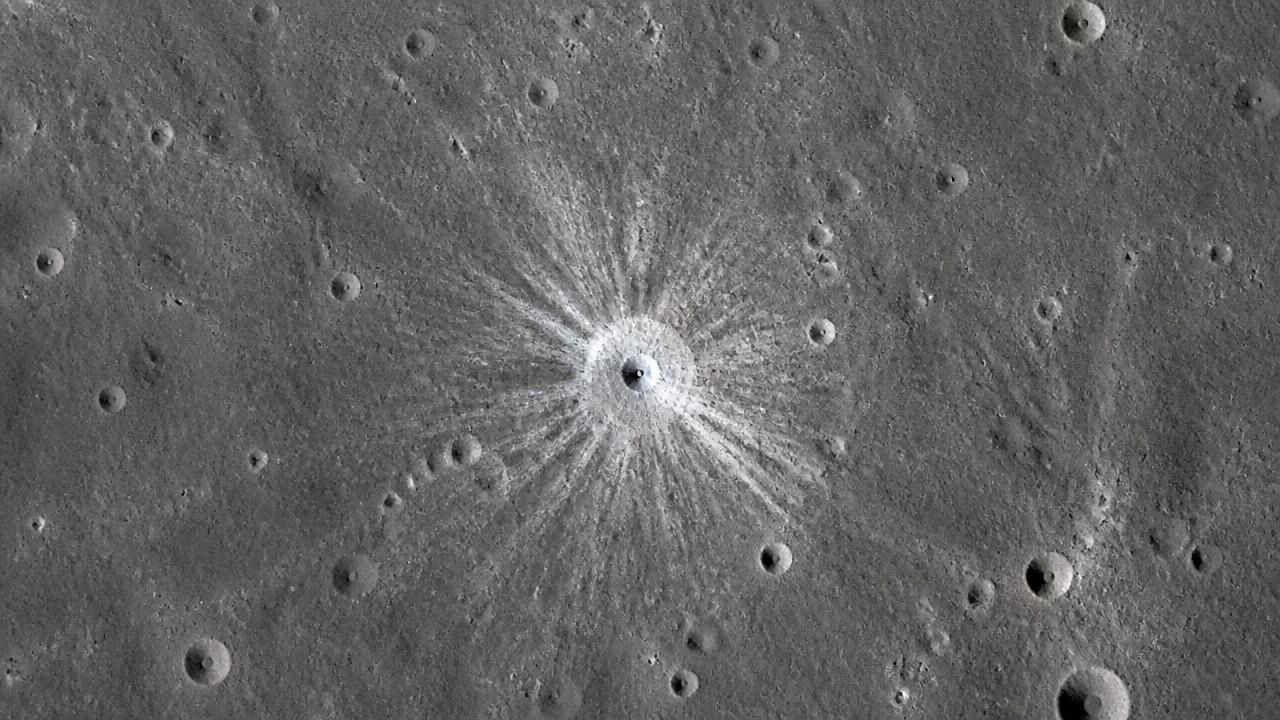
When a spent SpaceX Falcon 9 upper stage slammed into the Moon on August 5, 2026, it created a crater that did not go unnoticed. Within days, two lunar orbiters—NASA's Lunar Reconnaissance Orbiter (LRO) and South Korea's Danuri spacecraft—captured images of the impact site, offering scientists an unprecedented opportunity to study the aftermath of a human-made object crashing into the lunar surface.
The crash was the end of a nearly two-year journey for the rocket stage, which had launched the Firefly Blue Ghost 1 lunar lander mission in January 2025. After successfully deploying the lander, the upper stage was left in a high-altitude orbit around Earth. Over time, gravitational perturbations from the Sun and Moon caused its trajectory to decay, ultimately sending it careening into the lunar surface at roughly 5,000 miles per hour.
First Images From Two Orbiters
NASA's LRO, which has been mapping the Moon since 2009, was the first to release images. Between August 11 and 12, 2026, the spacecraft maneuvered to point its Narrow-Angle Camera at the impact site, which lies in the Moon's southern hemisphere. The images reveal a fresh crater approximately 20 meters in diameter surrounded by bright ejecta rays—material blasted outward during the collision.
The Korean Aerospace Research Institute (KARI) followed with its own images from Danuri, also known as the Korean Pathfinder Lunar Orbiter, which has been in lunar orbit since late 2025. The Danuri images, released via social media and the Korean space agency's website, provide a complementary view of the site from a different angle and lighting conditions, helping scientists to construct a three-dimensional model of the crater.
“Getting the pointing right was only half the challenge; timing had to be accurate as well. If the camera snapped even 10 seconds too early or too late, the target would drift off-center by 10 miles.” — NASA, describing LRO's imaging maneuver
That intricate dance involved tilting the spacecraft so its cameras would point toward the crater each time LRO passed about 60 miles above the Moon, traveling at 1 mile per second. The orbiter circles the Moon from pole to pole every two hours, so it took six days for the target to rotate into view.
A Boom for Lunar Science
While the crash was not part of any planned mission, scientists say it amounts to a serendipitous experiment. The Falcon 9 upper stage is a large, hollow object with a cylinder-like structure and a heavy engine at one end. Its impact—at high speed and at a known mass—provides a natural test case for collision models that usually rely on laboratory experiments or computer simulations.
“This is a unique opportunity to see how a human-made object interacts with the lunar surface,” said Dr. Sarah Noble, LRO deputy project scientist, in a NASA statement. “The crater's shape and ejecta distribution will tell us about the mechanical properties of the regolith and how the stage itself behaved as it broke apart.”
Preliminary analysis suggests the crater is asymmetric, with a distinct double-lobed pattern indicating that the rocket stage tumbled during descent and struck engine-first. The hollow nature of the upper stage likely caused it to collapse and fragment in ways that a solid meteoroid would not.
Testing Hollow-Body Impact Models
The August 5 impact is especially valuable because of the debris field it created. LRO's images show a series of small secondary craters surrounding the main pit—evidence that pieces of the rocket broke away during the dive and struck the surface at different points. By matching those impacts to known structural features of the Falcon 9 second stage, engineers can refine models for how spacecraft break up during uncontrolled reentry.
This is not the first time a large piece of space hardware has hit the Moon. NASA's Apollo mission upper stages struck the Moon intentionally in the 1970s, and the LCROSS mission in 2009 created a visible crater by crashing a rocket stage into a permanently shadowed polar crater. But those impacts were observed mainly from Earth or from spacecraft at a distance. The LRO and Danuri images provide high-resolution before-and-after views that were impossible in earlier decades.
How the Story Was Covered
The event generated widespread media attention, but with different framings. News outlets like Forbes and The New York Times had run stories in advance, when the rocket's trajectory was first calculated to result in a lunar impact. At that time, some observers dubbed it the “first accidental lunar crash” of a commercial spacecraft—though later analysis showed it was the result of natural orbital mechanics rather than a guidance error.
After the crash, CNN titled its explainer “A SpaceX rocket collided with the moon. Here's what to know,” focusing on the broader implications for space debris and lunar exploration. Wired provided the first clear images from LRO, while several MSN outlets highlighted the South Korean orbiter's role, using headlines such as “SpaceX Falcon 9 rocket impact crater on the moon spotted by South Korean orbiter—see first pictures.”
BBC Science devoted attention to the scientific value, asking “What can scientists learn from a stray SpaceX rocket hitting the Moon?” The answer, as NASA and KARI have demonstrated, is quite a lot—from the mechanics of crater formation to the behavior of complex metallic structures under hypervelocity impact.
Looking Forward
The new crater will persist for geological ages, joining the thousands of impact craters that dot the lunar surface. But for scientists, its youth is its greatest asset. Over the coming months, LRO will continue to image the site as lighting conditions change, revealing subtle details that could be hidden in the initial snapshots. Danuri's instruments—which include a polarimetric camera and a gamma-ray spectrometer—may also detect compositional changes in the ejecta.
For the aerospace industry, the incident underscores the need to track and dispose of spent rocket stages responsibly. While most upper stages are either deorbited into oceans or boosted into heliocentric orbits, the Falcon 9 stage that hit the Moon slipped through because its disposal orbit was not sufficiently stable. As more spacecraft travel to the Moon and beyond, such events will become more common—and with them, new opportunities for science.