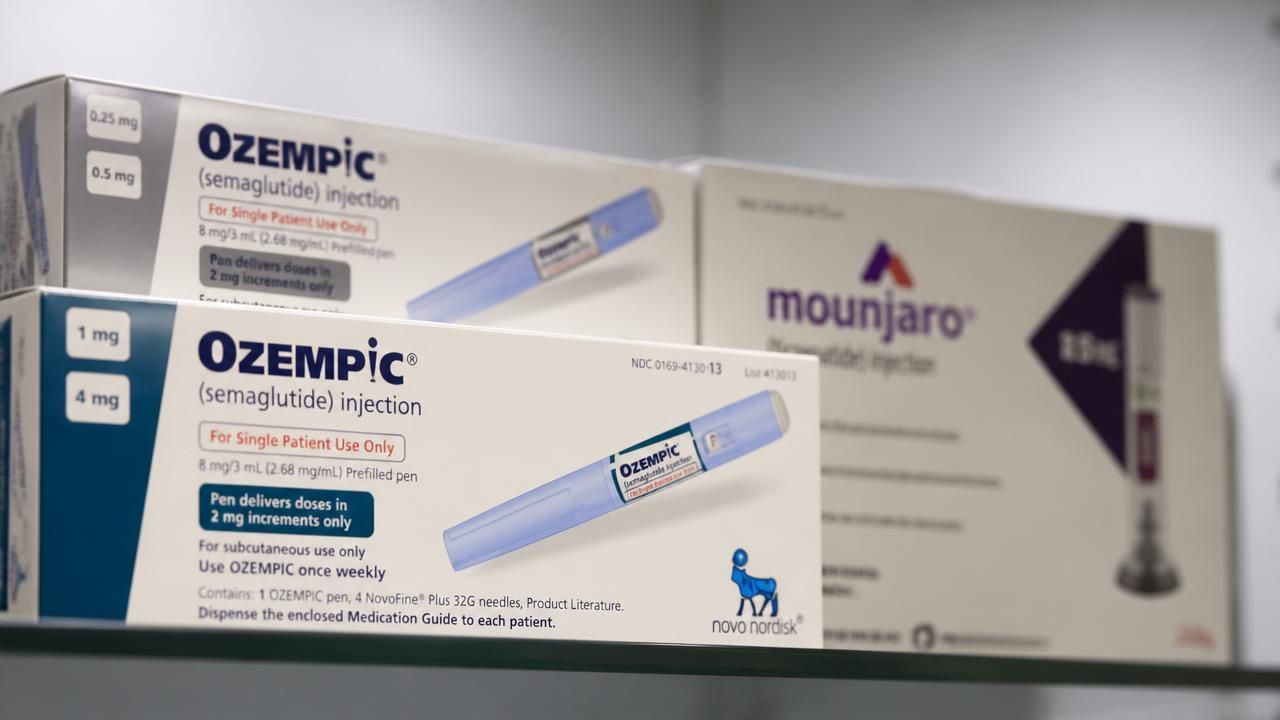
They were designed for diabetes, repurposed for weight loss, and are now being scrutinized for something far more ambitious: what they do to the human brain. A wave of new reporting on GLP-1 receptor agonists — semaglutide, sold as Ozempic and Wegovy, and tirzepatide, sold as Mounjaro and Zepbound — portrays a drug class that keeps outrunning its own label, delivering unexpected benefits while accumulating equally unexpected risks.
The latest flashpoint is cognitive health. A growing body of observational evidence, summarized in a new review, suggests people taking GLP-1 medications may run a lower risk of dementia. But the picture is more complicated than the headlines suggest: major randomized trials found that semaglutide did not slow the progression of Alzheimer's disease in patients who already had it. Scientists now suspect the drugs may be most protective earlier in the story — preserving memory and thinking in people with obesity or type 2 diabetes, before cognitive problems take hold.
A Brain Drug Hidden Inside a Weight-Loss Drug?
The hypothesis is biologically plausible. GLP-1 receptors are expressed in the brain, and the drugs appear to reduce neuroinflammation, improve vascular health and stabilize blood sugar — all pathways implicated in cognitive decline. Obesity and diabetes are themselves among the strongest modifiable risk factors for dementia, so any drug that durably changes those conditions may carry neurological benefits as a downstream effect rather than a direct one.
The emerging consensus is not that these drugs treat dementia, but that they may help prevent the metabolic and vascular damage that precedes it — a distinction with enormous consequences for how the drugs are prescribed and studied.
That nuance has been largely lost in translation. Greek and international outlets covering the same review emphasized the dementia signal in their headlines while noting, often further down, that Alzheimer's progression was untouched. The divergence illustrates a broader pattern: early observational findings are being reported with the urgency of definitive trial results.
The FDA's New Warning: A Rare Eye Condition
The safety conversation shifted sharply after the U.S. Food and Drug Administration added a warning to the labels of Ozempic, Wegovy, Mounjaro and Zepbound about a rare eye condition linked to sudden vision loss — non-arteritic anterior ischemic optic neuropathy, sometimes described as an "eye stroke." Regulators in other markets have issued similar guidance.
For most patients the risk appears very small, and the warning is not a reason to stop treatment without consulting a physician. But for a minority it has been catastrophic. British and European tabloids have carried first-person accounts from patients who say they went suddenly blind while on the injections, and the case reports have pushed health authorities to formalize warnings that were initially dismissed as anecdotal.
The lesson is familiar from the drug's broader arc: at population scale, even rare adverse events become statistically visible, and the burden of proof shifts from "does this happen?" to "how often, and to whom?"
Aging, Nutrition and the Deficiency Problem
Separately, data highlighted this week suggest GLP-1 drugs may slow certain biological markers of aging — an early, tentative finding that researchers caution is far from proven. More concrete is a nutritional concern: because the drugs suppress appetite and slow gastric emptying, some patients eat so little that they develop serious micronutrient deficiencies. One study linked GLP-1-driven vitamin deficiency to a rare neurological disorder, a reminder that powerful appetite suppression requires active nutritional management rather than passive weight loss.
Clinicians are increasingly urging new patients to treat the drugs as part of a regimen — protein targets, vitamin monitoring, muscle-preservation strategies — rather than a standalone injection. Nutrition guidance, once an afterthought in prescribing, is becoming central.
Hearts, Switches and the Cost of Stopping
Cardiovascular data continue to favor the class. New analysis indicates that increasing the dose of semaglutide may reduce heart risk more than switching patients to tirzepatide, a finding with direct implications for insurers and formularies weighing the two drugs against each other.
Meanwhile, discontinuation is emerging as its own clinical dilemma. Because the drugs suppress appetite only while they are taken, stopping typically produces rapid weight regain, along with the metabolic improvements that came with it. Patients and physicians are being forced into open-ended treatment conversations that neither was prepared for.
Lawsuits, Eating Disorders and the Cultural Fallout
The commercial and social consequences are arriving alongside the science. Hundreds of lawsuits have now been filed in New Jersey — home to several major pharmaceutical employers — alleging severe gastrointestinal injuries and inadequate warnings. Legal exposure of that scale tends to reshape how drugmakers communicate risk, and often how aggressively they market.
There is also a quieter concern. Clinicians and commentators are asking whether some patients presenting for weight loss are actually living with anorexia nervosa, and whether easy access to appetite-suppressing medication is masking or worsening eating disorders. The question, raised bluntly by The New York Times — "Is it Ozempic, or Anorexia?" — cuts to a cultural shift in which thinness has again become a medical goal, with a prescription to match.
What Patients Should Take Away
- Benefits are real but category-specific. Cardiovascular protection is well supported; dementia prevention is promising but unproven; Alzheimer's treatment has failed in trials.
- Watch for vision changes. Sudden vision loss on a GLP-1 should prompt immediate medical evaluation.
- Nutrition is not optional. Protein, vitamins and muscle mass need monitoring, especially with rapid weight loss.
- Stopping has consequences. Plan for long-term management rather than a course with an endpoint.
The GLP-1 story has moved past the question of whether these drugs work. The harder questions now concern who should take them, for how long, at what dose, and with what safeguards — and whether the enthusiasm generated by blockbuster weight-loss results has outpaced the more cautious, incremental science of the brain, the eye and the aging body.