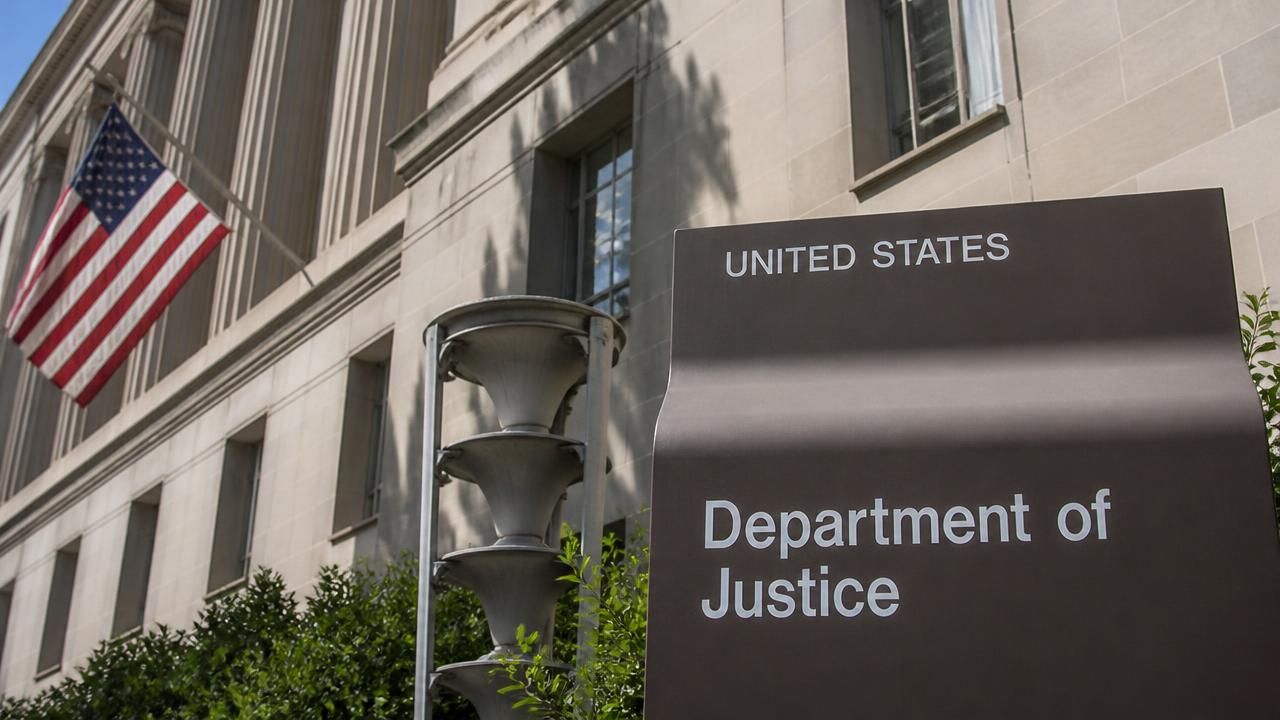
A former federal prosecutor has filed a lawsuit against the Department of Justice (DOJ), alleging she was unlawfully and retaliatorily fired earlier this year for her work prosecuting a case against anti-abortion activists. The legal action, covered by NPR, CBS News, and MSN, centers on the Freedom of Access to Clinic Entrances (FACE) Act, a federal law that protects access to reproductive health services. The case has ignited fresh debate over the politicization of the justice system and the fragile independence of career prosecutors.
Who and What: A Termination Tied to the FACE Act
The plaintiff, a former federal prosecutor whose name has not been publicly released in the sources, alleges that her dismissal was not a routine personnel decision but a direct consequence of her involvement in prosecuting individuals under the FACE Act. The FACE Act prohibits acts of force, threat, or physical obstruction that interfere with access to reproductive health care facilities. It has become a flashpoint in the nation’s ongoing abortion wars, with some conservative activists viewing prosecutions under the law as politically motivated.
According to the lawsuit, the firing was “unlawful and retaliatory,” a phrase echoed in NPR’s coverage. The complaint argues that the termination violates federal whistleblower protections and civil service rules, and that the DOJ’s decision to remove her was influenced by the political sensitivities surrounding the case. CBS News emphasized the FACE Act connection in its headline, while MSN framed the story as a dispute over an abortion-related prosecution.
When and Where: A Legal Battle in Federal Courts
The prosecutor was fired earlier this year, though the exact date is not specified. The lawsuit has now been filed in federal court, seeking reinstatement, back pay, and damages for emotional distress and reputational harm. The DOJ has not yet issued a formal response, but the case is expected to test the limits of political appointees’ authority over career staff and the protections afforded to those who act in accordance with departmental policy.
This lawsuit comes at a time when the DOJ has faced heightened scrutiny over allegations of politicization. In recent years, both Democratic and Republican administrations have been accused of influencing prosecutorial decisions, particularly in cases involving sensitive social issues like abortion. The outcome of this case could set a precedent for how courts handle claims of retaliatory termination within federal law enforcement agencies.
Why It Matters: The FACE Act as a Political Lightning Rod
The FACE Act was enacted in 1994 in response to a wave of clinic blockades and violence following the Supreme Court’s Planned Parenthood v. Casey decision. It has been used to prosecute both pro-choice and anti-abortion activists, but in recent years, enforcement has skewed heavily toward anti-abortion protesters. The current political climate has amplified the stakes: some conservative lawmakers have called for the law’s repeal, while reproductive rights groups argue it is essential for clinic safety.
The former prosecutor’s case is likely to draw attention to the tension between career employees’ professional obligations and the political agenda of the administration in power. Legal experts point out that career prosecutors are expected to apply the law even-handedly, but when politically controversial cases arise, they can become targets. “This lawsuit is a reminder that the justice system’s independence is only as strong as the protections we afford to the individuals who enforce it,” said a former DOJ official familiar with the case, who spoke on condition of anonymity.
Media Framing: How Different Outlets Tell the Story
The coverage of this lawsuit varies in focus. NPR’s report leads with the “unlawful and retaliatory” language from the lawsuit, underscoring the procedural and legal violations alleged. CBS News places the FACE Act front and center, framing the case as a direct challenge to the administration’s softening stance on anti-abortion activism. MSN, meanwhile, is more abbreviated, but its headline – “Ex-federal prosecutor sues DOJ, argues firing tied to abortion case” – highlights the abortion angle, which is likely to resonate with both sides of the political divide.
This divergence in framing reflects the broader media landscape, where the same event can be presented as a legal dispute, a policy controversy, or a cultural flashpoint. It also signals how the story may be mobilized by advocacy groups on both the left and the right in the lead-up to the 2024 election.
In Other News: Homeschooling on the Rise in Nebraska
While the DOJ lawsuit has captured national attention, a separate but telling trend is unfolding in Nebraska. According to statistics reported by KWIT, homeschooling in the state continues to increase. The data, which shows a steady upward trajectory over recent years, suggests that more families are choosing to educate their children at home, a decision frequently driven by a mix of parental dissatisfaction with public schools, cultural or religious values, and, in some cases, a broader distrust of government institutions.
Although the connection may seem distant, both stories reflect a growing polarization and skepticism toward institutional authority – whether it be the justice system or public education. As the former prosecutor fights her termination in court, homeschooling parents in Nebraska are voting with their feet, creating alternative structures that bypass traditional systems. The parallel is not explicit, but it underscores a moment in American life when faith in public institutions is increasingly contested.
Context and Implications
The lawsuit against the DOJ is not an isolated incident. It follows a pattern of high-profile departures and firings of federal employees perceived as disloyal to the administration. If the court rules in the prosecutor’s favor, it could serve as a check on executive overreach and reassure career staff that their work is shielded from political retribution. Conversely, a defeat could embolden future administrations to more aggressively purge those who pursue cases disfavored by the White House.
For Nebraska, the homeschooling uptick carries its own implications. As more students leave the public school system, state funding formulas and resource allocation may shift, potentially straining rural districts. Yet the trend also spawns a thriving community of homeschooling networks, which some see as a form of educational innovation.
“This lawsuit is a reminder that the justice system’s independence is only as strong as the protections we afford to the individuals who enforce it.”
As both stories develop, they will be watched closely. The DOJ case will likely take months to resolve, with discovery expected to unearth internal communications that could clarify the motives behind the firing. In Nebraska, the homeschooling numbers are expected to be tracked closely by education policymakers and real estate agents alike. For now, these two seemingly unrelated stories collectively illustrate a country wrestling with foundational questions about who holds power, whom to trust, and how to structure the institutions that shape daily life.