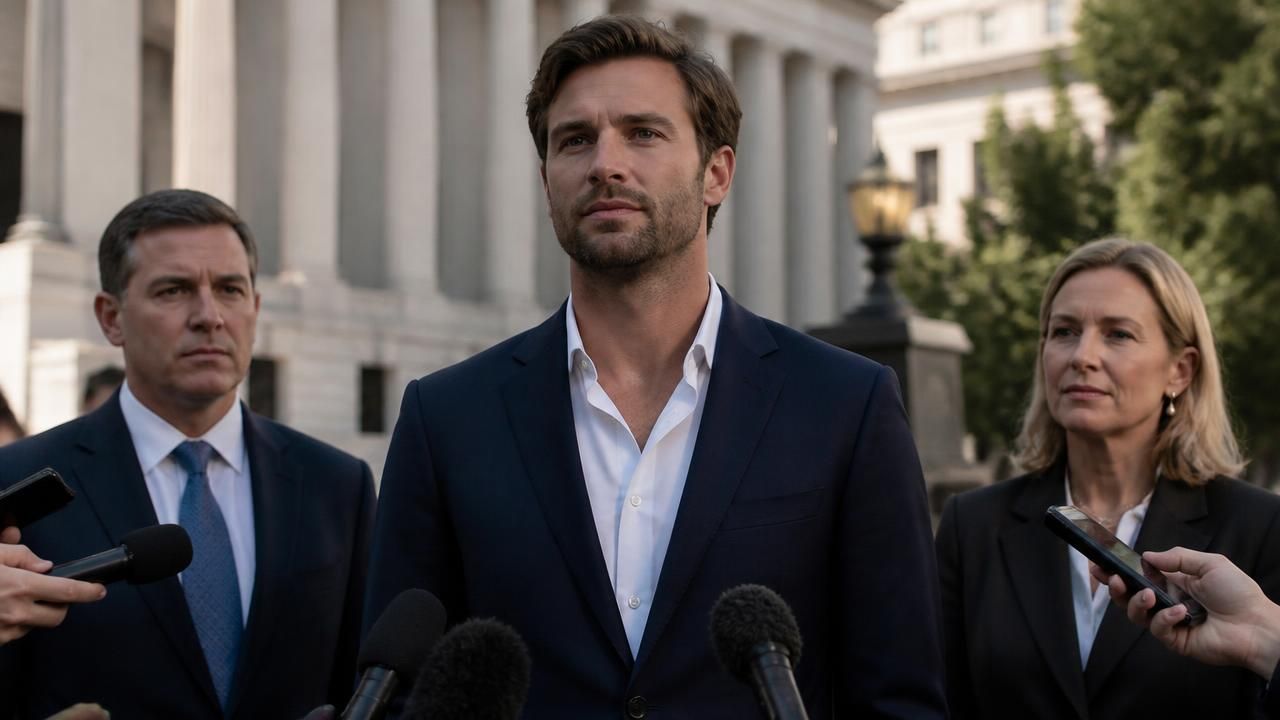
WASHINGTON — A federal judge in the District of Columbia has permanently dismissed the vandalism case against former Olympic athlete David Hearn over damage to the Lincoln Memorial Reflecting Pool, ruling that the government may not refile the charges — a decision that effectively closes one of the most politically charged prosecutions to emerge from the National Mall.
The ruling, first reported by NPR and confirmed across a wave of wire and broadcast reports, bars the U.S. Attorney’s Office for the District of Columbia from bringing the case again. In doing so, the court went further than a routine dismissal: it foreclosed the possibility that federal prosecutors could simply recharge Hearn if political winds shifted.
A Rare and Blunt Dismissal
According to NPR, the judge cited “exceptional circumstances” in deciding that the federal government could not refile its Reflecting Pool charges, despite explicit pressure from President Trump to do so. That phrase — unusual in an ordinary misdemeanor or property-damage matter — signals that the court weighed not just the evidence but the broader context in which the prosecution was unfolding.
Several outlets, including MSN and Newser, described the outcome in sweeping terms, reporting that the case had been “permanently tossed” or “permanently dismissed.” NBC News focused its headline on the practical effect of the order, reporting that the judge had barred U.S. Attorney Jeanine Pirro specifically from charging the former Olympian again. Other aggregators framed the decision as a direct rebuke of the prosecutor, with one headline describing it as a “humiliating blow.”
Hearn, who lives in Bethesda, Maryland, had returned to court in connection with the dismissed charges, according to KHOU, underscoring how many times the case had cycled through the D.C. courts before the judge ended it for good.
The Political Pressure Campaign
The case did not unfold in a vacuum. Multiple sources note that President Trump had publicly pressed for the charges to be pursued, a fact that reframed what might otherwise have been a straightforward property-damage prosecution into a test of prosecutorial independence.
MSN’s coverage zeroed in on that dimension, headlining the judge’s citation of “risk Trump will force new charges.” The implication is significant: the court appears to have concluded that leaving the door open to refiling would invite further political intervention rather than a neutral application of the law.
“Citing ‘exceptional circumstances,’ a D.C. judge has ruled that the federal government cannot refile its Reflecting Pool charges against David Hearn, despite pressure from President Trump to do so.” — NPR News
The involvement of Pirro, a former television host turned top federal prosecutor in the nation’s capital, added another layer of political texture. NBC News’ framing — that the judge had barred her office from acting — made clear the order was aimed at a specific prosecutorial authority, not merely at the case as it stood.
Who Is David Hearn?
Hearn is a three-time Olympian, a distinction that gave the case unusual visibility from the outset. Coverage consistently identifies him by his athletic record, and the Bethesda Magazine headline identified him by his Maryland hometown — a reminder that the defendant is a local figure as well as a national one.
He was accused of vandalizing the Reflecting Pool, the long, shallow basin that stretches between the Lincoln Memorial and the Washington Monument and ranks among the most iconic — and most heavily visited — sites on the National Mall. Damage to such a landmark typically triggers federal charges, and the symbolic weight of the location helped elevate the story well beyond its legal stakes.
How the Story Was Framed
The breadth of coverage produced a striking range of emphasis, even though the underlying facts were identical:
- Institutional and restrained: NPR and its affiliate KUNC led with the mechanics of the ruling — a permanent dismissal citing “exceptional circumstances.”
- Procedural: UPI emphasized that the judge had barred future charges, highlighting the forward-looking nature of the order.
- Political conflict: MSN and other aggregators foregrounded the clash between the court and the Trump administration, framing the ruling as a check on executive pressure.
- Personalities: NBC News and one MSN headline centered Pirro, treating the decision as a direct limit on her authority.
- Tabloid-adjacent: Newser and the “humiliating blow” framing cast the outcome as a dramatic defeat rather than a legal technicality.
Earlier in the saga, theyeshivaworld.com had reported the case at the stage when the judge was still weighing whether to dismiss permanently — a snapshot of how quickly the story moved from uncertainty to finality. Bethesda Magazine’s coverage was inaccessible to some readers due to a regional block, illustrating how unevenly the story reached audiences even as it dominated national feeds.
Why It Matters
The ruling carries implications that extend well past Hearn. A permanent dismissal that explicitly anticipates future political pressure is a notable assertion of judicial independence. It suggests courts may be increasingly willing to build prophylactic barriers into their decisions — closing cases not only on their merits but to guard against the possibility that a prosecutor might reopen them under external influence.
For the Justice Department’s D.C. office, the order is a constraint on discretion at a moment when that office has been under intense national scrutiny. For Hearn, it is an exoneration in practical terms: no conviction, no pending charge, and no prospect of one.
And for the Reflecting Pool itself — a monument that has absorbed the symbolism of marches, protests and national ceremonies for a century — the case ends as it began: a landmark caught briefly at the center of a political storm, and now, by judicial order, left out of it.