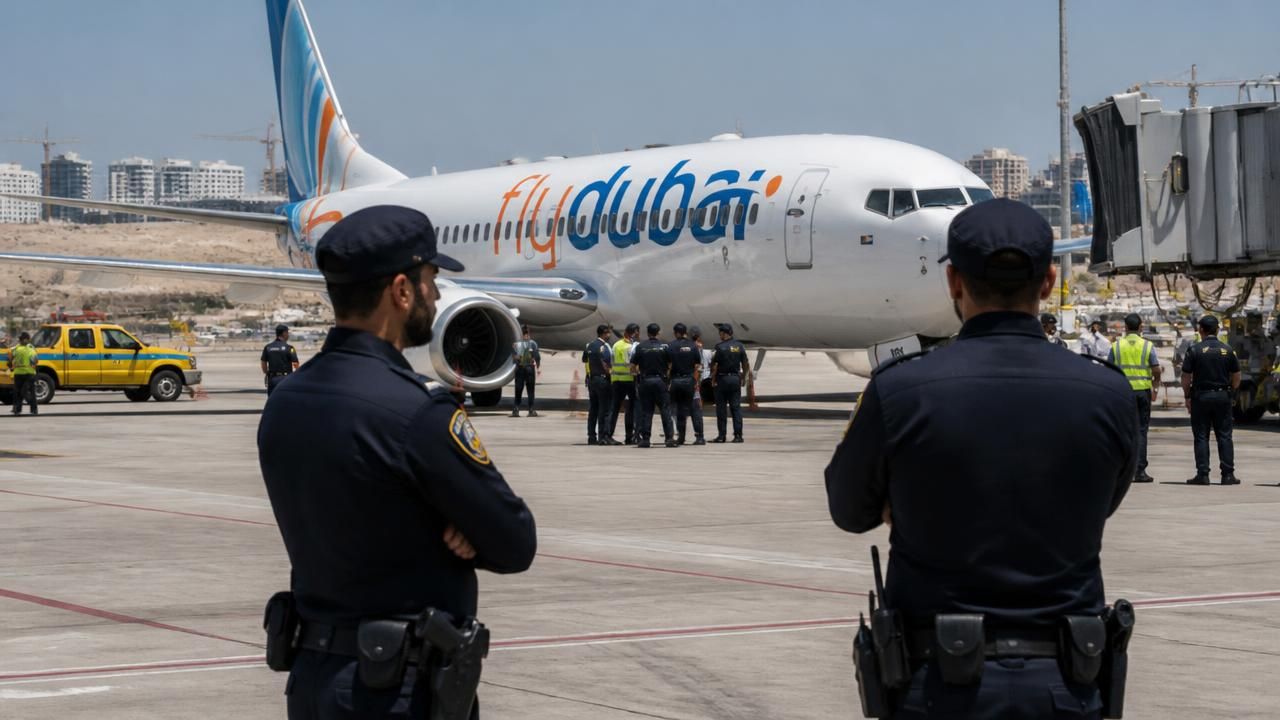
Authorities in the United Arab Emirates and Israel have opened an investigation into an apparent attack involving a flydubai flight, with Emirati officials saying they will lead the probe and examine possible links to terrorism. The incident, described variously in official statements and media headlines as a hijacking attempt and an alleged crash attempt, also prompted a second flydubai plane traveling from Dubai to Tel Aviv to turn back, according to live updates.
The UAE’s decision to take the lead investigative role marks a notable moment of security cooperation between the two countries, whose ties have deepened since the Abraham Accords normalized relations in 2020. Israeli Prime Minister Benjamin Netanyahu said the attacker had undergone “Islamist radical indoctrination,” though he did not elaborate on the evidence behind that assertion. The UAE has not publicly endorsed that characterization, saying only that it is investigating possible terror links.
What We Know — and What Remains Unclear
Details of the incident remain fluid. Flydubai, a Dubai-based carrier, operates frequent flights between the UAE and Israel, a route that has become a symbol of warmer ties between the two nations. According to live updates, another flydubai flight from Dubai to Tel Aviv was turned back, suggesting aviation authorities moved quickly to secure the route while the investigation began.
Investigators are focusing on whether the alleged crash attempt was tied to what one headline described as “terror activity.” That question is central to the case: if confirmed, it would transform an aviation security scare into a politically charged transnational terrorism investigation. If not, the incident could be reclassified, a possibility officials have not ruled out.
The United Arab Emirates said it would lead the investigation, including into possible links to terrorism.
That statement, reported by The New York Times, underscores the careful balancing act facing Emirati authorities. The UAE has sought to present itself as a stable, business-friendly hub and a mediator in a volatile region. Taking charge of a sensitive probe involving Israel allows Abu Dhabi to demonstrate its security capabilities while avoiding the appearance of ceding control to Israeli intelligence.
Competing Frames in a Fast-Moving Story
Coverage of the incident has reflected the different priorities of the outlets tracking it. The New York Times’ live updates led with the investigation’s search for motive and Netanyahu’s claim about radicalization, framing the story around the political and ideological dimensions of the attack. MSN’s live blog, by contrast, emphasized operational developments — most notably that a second flydubai plane from Dubai to Tel Aviv had turned back — and the question of whether the alleged crash attempt was tied to “terror activity.”
Another MSN headline went further, describing the case as a “flydubai hijacking attempt” and reporting that the UAE and Israel had opened a joint investigation to confirm a terror motive. Taken together, the coverage illustrates how quickly a breaking news event can generate multiple framings: a security incident, a terrorism probe, a diplomatic test, and a travel disruption.
Regional and Diplomatic Context
The investigation comes against the backdrop of the Abraham Accords, the U.S.-brokered agreements that normalized Israel’s relations with the UAE, Bahrain, Morocco and Sudan. Since then, direct flights between Dubai and Tel Aviv have become routine, carrying business travelers, tourists and officials. Any security breach on that route would be treated with particular gravity by both governments, not only because of the potential loss of life but because it could undermine confidence in the new diplomatic architecture.
For Israel, Netanyahu’s quick comment about “Islamist radical indoctrination” fits a long-standing pattern of framing attacks as part of a broader ideological war. For the UAE, the priority is likely to be a methodical, evidence-based investigation that preserves its reputation for stability and avoids inflaming regional tensions. The two approaches are not mutually exclusive, but they can produce different public narratives in the days ahead.
What Happens Next
Investigators are expected to examine flight data, passenger manifests, cockpit recordings and security footage, as well as any intelligence indicating a possible organized plot. The UAE’s lead role means the findings will be closely watched in both Jerusalem and Abu Dhabi — and by international aviation regulators.
- Motive: Authorities are seeking to determine whether the incident was terrorism, a criminal act, or something else.
- Aviation security: The turning back of a second flydubai flight suggests heightened caution on the Dubai-Tel Aviv route.
- Diplomacy: The joint investigation tests the depth of UAE-Israel security cooperation under the Abraham Accords.
- Public messaging: Netanyahu’s comments have already shaped the political framing, while the UAE has kept its statements more measured.
Officials have not yet released a full account of what happened on board, and no final determination on motive has been made. Until then, the story remains a live investigation — one that could have lasting implications for aviation security, regional alliances and the fight against terrorism.