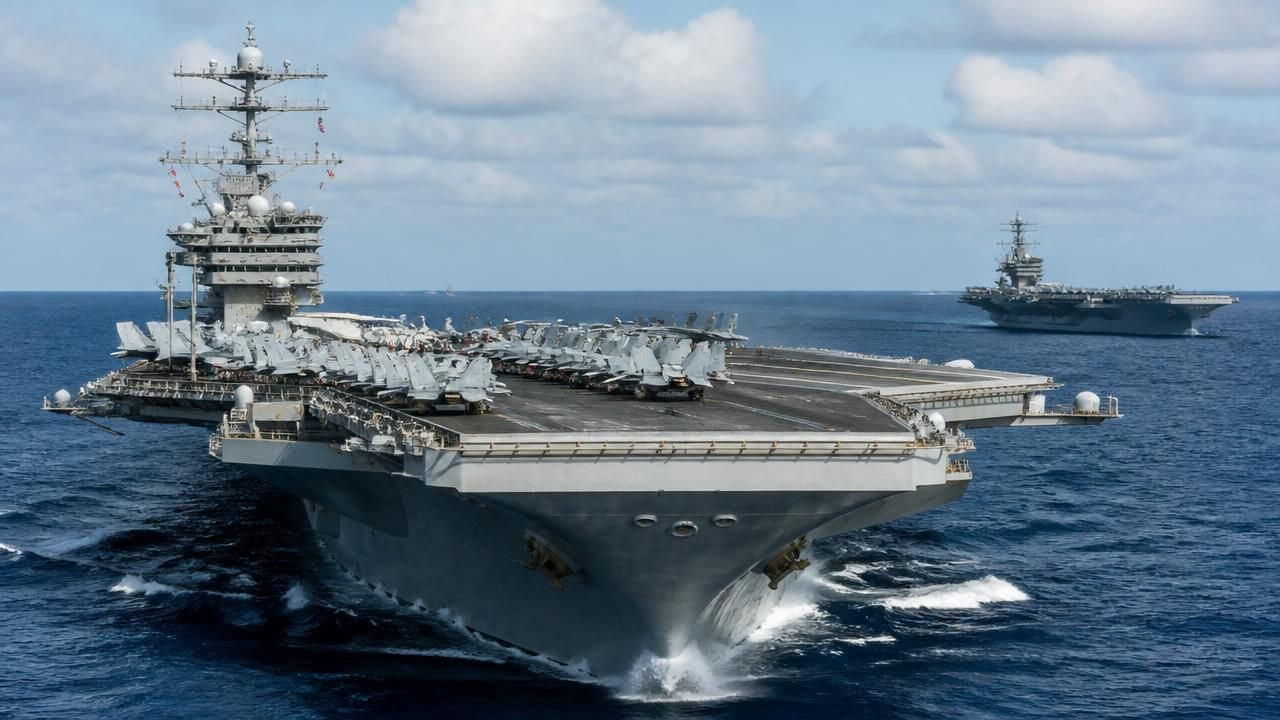
The U.S. Navy is executing a high-stakes carrier rotation in the Middle East as the USS George Washington (CVN-73) heads to the region to relieve the USS Abraham Lincoln (CVN-72). The movement comes at a critical moment, with diplomatic efforts on Gaza accelerating and concerns growing over the prolonged deployment of the Lincoln and its crew. Meanwhile, Jared Kushner, a key figure in past Middle East negotiations, is expected to meet with Israeli Prime Minister Benjamin Netanyahu to push forward talks.
A Carrier's Long Journey
The USS George Washington, a Nimitz-class aircraft carrier homeported in Yokosuka, Japan, has departed its Pacific station to transit to the Middle East. MSN reported that the ship was 'forced to abandon its last post in the Pacific' and 'race' to relieve the Lincoln, underscoring the urgency of the mission. The Pentagon has not disclosed the specific timeline, but naval officials say the rotation is part of a routine deployment pattern, adjusted to address evolving operational requirements.
The USS Abraham Lincoln has been operating in the Middle East for an extended period, having been surged to the region earlier this year in response to escalating tensions between Israel and Iran-linked groups. NPR noted that the relief comes 'amid concerns about conditions aboard' the Lincoln. Those concerns likely relate to crew fatigue and maintenance challenges after months of continuous operations at sea. The Navy has increasingly faced scrutiny over deployment lengths, with some ships exceeding planned schedules due to global security demands.
"The stress on the crew is real," said a former Navy officer who spoke on condition of anonymity. "Carrier deployments are grueling, and extending them has consequences for morale and retention."
Kushner's Diplomatic Push
In a separate but related development, Jared Kushner, who served as a senior advisor to President Donald Trump and helped broker the Abraham Accords, is expected to meet with Prime Minister Netanyahu. NPR reported that the meeting is intended to 'move Gaza talks forward.' While Kushner no longer holds an official government position, he remains influential in the region and has maintained close ties with Israeli leadership.
The meeting comes amid ongoing negotiations over a ceasefire and hostage release deal in Gaza. The U.S. has been actively involved in mediating between Israel and Hamas, with CIA Director William Burns and other officials shuttling between capitals. Kushner's involvement suggests a continuity of the Trump administration's approach to Middle East diplomacy, focusing on economic incentives and regional normalization rather than direct statehood negotiations.
Strategic Context: A Persistent U.S. Naval Presence
The George Washington's arrival will ensure that the U.S. maintains a continuous carrier presence in the Middle East. This has been a cornerstone of American military strategy for decades, providing a platform for airstrikes, intelligence gathering, and deterrence. The carrier strike group typically includes cruisers, destroyers, and attack submarines, all capable of projecting power ashore.
The decision to pull the George Washington from its Pacific duties highlights the global demand for naval assets. The U.S. Navy operates a fleet of 11 carriers, but only a handful are deployed at any given time. With tensions in both the Pacific and the Middle East, the Navy is stretched thin. The George Washington recently underwent a mid-life refueling and complex overhaul, making it one of the newer-capability carriers in the fleet.
Conditions Aboard the Lincoln
Reports of crew strain on the Lincoln have raised questions about the sustainability of extended deployments. In recent years, the Navy has implemented policies to address morale, including more flexible schedules and additional port visits. However, the operational tempo in the Middle East often limits these opportunities. The Lincoln's crew has been operating in a high-threat environment, with Houthi rebels in Yemen targeting commercial ships and occasional drone and missile attacks on U.S. assets.
An anonymous crew member told Stars and Stripes via social media that the 'unrelenting schedule' has been challenging. "We understand the mission, but we're ready to go home," the sailor said. The Navy has not commented directly on these allegations but emphasized its commitment to crew well-being.
Different Framings in the Media
The news coverage of this operation reflects varying priorities. NPR's report focuses on the intersection of military moves and diplomatic efforts, noting both the carrier relief and Kushner's visit in the same brief. MSN headlines emphasize the 'race' and the abandonment of the Pacific post, framing it as a reactive scramble. Stars and Stripes, the military-focused publication, reports the fact without embellishment, simply stating the handoff.
These contrasts illustrate the challenge of covering complex security stories. For the public, the key takeaway is that the U.S. remains deeply entrenched in the region, both militarily and diplomatically. The carrier rotation ensures that the military option remains on the table, even as diplomatic channels are actively being pursued.
Implications and Looking Ahead
The arrival of the USS George Washington will likely take several more weeks, depending on the route and speed. During this time, the Lincoln will continue its operations before transiting back to its homeport in San Diego. The handover will involve a transfer of command and operational control, a delicate process that requires close coordination.
In the meantime, Kushner's meeting with Netanyahu could signal a renewed push for a deal. The former envoy has advocated for an economic approach to peace, including the development of Gaza's gas reserves. Whether he can bridge the gaps remains uncertain. But his involvement, combined with the very visible projection of U.S. naval power, sends a message that Washington is prepared to engage on all fronts.
As the situation evolves, both the military and diplomatic tracks will remain in flux. The world will be watching to see if this carrier rotation is just a routine change or a prelude to more significant shifts in the region.