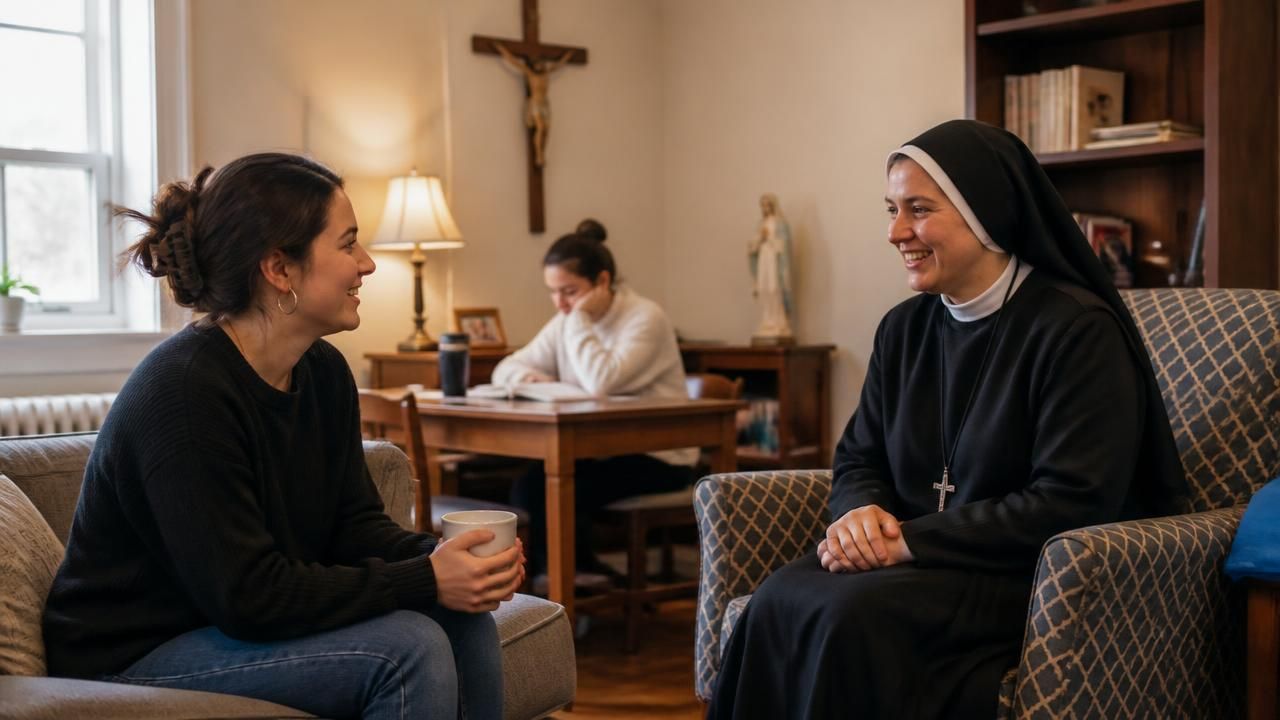
In the midst of a brutal housing affordability crisis, an unlikely landlord is opening doors: the Catholic convent. Across New York City and Washington, D.C., young women—many of them Gen Z professionals and graduate students—are trading skyrocketing market rents for a room in a convent, where weekly rent can be as low as $200 and the amenities include quiet, community, and a strict no-boys-after-curfew policy.
This trend has been spotlighted in a recent wave of coverage from outlets like The Wall Street Journal, NPR, and Fox News, as housing costs continue to outpace wages in major metropolitan areas. According to multiple reports, convents and Catholic residences have become an unlikely solution for young women seeking affordable housing in cities where the average one-bedroom apartment rent hovers well above $2,500 a month.
A $200-a-Week Alternative
In New York City, the numbers are stark. The average rent for a one-bedroom apartment in Manhattan has topped $4,000, while Brooklyn and Queens aren't far behind. Against that backdrop, a room in a convent for $200 per week—or roughly $800 a month—is a relative bargain. Reports from Good Good Good and MoneyWise highlight that these residences are often run by orders of nuns who have more space than they need and a mission to serve the community. Residents get a private or semi-private room, access to common areas, and the intangible benefit of living in a supportive, faith-centered environment.
The rules, however, are not for everyone. "No boys are allowed after curfew," one resident told a reporter. "It's like having a strict grandmother, but your rent is a third of what your friends pay." Curfews are typically around 10 or 11 p.m., and overnight guests of any kind are generally prohibited. For many young women, the trade-off is worth it.
“I was paying $1,800 for a studio that had a leaky ceiling and a rat problem. Now I pay $800 and live with nuns who actually care if I come home safe at night.” — a resident of a New York convent residence, as told to a local news outlet.
Washington, D.C.'s Closing Chapter
The phenomenon isn't limited to New York. In Washington, D.C., a Catholic-run home operated by the Society of the Sacred Heart has offered young women an affordable place to live for a decade. Residents ranged from Capitol Hill interns to graduate students at Georgetown. But as NPR reported, that community is now saying goodbye. The home is closing after ten years, leaving its residents to navigate D.C.'s equally expensive rental market.
The closure illustrates the fragility of such arrangements. While convents can provide affordable housing, they are not always sustainable. Changing demographics, declining numbers of nuns, and the financial pressures facing religious institutions mean that these housing options can disappear as quickly as they emerged.
The Broader Housing Crisis
These stories are a microcosm of a nationwide—and global—housing affordability crisis. From Palm Beach County to the Bay Area, young adults and families are being squeezed. A report from the Palm Beach Post captures the sentiment: “Everyone in my generation is struggling,” said a 20-something renter. Many young people are doubling up with roommates, moving back in with parents, or delaying major life milestones like marriage and children. Some are even “lying flat” in China, buying $6,000 apartments in decrepit cities to escape the rat race, as ABC News recently documented.
The housing squeeze is also reshaping family life. As Healthcare Uncovered notes, some young families are postponing kids and getting a cat instead—a poignant symbol of the financial barriers to starting a family. The convent trend is part of this wider search for creative housing solutions. In New York, the last remaining all-women apartment buildings are similarly seeing renewed interest, according to the New York Post. These buildings, like the Barbizon Hotel for Women in its heyday, offer a sense of safety and community—and now, a more affordable alternative to market-rate housing.
Not Always a Safe Haven
However, not every story of nuns and rent is heartwarming. The New York Post has also reported a controversial case where a group of nuns raised rents at an immigrant home, effectively ousting residents. That story highlights the tensions that can arise when religious institutions act as landlords and the vulnerability of tenants who rely on them.
Still, for many, the benefits outweigh the risks. In addition to cheap rent, convents often offer a built-in support network. Residents describe communal dinners, study groups, and a kind of intergenerational mentorship that is rare in today's cities. “The nuns are awesome,” one woman told the International Business Times. “They give you life advice, they feed you, and they don’t judge your dating life—as long as you're back by curfew.”
What This Means for the Future
As the housing crisis deepens, policymakers and urban planners are looking at every available resource. Convents and other religious buildings represent a largely untapped inventory of underutilized space. Some dioceses have begun converting excess convents into affordable housing units, while others are opening their doors to tenants from all walks of life—not just Catholic women.
But the trend also raises questions about the long-term viability of faith-based housing. With aging nuns and shrinking congregations, many religious orders are consolidating properties rather than expanding. The closing of the Washington, D.C. home is a reminder that these housing solutions can be temporary band-aids, not structural fixes.
For the young women who have found refuge in convents, though, the experience is transformative. It's not just about the money; it's about the community. In a city that can feel isolating and impersonal, living with nuns offers a sense of belonging that money can't buy. As one resident put it, “I came for the cheap rent, but I stayed for the sisters.”
In other developments that intersected with this week's housing conversations, Meta headed to court over social media addiction, while Elon Musk's Starbase continued its push for expansion in south Texas. These stories, while distinct, underscore the broader societal shifts—technological, economic, and demographic—that are shaping where and how Americans live.
In the meantime, the nuns themselves are enjoying the arrangement. “We have the space and the mission to help,” said Sister Mary, a resident of a Manhattan convent. “They bring youth and energy into our home, and we provide them a place to grow. It's a blessing for all of us.”