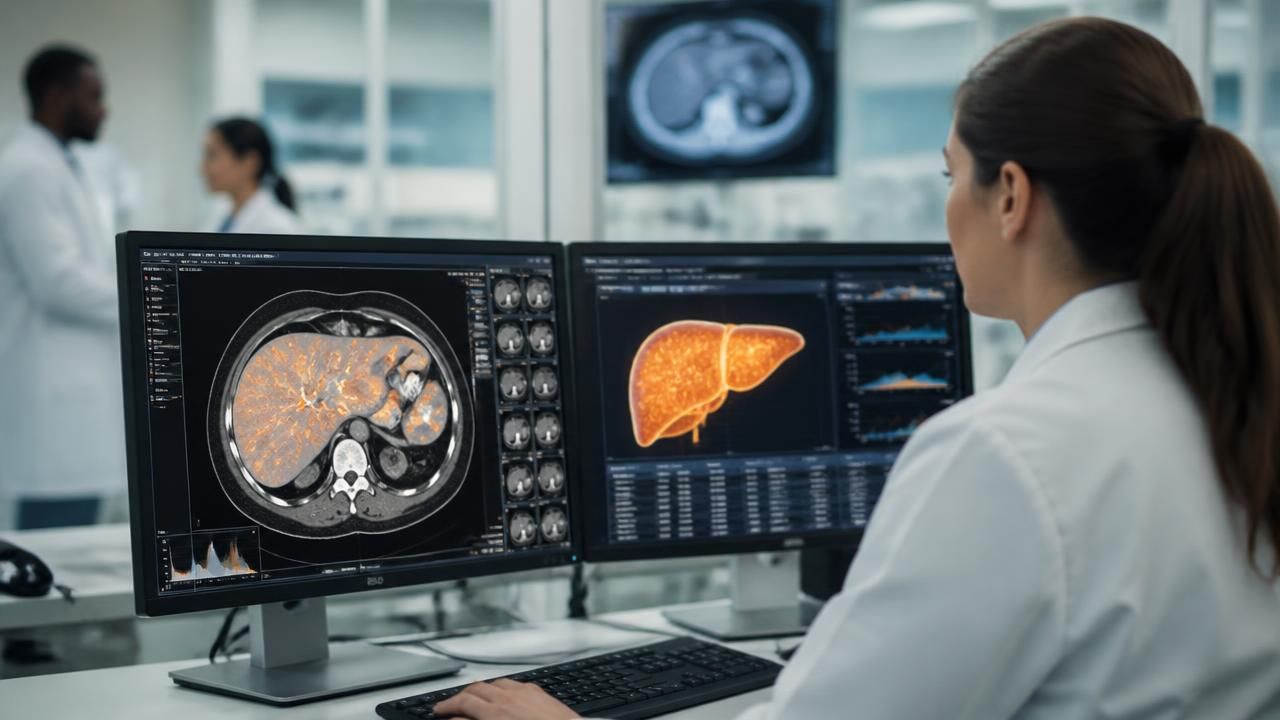
It is often called a silent epidemic: a condition that affects more than a billion people globally, yet most don't know they have it. Fatty liver disease—the accumulation of excess fat in liver cells—has become one of the most common chronic health issues of our time. But now, a new wave of research is exploring how artificial intelligence could help detect, monitor, and ultimately prevent this hidden threat before it becomes deadly.
Recent reporting from outlets like Wired, MSN, and New Scientist has highlighted the scale of the problem: over a billion people worldwide have livers with excess fat. In cities, the numbers are even more striking—one in three people in India, for instance, may be living with the condition. And a related concern, fatty pancreas, is emerging as a parallel silent epidemic affecting up to a third of the world's population. Yet despite its prevalence, fatty liver disease often goes undiagnosed until it progresses to more severe stages, including non-alcoholic steatohepatitis (NASH), cirrhosis, liver cancer, or liver failure.
What Is Fatty Liver Disease?
Fatty liver disease occurs when more than 5% of the liver's weight is fat. The most common form, non-alcoholic fatty liver disease (NAFLD), is strongly linked to obesity, type 2 diabetes, high blood pressure, and high cholesterol. A subset of patients develop inflammation and damage to the liver—a more serious condition known as NASH. The progression is often gradual and symptomless, which is why it is so dangerous.
As the Daily Inter Lake noted in its coverage, the disease is a “silent epidemic” because most people do not experience symptoms until the liver is significantly compromised. Fatigue, nausea, and discomfort in the upper right abdomen may appear only in later stages. By then, treatment options are limited, and liver transplants may be the only recourse.
India's Urban Crisis
Nowhere is the epidemic more visible than in India's rapidly growing cities. According to MSN reporting, fatty liver disease now affects one in three people in urban India. This dramatic rise mirrors the country's economic boom, which has brought sedentary lifestyles, processed foods, and increasing rates of diabetes and obesity. Young professionals, often in their 30s and 40s, are being diagnosed at alarming rates—a pattern repeated across Southeast Asia, the Middle East, and Latin America.
Health experts warn that the burden could overwhelm healthcare systems in developing nations, where liver transplantation services are limited and the cost of treating advanced liver disease is prohibitive. But there is hope: unlike cirrhosis or liver cancer, fatty liver disease is reversible if caught early. Weight loss, exercise, and dietary changes can reduce liver fat and improve outcomes. That's where AI comes in.
AI as a Detection Tool
Artificial intelligence is poised to revolutionize how we identify and manage fatty liver disease. Researchers are developing machine-learning algorithms that can analyze routine medical data—blood tests, ultrasound images, electronic health records, and even retinal scans—to flag early signs of liver fat accumulation. These tools can spot patterns invisible to the human eye, enabling earlier intervention and better patient outcomes.
One promising approach involves training neural networks on large datasets of liver ultrasounds. Fatty liver has a characteristic appearance on imaging—often described as increased echogenicity, or brightness—but interpreting these images is subjective and requires specialized expertise. AI can standardize this assessment, reducing variability between radiologists and allowing screening to be deployed in underserved areas where specialists are scarce.
Other models use routine blood tests, which include liver enzymes like ALT and AST. Elevated levels can indicate liver damage, but many patients with fatty liver have normal enzyme levels. By combining multiple data points—demographics, metabolic markers, and clinical history—AI can calculate a patient's risk score with far greater accuracy than existing clinical guidelines. This allows doctors to identify high-risk individuals and recommend follow-up testing or lifestyle interventions before damage becomes irreversible.
“Even a 5% weight loss can significantly reduce liver fat. If AI can help us find patients early, we can shift from treating late-stage disease to preventing it altogether.” — Dr. Neha Sharma, hepatologist at the Institute of Liver Science
The Broad Spectrum: Fatty Pancreas and Beyond
Fatty infiltration isn't limited to the liver. A related condition, fatty pancreas (or pancreatic steatosis), is getting increased attention from researchers. A recent analysis cited by MSN suggests that up to one-third of the world's population may be affected. Fatty pancreas is linked to metabolic syndrome, pancreatitis, and an increased risk of developing type 2 diabetes. While the pancreas and liver are separate organs, they often accumulate fat simultaneously in people with obesity or insulin resistance.
AI could help here too. Machine-learning models are being trained to measure fat content in the pancreas using CT and MRI scans, which can lead to earlier detection of pancreatic dysfunction. This broader view of metabolic disease—how fat affects multiple organs—could transform prevention strategies from a single-organ approach to a systemic one.
Challenges and Limitations
Despite its promise, AI is not a silver bullet. The quality of AI models depends on the diversity and completeness of the data they are trained on. Many existing studies use datasets from Western populations, and models may not perform equally well in Asian, African, or Latin American populations. Ensuring that algorithms are trained on global data is essential to avoid widening health inequities.
There are also practical barriers to deployment, including the cost of imaging equipment, integration with existing electronic health-record systems, and the need for clinicians to trust AI-generated recommendations. As researchers from Wired emphasize, AI should be seen as a decision-support tool, not a replacement for physician judgment. The aim is to help clinicians get ahead of the epidemic by identifying patients who need further evaluation or early intervention.
The Road Ahead
Governments and health organizations are beginning to take notice. Screening programs for fatty liver disease are being piloted in several countries, and AI-powered risk stratification could make such programs more efficient. For example, instead of screening everyone with ultrasound—which is costly and time-consuming—health systems could use AI-based risk scores to select patients who are most likely to benefit.
Meanwhile, public health campaigns are raising awareness that fatty liver is not just a “lifestyle disease” but a medical condition with serious consequences. The New Scientist's coverage of the liver disease epidemic underscores the urgent need for action: without widespread detection, millions will progress to cirrhosis and liver cancer in the coming decades.
For the billion people walking around with fatty livers right now, AI offers a glimmer of hope. If these technologies can be deployed early, at scale, and fairly, they could help turn the tide against one of the most underestimated health crises of the 21st century. The fat is not inevitable; with the right tools, it can be spotted, stopped, and even reversed.
This article synthesizes reporting from Wired, MSN, Daily Inter Lake, and New Scientist, focusing on the intersection of technology and public health.