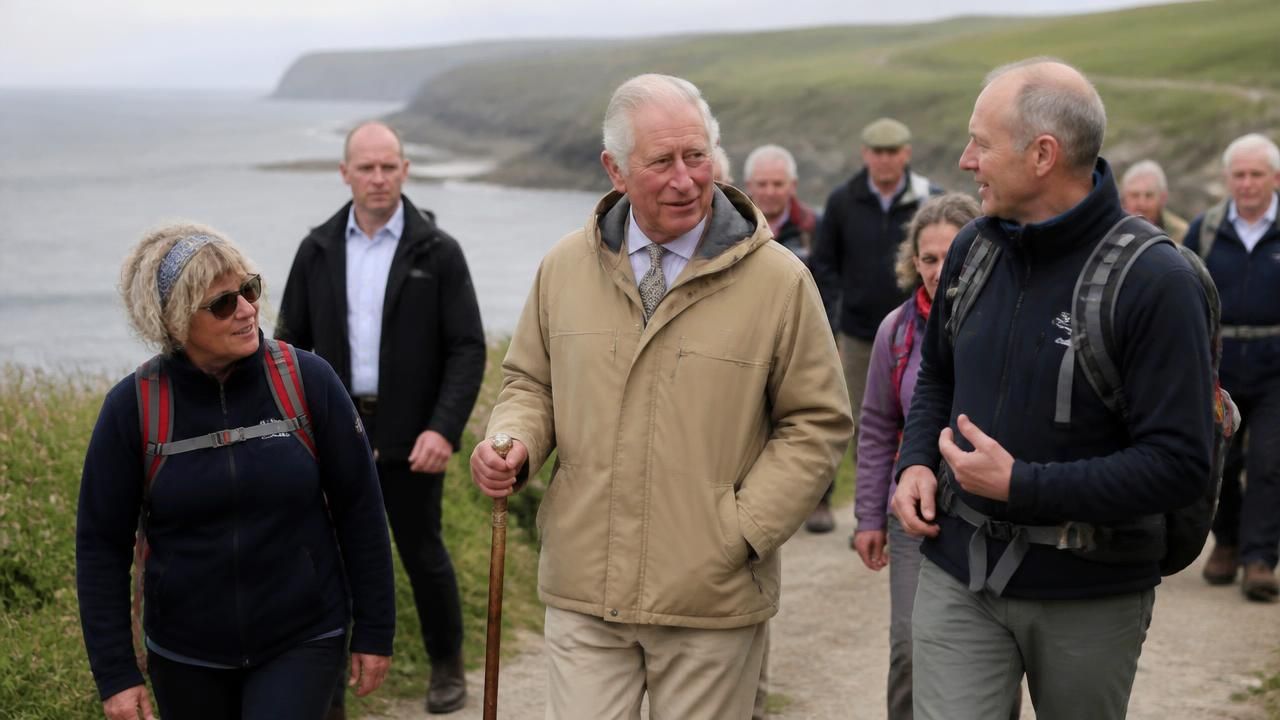
The King Charles III England Coast Path, a 2,700-mile continuous walking route around England's entire coastline, is now open in sections, with King Charles III personally inaugurating the trail and surprising walkers along the way. Dubbed the world's longest managed coastal path, the route is being delivered by Natural England and is set to become fully open this summer—after nearly two decades of planning and construction.
The King marked the launch during a walk on the Furness peninsula in Cumbria, where he met hikers and even teased 'cheating' e-bike riders. A spokesperson for Natural England said, 'It was a joy to see His Majesty enjoying the path he has lent his name to, and to witness the enthusiasm of the walkers who turned out to meet him.' The royal visit, covered by international media, drew attention to the scale of the project: when complete, the path will stretch for 2,700 miles, linking every cliff, cove, and coastal town in England.
A trail almost 20 years in the making
The origins of the England Coast Path date back to 2010, but the vision goes further—author Paul Theroux walked the British coastline in 1982 for his book The Kingdom by the Sea. This year, Theroux returned to walk parts of the new route, noting how much of the coastline remains wild and unchanged. The government formally launched the project in 2014, and since then Natural England has been working with local authorities, landowners, and communities to create a continuous, accessible trail.
The path is being opened in stages. In recent weeks, major sections have come online: 45 miles of Suffolk coastline, 35 miles along Chichester Harbour, 42 miles in Devon, and new stretches on the Isle of Wight, Hampshire, and West Sussex. On the Isle of Wight, two new stretches—including a 12-mile section near Cowes—were opened, while a 26-mile stretch in Suffolk was unveiled, completing a continuous route along the county's coast. The Furness section, where the King walked, opened to the public as part of the inauguration.
A national asset for walkers and wildlife
The path is designed to provide legal access to England's beaches, cliffs, and estuaries, opening up views that were previously inaccessible. It is expected to boost local economies through walking tourism, with guides already highlighting the best coastal towns and hidden gems along the route. Countryfile magazine called it 'England's record-breaking National Trail,' while Condé Nast Traveler noted that the northeast section alone is 'the world's longest coastal path' when considered as a continuous managed route.
Walking groups have welcomed the openings. The Ramblers told the BBC that the Suffolk section offers 'a more engaging way to explore the coast' and that the path 'unlocks beaches and clifftops most people have never seen.' However, they also stressed the need for maintenance and long-term funding.
Challenges and concerns
Despite the celebrations, the path faces significant challenges. In Dorset and Hampshire, coastal erosion has raised safety fears, with sections of the route crumbling into the sea. The BBC reported that erosion is 'sparking safety fears' on the new path, forcing closures and diversions. On the Isle of Wight, a collapsed path near Ventnor required repairs, and a six-week weekday closure was scheduled on Military Road for upgrades.
The Times reported that the King's coastal path is 'already under threat from housing development,' with planners approving projects that would run through or near the trail. The Guardian noted that 'much of it is still closed off'—the path is not yet fully open, and some sections remain inaccessible due to legal disputes or unresolved access agreements. A new stretch in Suffolk ignited an 'access debate,' as some landowners resisted public rights-of-way, while local residents raised concerns about privacy and footfall.
Expert views
Marian Spain, Natural England's chief executive, said in a blog post: 'The England Coast Path is a once-in-a-generation project. It will transform how people experience the coast, benefit wildlife, and help tackle the climate crisis by encouraging sustainable travel.' Meanwhile, the Royal Society for the Protection of Birds (RSPB) warned that increased foot traffic could disturb nesting birds, urging walkers to stick to the main path.
Charlie Ryrie, author of a new guidebook to the path, told The Guardian: 'This is a chance to walk the edge of a nation. You get drama, solitude, and a front-row seat to the power of the sea.'
What lies ahead
When fully complete, the King Charles III England Coast Path will be the longest managed coastal walking route in the world, surpassing trails in the United States and Australia. It will also become England’s second National Trail to circumnavigate a whole country, after the Wales Coast Path.
For now, walkers can explore the sections that are open, from the white cliffs of Sussex to the salt marshes of Suffolk, the industrial heritage of Furness, and the wild beaches of Devon. The King's official walkabout was a celebration, but it also underscored the scale of the work still to be done—and the importance of preserving this coastline for future generations.