The United States has charged three men described as Iran-backed operatives in connection with a sprawling alleged terror campaign that federal prosecutors say included a foiled plot against a British air base hosting U.S. military personnel and aircraft, according to court documents and announcements from the Justice Department.
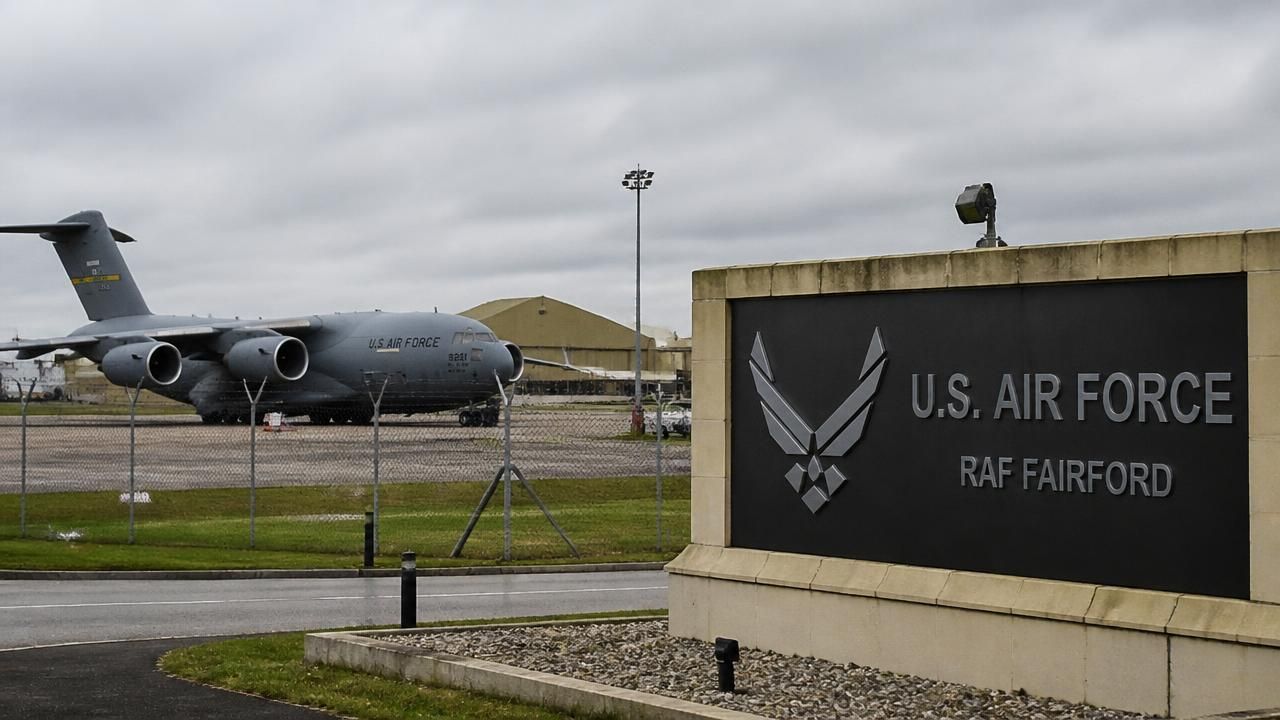
The indictment, reported across a range of outlets from NPR and NBC News to the New York Post, accuses the trio of involvement in nearly 20 planned attacks, with the most closely watched alleged target being RAF Fairford in Gloucestershire, England — a forward-operating base that has long served as a staging point for American bomber deployments in Europe.
What prosecutors allege
According to the charging documents, the three defendants are accused of acting on behalf of, or in coordination with, Iranian-backed networks. The allegations span a broad plot matrix rather than a single incident: prosecutors describe a series of planned operations, of which the Fairford scheme was one element. The charges represent one of the more ambitious alleged Iran-linked plots to surface in U.S. courts in recent years, and they place a British military installation at the center of a case being prosecuted in the United States.
The New York Post, which reported the story under an exclusive banner, framed the case around a striking detail: that one of the accused allegedly orchestrated the foiled plot on the U.K. base from a prison cell in New York City. Other outlets, including MSN's aggregated reporting and NBC News, emphasized the breadth of the alleged conspiracy — multiple terrorist plots rather than a lone target — while NPR foregrounded the transatlantic security dimension, noting the base houses U.S. troops and jets.
"Iran 'terrorist' orchestrated foiled plot on UK military base from NYC prison cell: feds" — New York Post
Why RAF Fairford matters
RAF Fairford is not an ordinary installation. Operated by the U.S. Air Force as a forward base in wartime contingency planning, it has been used repeatedly to host American heavy bombers and support aircraft, including B-52 deployments during the 2003 Iraq campaign and more recent rotations tied to heightened tensions in the Middle East. Its runways are long enough to accommodate the largest U.S. bomber aircraft, and its location in southwest England makes it a key node in the transatlantic force posture.
That profile helps explain why prosecutors say it would be an attractive target. An attack on a base hosting U.S. aircraft would carry symbolic and operational weight well beyond casualties — it would be designed to demonstrate reach, expose vulnerabilities in allied basing arrangements, and complicate the American military footprint in Europe. The allegation that the plot was allegedly directed remotely, from behind bars in the United States, adds a further layer of concern for counterterrorism officials who have long warned about radicalized inmates and incarcerated operatives maintaining external command roles.
Two cases, one news cycle
The charges emerged alongside a separate and unrelated case that NPR paired with the Iran allegations: a U.S. soldier is being held in the United Kingdom on allegations of spying for Russia. The juxtaposition, while coincidental in legal terms, underscored a broader theme for Western security services — that allied territory is increasingly the setting for espionage and proxy violence directed at the same military infrastructure.
The Department of Justice has not, in public statements summarized by the outlets covering the case, detailed the specific evidence underlying each of the roughly 20 alleged plots, nor have British authorities publicly outlined their own role in the investigation. The case will now move through the U.S. federal court system, where defense attorneys are expected to contest both the sufficiency of the evidence and the characterization of the defendants' ties to Iran.
A pattern of alleged Iran-linked plots
The indictment fits a well-documented pattern. In recent years, U.S. prosecutors have repeatedly brought cases accusing Iranian-linked actors of targeting American officials, dissidents, and infrastructure on Western soil. Those cases have ranged from alleged surveillance of public figures to charges involving murder-for-hire schemes and, in at least one instance, an alleged plot to assassinate a former U.S. president. Tehran has consistently denied involvement in such operations, characterizing the accusations as politically motivated.
What distinguishes this case is scale and geography: the alleged conspiracy stretches across countries and includes a military installation belonging to a close U.S. ally, raising immediate questions about base security protocols and intelligence-sharing between Washington and London.
Implications
- Base security: Expect renewed scrutiny of perimeter, insider-threat, and drone-defense measures at U.S.-used facilities in the U.K.
- Intelligence sharing: The case will test the depth of U.S.-U.K. counterterrorism coordination at a moment of heightened Middle East tension.
- Prison radicalization: If the allegations hold, the case will intensify debate over how incarcerated individuals communicate with outside networks.
- Iran policy: Each new indictment adds to the accumulation of allegations that complicate any diplomatic opening between Washington and Tehran.
For now, the case remains at the charging stage, where allegations are just that. But the story it tells — of remote direction, allied bases as targets, and plots allegedly spanning continents — is one Western security officials have been bracing for.