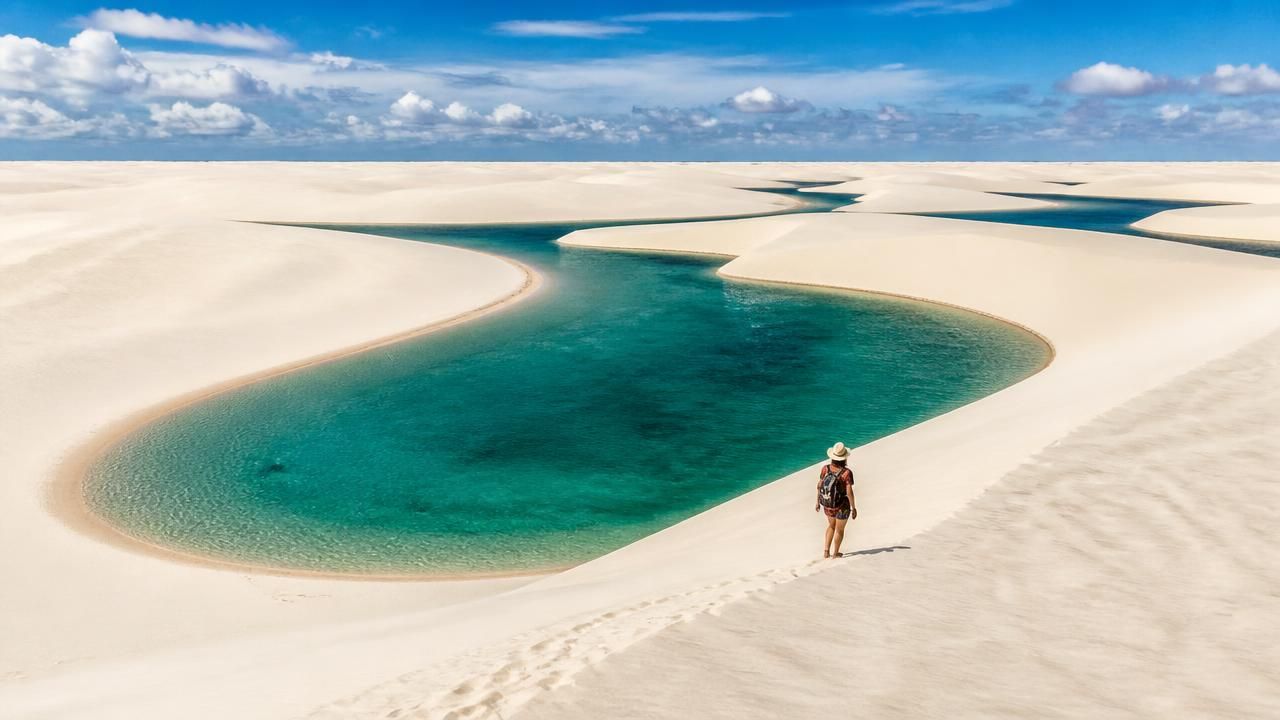
In northeastern Brazil, a landscape so surreal it defies easy description stretches across the Atlantic coast. The Lençóis Maranhenses National Park, a name that translates roughly to “bedsheets” of Maranhão, presents an endless expanse of pristine white sand dunes punctuated by thousands of crystalline freshwater lagoons. This is not a desert in the traditional sense, but a unique ecological crossroads where jungle, ocean, and rain collide to create one of the planet's most spectacular natural phenomena.
As described by NPR, the park offers a “surreal expanse of sand dunes dotted with freshwater lagoons,” bordered by thick jungle on one side and the Atlantic Ocean on the other. The image is almost hallucinatory: wave after wave of fine white sand, interspersed with pools of emerald and sapphire water, shimmering under the tropical sun. It is a place that looks like a mirage, yet is entirely real, drawing travelers from around the world who seek landscapes that challenge the imagination.
A Bucket-List Destination Acknowledged Worldwide
Travel publications have long ranked Lençóis Maranhenses among the world's most spectacular sand dune destinations. A recent listicle from Yahoo! ventures included it on a roundup of “World's Most Spectacular Sand Dunes You Should Have On Your Bucket List,” underscoring its global appeal. While the specific article was temporarily unavailable, the recognition itself speaks to the park's standing as a must-see location for adventurers and nature lovers alike. Similarly, MSN highlighted the park's signature visual — “blue lagoons between white dunes in northern Brazil” — a concise but evocative shorthand that has come to define the region in popular media.
But what makes Lençóis Maranhenses truly unique is the interplay between two opposing elements: sand and water. Unlike classic deserts where water is scarce, this park floods during the rainy season, transforming its valleys into a labyrinth of lagoons that can stretch for miles.
Geography and Formation: A Landscape Sculpted by Wind and Rain
The park covers roughly 155,000 hectares (about 383,000 acres) along the coast of Maranhão state, lying between the Parnaíba River delta to the east and the Munim River to the west. The prevailing winds sculpt the dunes into sweeping ridges, some reaching heights of up to 40 meters (130 feet). During the rainy season, from roughly January to June, heavy rains fill the depressions between these dunes, creating the park's famous lagoons. Because the underlying bedrock is impermeable, the freshwater is held in place, forming natural pools that persist for several months before evaporating or seeping away.
The result is a dynamic ecosystem where flora and fauna have adapted to an annual cycle of flooding and drying. Fish, turtles, and other aquatic life appear in the lagoons, often arriving via temporary waterways or as dormant eggs that hatch once conditions are right. The park is also a haven for migratory birds, which stop over during their long journeys across the Americas.
A Borderline Between Biomes
Lençóis Maranhenses sits at a remarkable ecological intersection. To the south and west lies the Cerrado, Brazil's vast savanna. To the north and east, the Amazon rainforest's transitional forests give way to mangroves and coastal vegetation. This blend of biomes creates a biodiversity hotspot, with species from multiple ecosystems coexisting in a relatively small area. The park's borders encompass not just dunes and lagoons, but also beaches, mangroves, and river estuaries, each supporting distinct communities of wildlife.
Visiting the Park: Challenges and Rewards
Access to Lençóis Maranhenses requires both planning and a sense of adventure. The nearest major city is São Luís, the capital of Maranhão, from which visitors typically drive to the town of Barreirinhas, the main gateway to the park. From there, four-wheel-drive vehicles are necessary to navigate the soft sand and rough terrain. Alternatively, visitors can take boat trips along the Preguiças River, or fly into the small airstrip near the park's edge.
“The pristine white sand dunes of the Lençóis Maranhenses National Park are bordered by thick jungle on one side and the Atlantic Ocean on the other. Thousands of lagoons fill up after the rainy season.” — NPR
Most tours focus on the Lagoa Azul (Blue Lagoon) and Lagoa Bonita (Beautiful Lagoon), two of the largest and most accessible lakes. Swimming in the clear, cool water between towering white dunes is an experience visitors describe as otherworldly. The contrast between the scorching sand and the refreshing water is a sensory delight, and the photographic opportunities are unmatched at sunrise and sunset when the light paints the dunes in shades of pink and gold.
However, tourism comes with responsibilities. The park's ecosystem is fragile, and visitor numbers are managed to minimize impact. Dry season visits (June to September) are most popular because the lagoons are at their fullest, but this also means larger crowds. Off-season visits can offer solitude, though some lagoons may be dry by late summer. Conservationists stress the importance of staying on designated paths and respecting wildlife habitats.
Climate Change and the Future of the Dunes
As climate change intensifies, scientists are closely watching Lençóis Maranhenses. The park's unique hydrology depends on consistent seasonal rainfall. Changes in precipitation patterns could alter the timing and duration of the lagoons, potentially threatening the species that rely on them. Rising sea levels and coastal erosion also pose risks to the park's boundary ecosystems. A 2022 study found that the area has seen increased rainfall variability over the past decades, leading to some years with fewer and shallower lagoons.
Local communities, many of whom depend on fishing and tourism, are already adapting. Some are diversifying their livelihoods into ecotourism guides and small-scale hospitality. Others are participating in reforestation projects to stabilize sand dunes and protect freshwater sources. The future of Lençóis Maranhenses will depend on policies that balance conservation with sustainable development, ensuring that this fantasy-like landscape endures for generations to come.
Why It Captures the Imagination
Lençóis Maranhenses occupies a special place in the travel imagination because it subverts expectations. Deserts are supposed to be dry; lagoons are supposed to be permanent. Here, the two coexist in a fragile, ever-shifting equilibrium, making every visit unique. The park has been featured in films, documentaries, and countless social media posts, yet no photograph can fully convey the scale and silence of standing atop a dune, gazing over a seemingly infinite sea of sand and water.
For Brazilian and international visitors alike, the park is a reminder of the planet's boundless capacity for wonder. Whether one arrives via a bumpy 4x4 ride or a scenic flight, the first glimpse of those blue lagoons between white dunes is an image that stays forever. As Yahoo! Travel suggests, it is a bucket-list destination — and for good reason.
In an era when travel often feels standardized, Lençóis Maranhenses remains gloriously, defiantly strange. It is a place where the Earth shows off its most creative side, and where humans are humbled by the simple, breathtaking beauty of sand and water, arranged in perfect harmony. If there is a single destination that encapsulates the surreal beauty of our natural world, this is it.