Some 540 million years ago, in a burst of evolutionary innovation known as the Cambrian Explosion, Earth's oceans became a stage for an unprecedented diversification of life. Complex animals with hard shells, jointed limbs, and predatory instincts emerged, setting the stage for all future ecosystems. For decades, scientists have debated what triggered this biological fireworks show. A new study offers an unexpectedly humble explanation: poop.
A Nutrient Revolution Fueled by Feces
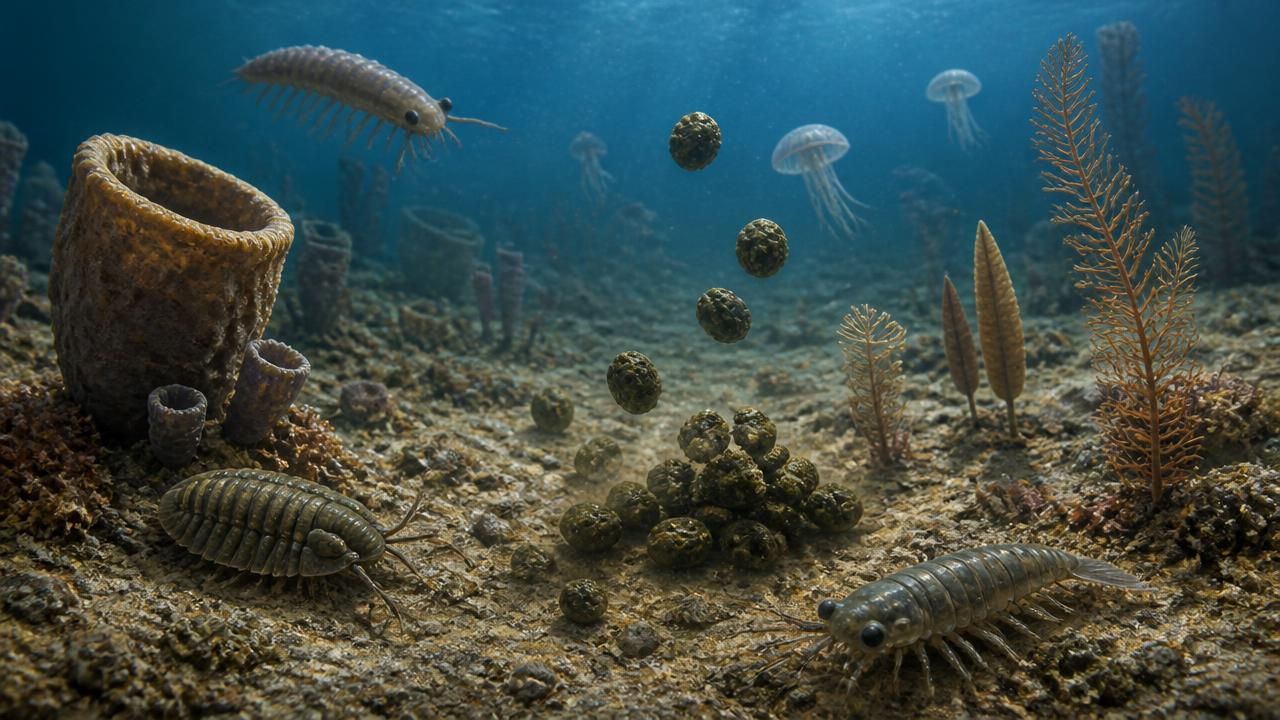
According to research highlighted by Ars Technica, the first animals to evolve the ability to produce dense fecal pellets may have inadvertently engineered a planetary-scale nutrient redistribution system. Before this innovation, organic matter in the ocean was likely diffuse and slow-sinking. But the evolution of fecal pellets—compact, nutrient-rich packages—allowed organic carbon to sink rapidly to greater depths. This "poop explosion" would have transported vital nutrients like phosphorus and nitrogen from surface waters to the deep ocean, nourishing benthic ecosystems and enabling larger, more complex animals to thrive.
The study, covered by The Brighter Side of News as "How animal feces became an evolutionary force 540 million years ago," suggests that the very act of defecation by early animals such as sponges, cnidarians, and small bilaterians transformed ocean chemistry. MSN's coverage goes further, stating that "animal poop travelled across oceans 540-million-years ago and triggered the evolution of life on Earth." Indeed, by exporting carbon to the deep sea, fecal pellets may have also oxygenated the water column, creating new habitable zones.
What the Study Shows
While specific data from the research is not fully detailed in the coverage, the core finding is that the rise of fecal pellet production coincides with the Cambrian Explosion. Analyses of ancient sedimentary rocks from that period show a marked increase in the size and abundance of fecal pellets, according to the synthesis. The researchers argue that this shift enabled a "benthic revolution"—a surge of life on the ocean floor.
"It may have taken off because some of those early animals evolved a bizarre new ability: pooping," Ars Technica writes, capturing the counterintuitive nature of the hypothesis.
Framing of the Story Across Media
The scientific angle from Ars Technica provides depth, highlighting the timeline: "The first animals on Earth emerged about 600 million years ago, and 60 million years later, those simple early animals evolved into wildly different directions." MSN's headlines emphasize the sweeping impact: "An ancient poop explosion could have helped complex life evolve" and "'Often overlooked': 540-million-year-old poop 'revolution' may be the source life as we know it." The Defector offers a more irreverent take with the title "We Wouldn't Be Here Without Poop," reminding readers that even the most high-minded biological narratives have earthy foundations.
This variety in framing shows how a single scientific finding can be packaged for different audiences—from technical science readers to popular news consumers to humor-oriented outlets. All agree on the underlying significance: feces were not merely waste but a driving evolutionary force.
Why This Matters
The study offers a fresh perspective on a long-standing puzzle. Previous explanations for the Cambrian Explosion have included rising oxygen levels, the evolution of vision, and geological upheavals. The new focus on poop adds a biological feedback loop: animals themselves changed their environment in ways that promoted further evolution. As the MSN article notes, this role is "often overlooked," yet it may be as critical as oxygen.
In modern oceans, fecal pellets still play a vital role in the "biological pump," sequestering carbon in deep waters. Understanding its origins helps scientists model ancient ocean systems and even informs climate change research. The study also highlights how even basic biological functions can have world-altering consequences.
- Who: An international team of researchers (per the study).
- What: The discovery that fecal pellets may have fueled the Cambrian Explosion.
- When: Around 540 million years ago.
- Where: Earth's oceans, with nutrient transport to deep-sea environments.
- Why: Dense feces allowed efficient nutrient transfer, enabling larger and more diverse animals.
- How: By exporting organic carbon from surface to deep ocean, oxygenating the water and providing food for benthic life.
Context and Historical Background
The Cambrian Explosion, occurring roughly 541 to 530 million years ago, saw the appearance of most major animal phyla. The first animals, like the simple sponge-like organisms, appeared in the Ediacaran period. The rise of fecal pellets represents a "macrobiotic" shift: animals began to concentrate waste, influencing nutrient cycles at a global scale. This idea aligns with the concept of "ecosystem engineering," where organisms alter their environment, creating new niches.
Expert Views and Implications
While the study's authors remain cautious, they suggest that the "biological pump" may have started not with plankton but with the first animal guts. Future research will examine timing more precisely and explore whether larger-bodied animals were the cause or consequence of the nutrient boom. The implications extend beyond paleontology: if feces can drive evolution, then the loss of certain species' defecation habits (e.g., whale poop) could have cascading effects on marine ecosystems today.
Ultimately, as The Brighter Side of News puts it, animal feces became an "evolutionary force." The humble act of pooping, often dismissed, left an indelible mark on the history of life. It's a reminder that the grandest biological transitions can have surprisingly down-to-earth origins.