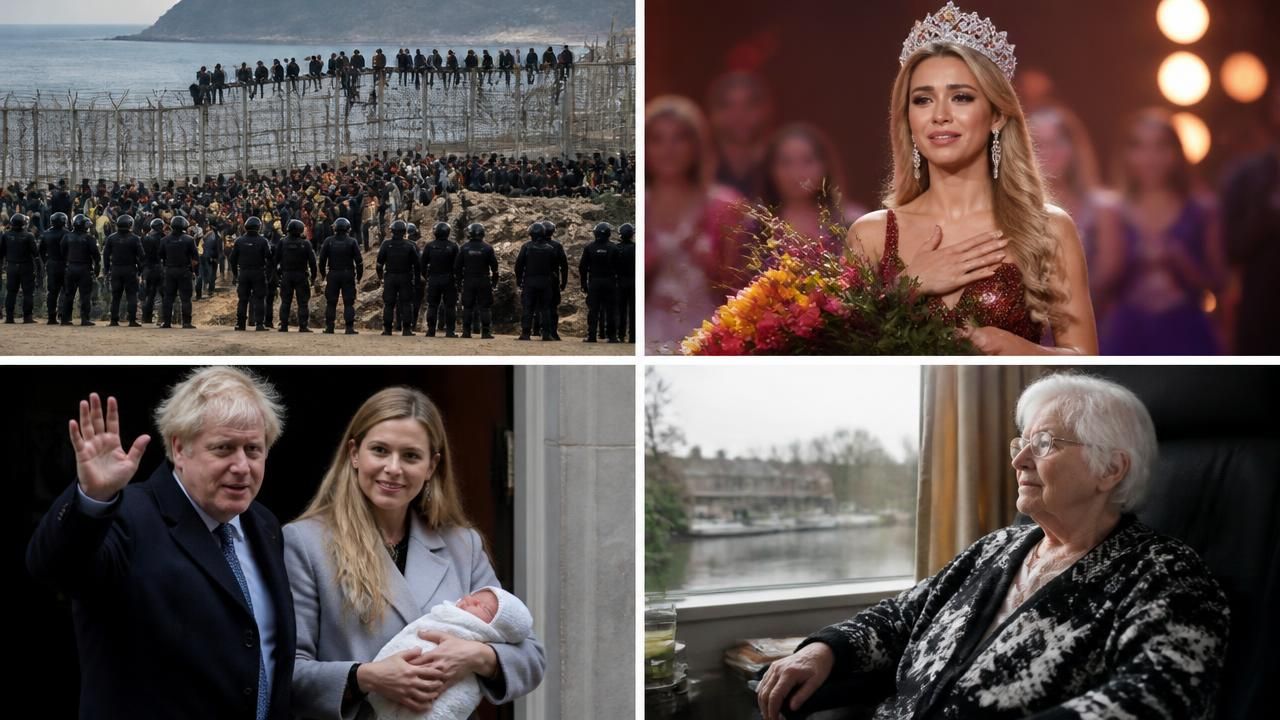
In a week of contrasting headlines, stories from Spain, the Netherlands, and Britain captured the world's attention, each reflecting broader shifts in geopolitics, culture, and personal rights. From unsubstantiated rumors surrounding a migrant surge in Ceuta to a historic beauty pageant win, the news cycle offered a snapshot of societies in flux.
Spain-Morocco Tensions Fuel Migrant Surge Speculation
The relationship between Spain and Morocco has always been complex, and recent events at the border of Ceuta have once again brought that tension to the fore. Rumors swirled that Morocco, perhaps spurred by Israel and the United States, organized a recent border disaster, leading to a sudden influx of migrants. However, as The New York Times reports, that speculation remains unproven, and experts say it is exacerbated by the region's complicated history.
Ceuta, a Spanish autonomous city on the North African coast, has long been a flashpoint for migration and diplomatic strains between Madrid and Rabat. The latest surge reignited fears and conspiracy theories, with some suggesting that Morocco deliberately loosened border controls to pressure Spain. The involvement of external actors like Israel and the U.S. was mentioned in these rumors, though no evidence has emerged to support such claims.
Meanwhile, a recent poll cited by Morocco World News reveals that more than a quarter of Spaniards see war with Morocco as a possible scenario. This statistic underscores the deep-seated anxiety that permeates Spanish public opinion when it comes to its southern neighbor. Historical incidents, such as the Perejil Island crisis in 2002 and the ongoing disputes over fishing rights and migration policies, have kept the relationship fragile.
While the true causes of the migrant surge remain unclear, the situation highlights the delicate balance of power and diplomacy in the region. Experts caution against jumping to conclusions, emphasizing that border incidents are often the result of multiple factors, including economic pressures and domestic politics in both countries.
Historic Crown: First Trans Woman Named Miss Netherlands
In a groundbreaking development for the pageant world, a trans woman was crowned Miss Netherlands for the first time in 2023. The winner, Rikkie Kolle, took the title at the age of 22, marking a significant step forward for LGBTQ+ visibility in mainstream beauty contests.
The announcement was met with widespread celebration from supporters, who hailed it as a victory for diversity and inclusion. Kolle, who previously competed in Dutch reality TV shows, expressed her pride, stating that her win was for all those young women who have laughed at me. The pageant organizers emphasized that their selection was based solely on the contestants' qualities, not their gender history.
However, the news also sparked debates about the boundaries of traditional gender categories in such competitions. Some critics questioned whether it was fair to cisgender women, while others defended the decision as a natural evolution of a society embracing gender diversity. The event serves as a mirror to broader cultural changes in Europe, where LGBTQ+ rights are increasingly recognized, yet still contested in certain spheres.
Boris Johnson and Wife Announce Birth of Second Child
In the midst of political turmoil, former British Prime Minister Boris Johnson and his wife, Carrie, announced the birth of their second child in 2021. The couple, who were married in 2021, already had a son, Wilfred. The newborn, a daughter named Romy, arrived as Johnson was navigating the challenges of his premiership and later controversies.
The announcement provided a rare personal moment for a figure who had been at the center of intense political scrutiny. Carrie Johnson took to social media to share the happy news, expressing gratitude to the hospital staff. The birth was widely covered in the British press, reflecting the public's fascination with the personal lives of political leaders.
While personal news often offers a respite from the political conflict, it also raises questions about privacy and the balancing act faced by public figures. For Johnson, the addition to his family came during a period of significant political upheaval, including the COVID-19 pandemic and the ongoing Brexit negotiations. The news of the second child was thus intertwined with the larger narrative of his time in office.
Right-to-Die Campaigner Dies
Tony Nicklinson, a British man who became a prominent advocate for assisted suicide after being left paralyzed by a stroke, died in 2012. His death marked the end of a highly publicized legal and ethical battle over the right to die with dignity.
Nicklinson, who suffered from locked-in syndrome, had fought for years to have a doctor legally allowed to end his life. His case reached the High Court, where he argued that the prohibition on assisted suicide infringed on his human rights. Although the court ruled against him, his campaign sparked nationwide debates and led to renewed calls for reform.
His death was announced by his lawyer, who said that Nicklinson had died peacefully after refusing food. The case continues to influence discussions on euthanasia and assisted dying in the U.K., with several subsequent attempts to change the law. Nicklinson's legacy lies in the questions he raised about autonomy, compassion, and the limits of state authority over individual lives.
A Tapestry of Human Experience
At first glance, these stories appear disconnected. Yet, when viewed together, they illustrate the complexity of the modern world, where borders are contested, identities are redefined, personal lives intertwine with politics, and fundamental rights are fiercely debated. From the geopolitical speculation of a migrant surge in Ceuta to the cultural milestone of a trans woman's pageant win, from the joyous birth in a political family to the somber death of an activist, the news reminds us that it is not just a series of isolated events but a tapestry of human experience. Each story carries its own weight and significance, but together they shape the way we understand our changing society.