Webb's Infrared Vision Transforms Our View of the Lion Nebula
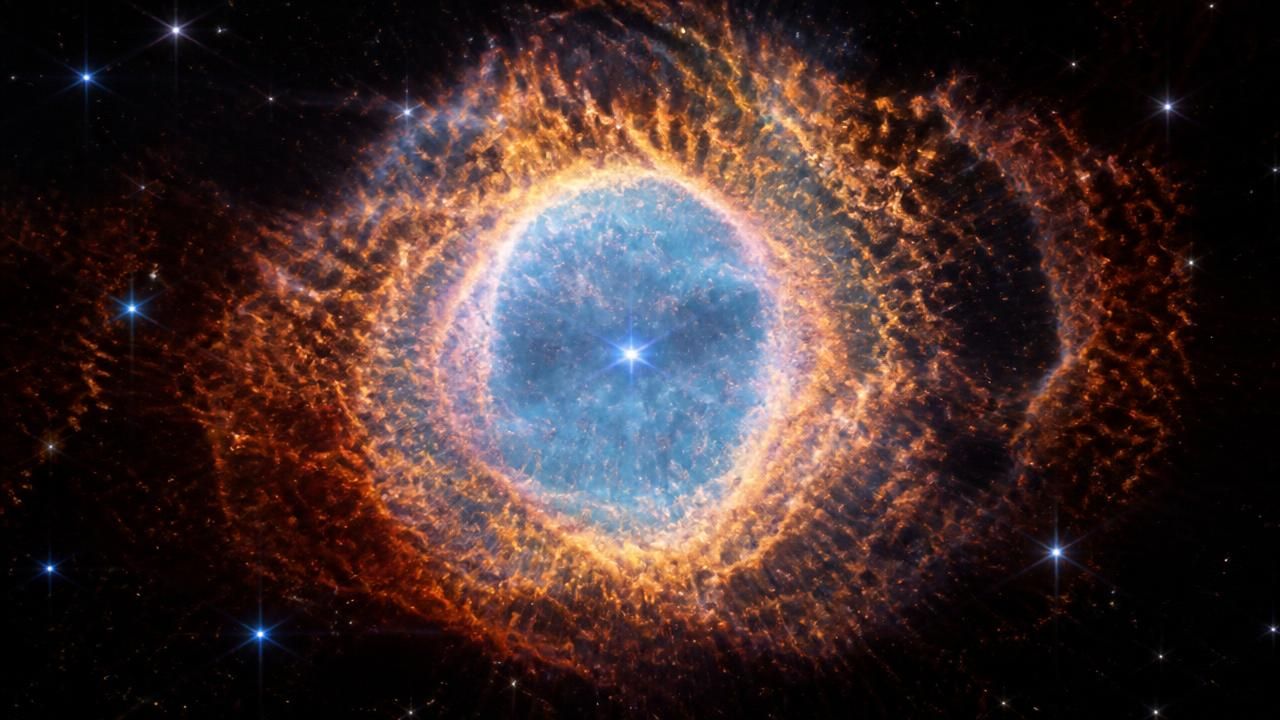
NASA's James Webb Space Telescope has delivered a breathtaking new look at NGC 2392, the planetary nebula popularly known as the Lion Nebula. Using its NIRCam and MIRI instruments, Webb captured the complex structure of this glowing cloud of gas and dust, which surrounds the remains of a dying star. The images reveal features that were previously hidden in visible light, marking a significant advance in our understanding of stellar evolution.
The Lion Nebula: A Star's Final Masterpiece
Located roughly 5,000 light-years away in the constellation Gemini, NGC 2392 earned its nickname from its appearance: a bright central star resembling a lion's nose, surrounded by a fluffy, mane-like ring of material. The nebula formed when a Sun-like star exhausted its nuclear fuel and expelled its outer layers into space. For thousands of years, the expanding shell of ionized gas has been sculpted by the intense radiation and stellar winds from the exposed core — now a white dwarf.
The nebula's distinctive shape was first imaged in detail by NASA's Hubble Space Telescope in 2000. Hubble's visible-light observations revealed a complex network of comet-shaped knots and filaments in the "mane." But Webb's infrared observations, released as part of the telescope's ongoing mission, provide a clearer and more detailed picture of the nebula's physical processes.
What's New in Webb's Images?
At first glance, the nebula's overall architecture in infrared looks similar to Hubble's earlier view. However, Webb's instruments are sensitive to different wavelengths, allowing astronomers to pierce through the dust that scatters visible light. The new images highlight compact clumps of dust and a vast haze of ionized gas, revealing the delicate interactions between the dying star and its environment.
- Instrumentation: NIRCam (Near Infrared Camera) and MIRI (Mid Infrared Instrument) combined to capture the nebula in high resolution.
- Features: The images show the lion face-shaped bubble of ionized gas and the surrounding "mane" of dusty material with unprecedented clarity.
- Context: The structure has taken thousands of years to form and continues to evolve as the central star's remnants energize the surrounding gas.
The Power of Infrared: Seeing Through the Cosmic Veil
Webb's advantage lies in its ability to observe in the infrared spectrum. In contrast to visible light, infrared wavelengths can pass through dense clouds of dust, allowing astronomers to see structures that would otherwise be obscured. NIRCam and MIRI are especially adept at capturing different thermal signatures, providing a multidimensional view of the nebula's temperature and composition.
"It's taken several thousand years for this collection of gas and dust to reach its current shape, and the nebula's components continue to be altered," said a spokesperson for the Webb team, emphasizing the dynamic nature of these cosmic structures. The images were processed by Alyssa Pagan of the Space Telescope Science Institute (STScI), which operates Webb's science operations.
Why Planetary Nebulae Matter
Planetary nebulae are not just visually stunning; they are crucial to our understanding of the life cycle of stars. When a star like the Sun dies, it ejects heavy elements — carbon, oxygen, nitrogen — into the interstellar medium, enriching the raw material for future generations of stars and planets. By studying nebulae like NGC 2392, astronomers can map the distribution of these elements and learn how they are recycled across the cosmos.
"The central star's remains are responsible for the nebula's structure, including a lion face-shaped bubble of ionized gas and dust 'mane.'"
Indeed, the central white dwarf is the engine driving the nebula's evolution. Its intense ultraviolet radiation ionizes the surrounding gas, causing it to glow. Meanwhile, fast stellar winds collide with slower ejecta, creating the shocks and dense clumps that Webb is now resolving in exquisite detail.
Looking Ahead: What's Next for the Lion Nebula
The new Webb images open up several avenues for future research. Astronomers will be able to analyze the nebula's chemical composition in greater detail, trace the three-dimensional structure of its outflows, and refine models of how planetary nebulae develop. Webb's high-resolution spectroscopy, available through its other instruments, could provide additional insight into the physical conditions within the nebula.
As Webb continues to survey the heavens, objects like the Lion Nebula serve as reminders of the profound transformations that await our own Sun in the distant future. By understanding these far-off stellar deaths, we learn more about the past and future of the cosmos — and our place within it.