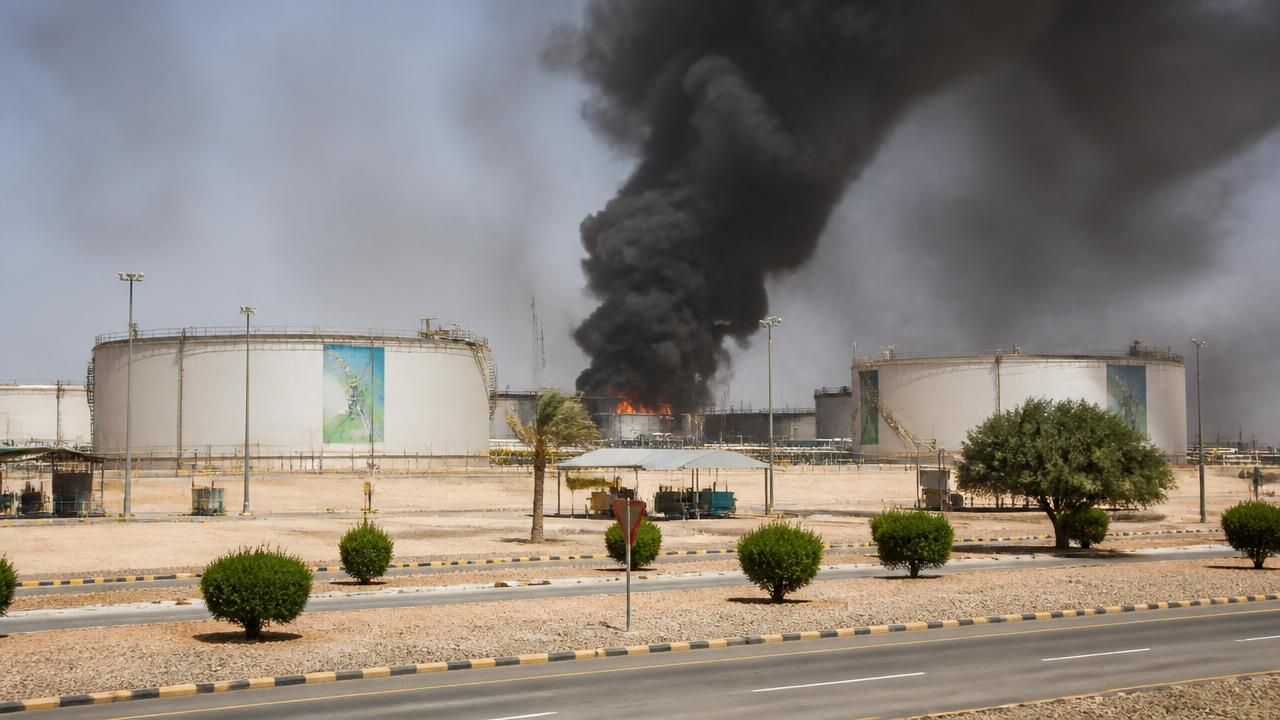
In a significant escalation of the long-running conflict in the Arabian Peninsula, Yemen's Houthi rebels have claimed responsibility for an attack on a Saudi Aramco oil facility in the southern city of Jizan. Saudi authorities confirmed that a fire broke out at the facility but was quickly extinguished, with no immediate casualties reported.
The attack comes amid a broader wave of regional instability, as the United States concludes a series of strikes against Iran-linked targets and Tehran issues new demands regarding nuclear negotiations and the strategic Strait of Hormuz. The Houthis, who have been fighting a Saudi-led coalition in Yemen since 2014, said the strike was retaliation for recent Saudi-led coalition operations in Yemen.
Who, What, Where, When
The attack targeted an Aramco facility in Jizan, a southwestern Saudi province bordering Yemen. The Houthis' military spokesman claimed the strike was carried out using a drone or missile, though the exact method remains unconfirmed. Saudi Arabia's official news agency reported that civil defense teams extinguished the resulting fire, and operations at the facility were not interrupted. No group has yet verified the extent of structural damage, but the symbolic impact is clear: the Houthis are capable of striking deep into Saudi territory despite years of coalition airstrikes.
The timing is critical. The attack occurs as the United States has ended its recent run of strikes on Iranian-aligned forces in the region. According to the Jefferson City News Tribune, the U.S. military's latest operations against Iran-linked targets in Syria and Iraq have concluded, at least for now. This pause has created a vacuum that regional actors are seeking to fill.
Broader Conflict and Iranian Demands
The Houthi strike is not an isolated incident but part of a widening conflict that now extends to the Red Sea. Reports from MSN suggest that the war is expanding beyond Yemen's borders, with Houthi forces threatening shipping lanes and engaging in direct exchanges with Saudi Arabia. Meanwhile, Iran has reportedly made new demands about the restart of negotiations over its nuclear program, including a precondition that the Strait of Hormuz—a vital oil chokepoint—be reopened to Iranian exports unimpeded. The United States has rejected these demands, further raising tensions.
In parallel, the Pentagon is pressing U.S. defense companies to accelerate weapons production, a move that signals Washington's concern about prolonged conflict in the Middle East. As NPR reported, the request is part of a broader strategy to maintain military readiness in the face of multiple fronts, from Ukraine to the Red Sea.
Historical Context and Energy Implications
Saudi Aramco facilities have been a recurring target for the Houthis since the Yemeni civil war began. In 2019, a major attack on the Abqaiq and Khurais plants temporarily halved Saudi oil output, spooking global markets. While the latest strike in Jizan appears smaller in scale, it underscores the persistent vulnerability of Gulf energy infrastructure to asymmetric threats. Oil prices often react to such attacks, and traders are likely to factor in a heightened risk premium.
The Houthis, who have developed an indigenous drone and missile program with alleged Iranian support, have repeatedly claimed attacks on Saudi airports, refineries, and military bases. Their rhetoric frames these strikes as retaliation for the crippling blockade and bombing campaign led by Saudi Arabia and the United Arab Emirates, which has caused what the United Nations calls one of the worst humanitarian crises in the world.
Framing the Story
The coverage of this event varies significantly across outlets. NPR placed the attack in a broad context, focusing on Iran's diplomatic manoeuvres and Washington's defense priorities. The New Tribune emphasized the U.S. ending its strikes, suggesting a potential shift in American military involvement. MSN headlines ranged from sensationalist claims of a "war widening to the Red Sea" to dry confirmation that Saudi Arabia extinguished the fire. Meanwhile, Yahoo News, which suffered a technical glitch, inadvertently highlighted the difficulty of getting real-time updates in a fast-moving conflict.
This divergence in framing matters. Media outlets in the Gulf and the West often treat Houthi attacks as destabilizing terrorism, while regional sympathizers view them as legitimate resistance against foreign intervention. The lack of independent verification on the ground complicates objective reporting, and each narrative serves a different political purpose.
Implications and Next Steps
The immediate consequences of the Jizan attack are threefold. First, Saudi Arabia is likely to respond with renewed airstrikes on Houthi-controlled areas, potentially escalating the humanitarian toll. Second, global oil markets may see short-term volatility, especially if the attack is seen as part of a coordinated campaign with Iran's threats to close the Strait of Hormuz. Third, the United States faces a delicate balancing act: it wants to deter Iranian aggression without being dragged into another Middle East quagmire, and the Houthi attack complicates that calculus.
For the Houthis, the strike serves as a reminder that they remain a relevant military actor despite years of coalition pressure. Their claimed capability to hit Aramco facilities gives them leverage in any future peace negotiations. For Saudi Arabia, the attack demonstrates that its massive defense spending—including advanced air defense systems—cannot fully guarantee the security of its energy infrastructure against low-cost drone tactics.
"The Houthis are using asymmetric warfare to compensate for their conventional disadvantages," said a regional security analyst, speaking on condition of anonymity. "This is a classic attrition strategy: sapping the enemy's economic strength and morale by targeting high-value assets."
Conclusion
As the dust settles on the Jizan facility, the broader Middle East remains on a knife's edge. The Houthi claim, Iran's new demands, the American pause in strikes, and the Pentagon's push for more weapons are all pieces of a volatile mosaic. Whether diplomacy or further escalation prevails depends on decisions made in Tehran, Riyadh, Washington, and Sanaa. What is certain is that the conflict, once confined to Yemen's rugged highlands, has now spread to the Red Sea, the Strait of Hormuz, and the heart of Saudi Arabia's oil industry.
For now, the world watches to see if this latest spark will ignite a wider conflagration or fizzle out in the face of international mediation. The only verifiable fact is that the fire at the Aramco facility in Jizan has been extinguished—but the flames of regional enmity continue to burn.