As the Democratic Republic of the Congo (DRC) struggles to contain the second-largest Ebola outbreak in history, a troubling new development has emerged: the virus may be mutating. With confirmed cases now exceeding 4,000, health officials are sounding the alarm that the pathogen could be evolving in ways that complicate diagnosis, treatment, and containment. In response, Africa’s public health watchdog has announced a dramatic escalation, including going door to door to seek out infected individuals.
A Crisis at 4,000 Cases
The outbreak, which began in August 2018, has ravaged the North Kivu and Ituri provinces in eastern DRC, a region already destabilized by armed conflict and chronic displacement. According to the country’s health ministry, more than 4,000 people have contracted the Ebola virus, making this outbreak the second deadliest ever recorded, surpassed only by the 2014-2016 West Africa epidemic that killed over 11,000 people.
The latest milestone underscores the resilience of the virus and the immense challenges faced by responders. Despite the availability of an effective vaccine and experimental treatments, the outbreak has persisted for over a year, fueled by insecurity, community mistrust, and now potentially viral mutations.
Mutation Fears
Health officials are increasingly concerned that the Ebola virus is mutating, a development that could undermine the effectiveness of existing diagnostic tests, drugs, and vaccines. Dr. John Nkengasong, director of the Africa Centres for Disease Control and Prevention (Africa CDC), warned that the virus appears to be undergoing genetic changes that need to be closely monitored.
“The virus is mutating and that is a big concern for us,” Nkengasong said in a recent briefing. “We need to understand the implications of these mutations on the response, particularly on diagnostics and therapeutics.”
Scientists have been sequencing viral genomes throughout the outbreak. Some studies have identified multiple mutations, but it remains unclear whether these changes alter the virus’s transmissibility or severity. However, any mutation that affects the target sites of diagnostic tests or the efficacy of monoclonal antibody treatments could have serious consequences.
Dr. Anne Rimoin, an epidemiologist at the University of California, Los Angeles, who has worked in the DRC for decades, emphasized the importance of genomic surveillance. “Ebola viruses evolve over time, and we must treat this as a dynamic threat. The mutations we’ve seen could be natural drift, but they could also signal a dangerous shift in the virus’s behavior that requires adjustments to our tools and strategies,” she said.
A New Strategy: Door-to-Door
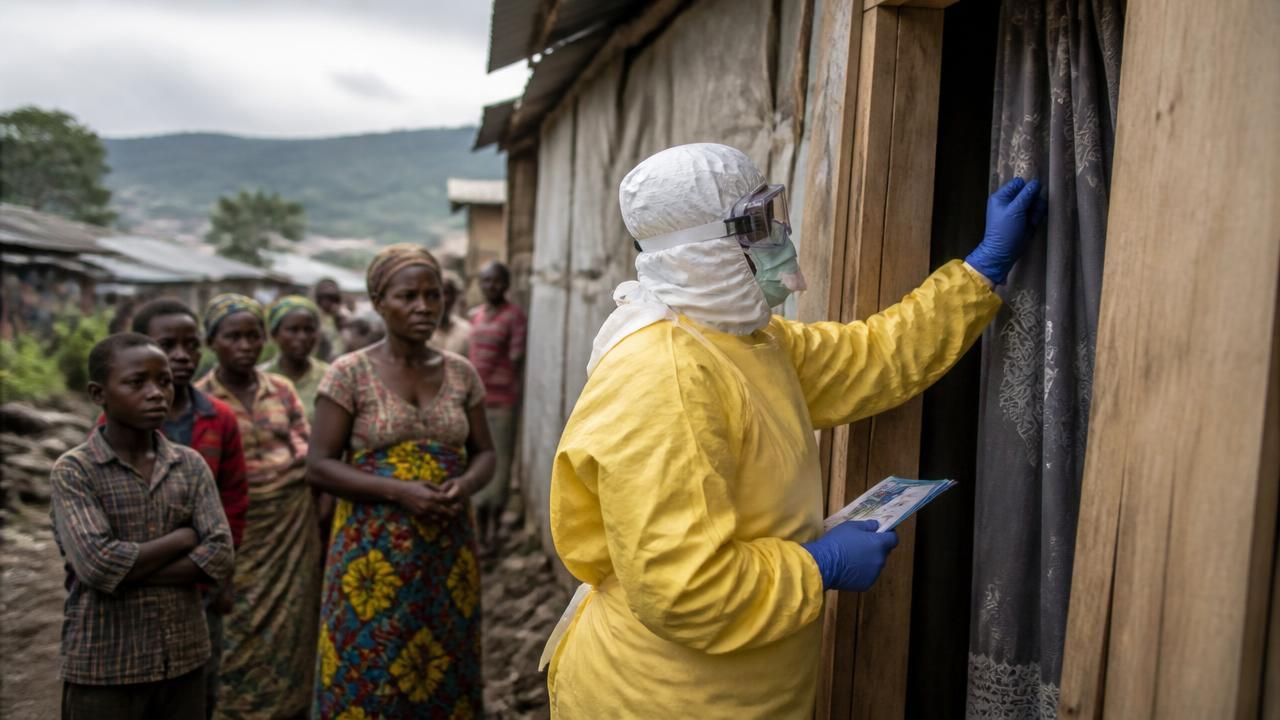
In response to the persistent transmission and the possibility of mutation, the Africa CDC announced a major operational shift. Nkengasong declared that “the time for incremental action is over,” and outlined plans to “go door to door looking for patients.” This marks a significant escalation from the previous approach, which relied heavily on community sensitization and contact tracing.
The door-to-door strategy is designed to identify patients who may be hiding symptoms or avoiding treatment centers due to fear, misinformation, or distrust of health workers. By actively seeking out cases, officials hope to interrupt transmission chains that have continued to elude traditional surveillance.
How the Door-to-Door Plan Works
- Trained response teams will systematically visit households in high-risk areas, checking for fever and other Ebola symptoms.
- Suspected cases will be immediately tested using rapid diagnostic tools, and those who test positive will be transported to treatment centers.
- Community health workers will also vaccinate eligible individuals during these visits, aiming to increase coverage in zones with low vaccine acceptance.
The World Health Organization (WHO) has lent its support to the escalated approach, but cautioned that security remains a critical obstacle. Many areas in North Kivu are controlled by armed groups, making access dangerous for health teams. In the past year, more than a dozen health workers have been killed in attacks, and several Ebola treatment centers have been vandalized.
Conflict and Community Resistance
The outbreak’s persistence cannot be separated from the volatile context in eastern DRC. Years of conflict have created a highly mobile population and a deep-seated mistrust of government institutions. Many residents are skeptical of foreign aid workers, and some believe the virus is a hoax or a political tool. This has led to refusal of vaccines, avoidance of treatment centers, and even violent confrontations.
“We are not just fighting the virus; we are fighting a crisis of trust,” said Dr. Mory Keita, an Ebola response coordinator for WHO in the DRC. “The door-to-door approach is essential, but it must be done with the full engagement of community leaders and local health workers. Otherwise, we risk further alienation.”
Implications for the Global Response
The developments in the DRC have broader implications for pandemic preparedness. The Ebola virus, once thought to be confined to remote rural areas, has shown that it can adapt and thrive in complex, violence-prone environments. Mutations could also make the virus more divergent from the current vaccine strain, potentially requiring updates to the existing vaccine.
While the current vaccine, rVSV-ZEBOV, has been highly effective in protecting against the Zaire strain of Ebola, its long-term efficacy against mutated strains remains uncertain. This has prompted calls for the development of second-generation vaccines that can offer broader protection.
The situation in the DRC also underscores the necessity of robust health systems and international solidarity. As of now, the outbreak shows no signs of abating, and health officials warn that without a sustained and flexible response, the virus could spread further within the DRC and across borders to neighboring countries, many of which are ill-prepared to handle an Ebola emergency.
The next few weeks will be critical as the door-to-door campaign unfolds. With thousands of cases already recorded and the virus possibly changing, the stakes could not be higher. The world is watching, and the lessons learned from this outbreak will likely shape global health policy for years to come.