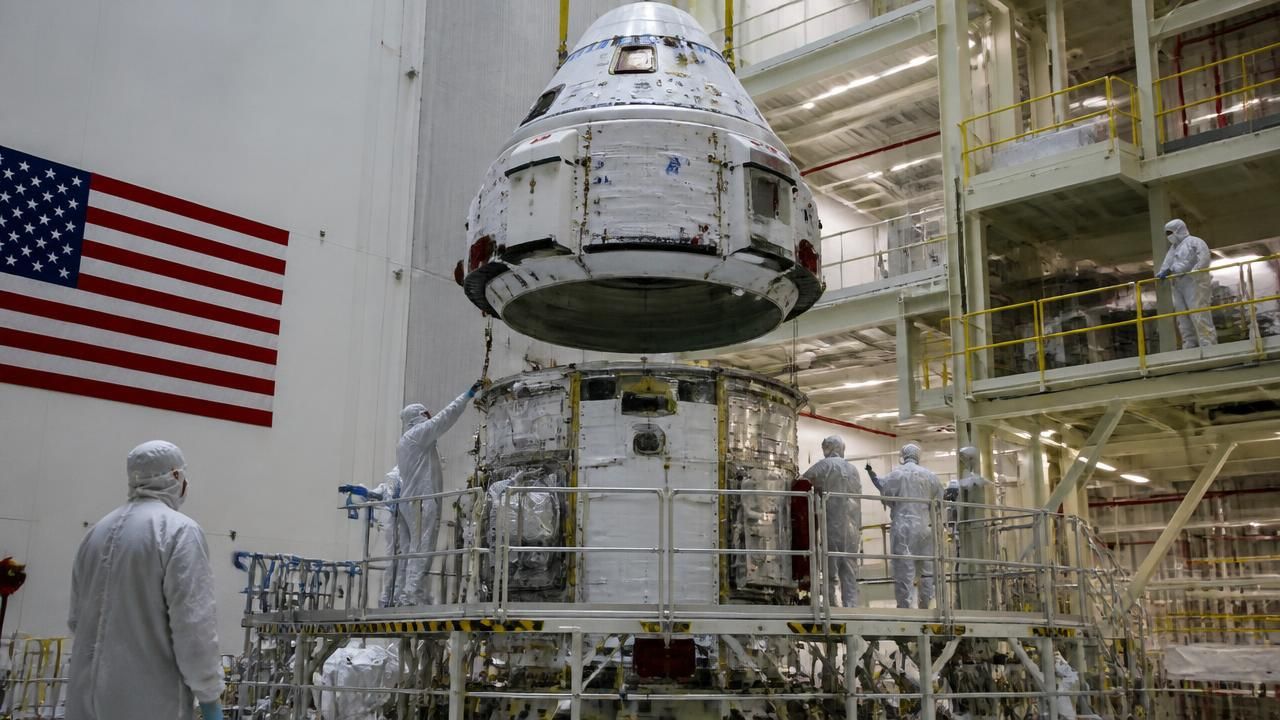
NASA marked a significant milestone in the Artemis program on July 30, 2026, when technicians inside the Neil Armstrong Operations and Checkout Building at Kennedy Space Center joined the Orion crew and service modules for the Artemis III mission. The crew module will carry four astronauts — NASA's Randy Bresnik, Andre Douglas, and Frank Rubio, along with ESA astronaut Luca Parmitano — while the European-built service module will provide propulsion and power for a mission that aims to test rendezvous and docking with commercial lunar landers from Blue Origin and SpaceX.
Artemis II: A Triumphant Return
The assembly comes on the heels of Artemis II's successful mission, which saw its crew become the first to view the far side of the Moon in over half a century. "It's a special thing to be on Planet Earth," the crew said upon their return to Houston, reflecting on the emotional homecoming. The mission ended with a dramatic splashdown, captured by onboard cameras and a flotilla of recovery assets. BBC footage showed the moment the Orion capsule's hatch was opened at sea, and NASA later released the capsule's own "Earthrise" recording, a modern counterpart to the iconic Apollo image.
The Artemis II crew's journey was not just about exploration; it also served as a proving ground for the hardware. As the capsule re-entered Earth's atmosphere, it endured temperatures approaching 5,000°F, testing the heat shield that has been a subject of scrutiny. Some reports, including one from the Daily Mail, raised concerns that the heat shield could be "blown apart" on splashdown, though NASA has yet to release final post-mission analysis. The successful recovery suggests the system performed as intended, but the agency continues to review data.
Artemis III: Pushing Further
Artemis III will push the boundaries even further. Unlike Artemis II, which was a lunar flyby, Artemis III is planned as a lunar landing mission, but with a twist: the Orion spacecraft will not land on the Moon itself. Instead, it will rendezvous and dock with test articles of commercial human landing systems provided by Blue Origin and SpaceX. These uncrewed test versions will validate the docking systems and procedures needed for later landing missions.
The mission profile represents a deliberate step-by-step approach. As NASA has explained, testing rendezvous and docking in lunar orbit is essential before committing to a full landing. The service module, built by Airbus and provided by ESA, will play a critical role, maneuvering Orion into the right orbits and keeping the crew alive during the multi-day mission.
The Crew
The Artemis III crew is a mix of veteran spacefarers and newcomers. NASA astronauts Randy Bresnik, Andre Douglas, and Frank Rubio bring a wealth of experience from previous missions, while ESA astronaut Luca Parmitano, an Italian, adds a distinctly international flavor. Parmitano's selection was highlighted by Forbes as a sign of Europe's growing role in lunar exploration.
"The crew module will carry and sustain these astronauts while the service module powers and propels Orion" — NASA
European Contributions
Europe's involvement extends beyond a single astronaut. The European Service Module (ESM) is the powerhouse behind Orion, providing electricity, propulsion, thermal control, and life support consumables. The handover of the Artemis II service module from Europe to NASA was a key moment, and the module for Artemis III has now been integrated with the crew capsule. This transatlantic partnership is seen as essential for the sustainability of the Artemis program.
Cameras and Commercial Connections
The Artemis missions have also captured the public imagination in unexpected ways. One surprising detail emerged from the Artemis II mission: the astronauts used a decade-old DSLR camera, and the GoPros mounted on Orion were even older. While this might raise eyebrows, experts note that space-rated cameras must meet stringent reliability requirements, and older models often have proven flight histories.
On the commercial side, Silicon Valley's influence is growing. The involvement of SpaceX and Blue Origin in providing landing systems for Artemis III marks a new era of public-private partnerships. Even LEGO has jumped on board, announcing a new NASA Artemis SLS rocket set that literally lifts off, scheduled for release in 2026 — a testament to the program's cultural resonance.
Challenges Ahead
Despite the progress, challenges remain. The heat shield issue, while not confirmed, underscores the risks inherent in lunar return missions. The Artemis III timeline will depend on the successful completion of the Artemis II post-flight analysis and the readiness of the commercial landing systems. Additionally, the docking test itself will be a complex ballet in lunar orbit, requiring precise timing and coordination.
As NASA turns its attention from the success of Artemis II to the assembly of Artemis III, the agency is keenly aware of the stakes. "This is a defining year for space," one Rand Corporation analyst noted, urging the U.S. and Europe to unite or fall behind in the new space race.
Looking Forward
With the crew and service modules now joined, Artemis III is on track for its scheduled launch. The coming months will see extensive testing of the integrated spacecraft, including systems checks and fueling. If all goes well, the next time we see Orion this assembled, it will be heading to the Moon once again — this time to test the technologies that will return humans to the lunar surface for the first time since Apollo 17.
For now, the teams at Kennedy Space Center, along with their partners across Europe and the commercial space industry, are savoring the moment. The journey to the Moon is not a sprint, but a marathon, and every milestone brings humanity one step closer to a new era of exploration.